The Meakusma festival 2026 lineup Belgium underground heads already know about returns to Eupen this September for its 21st edition, and it carries 140 acts across four days of live performances, DJ sets, installations, and workshops. This is not a festival built on headliner economics. It is a festival built on taste, on refusal, on the quiet conviction that programming should feel like a conversation rather than a sales pitch. For anyone tracking where underground music actually lives in Europe right now, Meakusma is the answer nobody in the mainstream is asking for.
Understanding the Meakusma Festival’s Essence
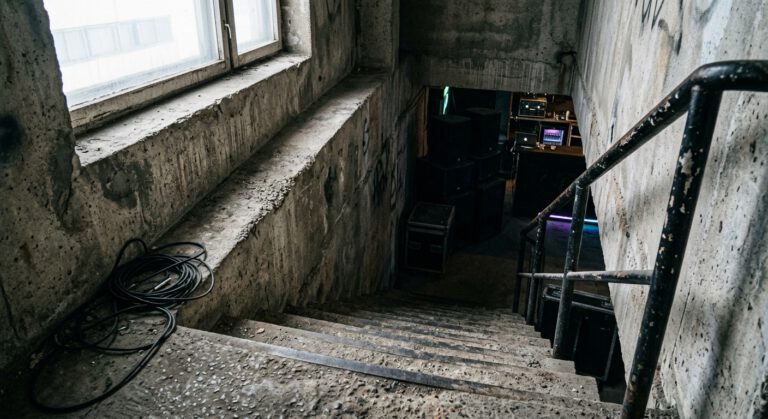
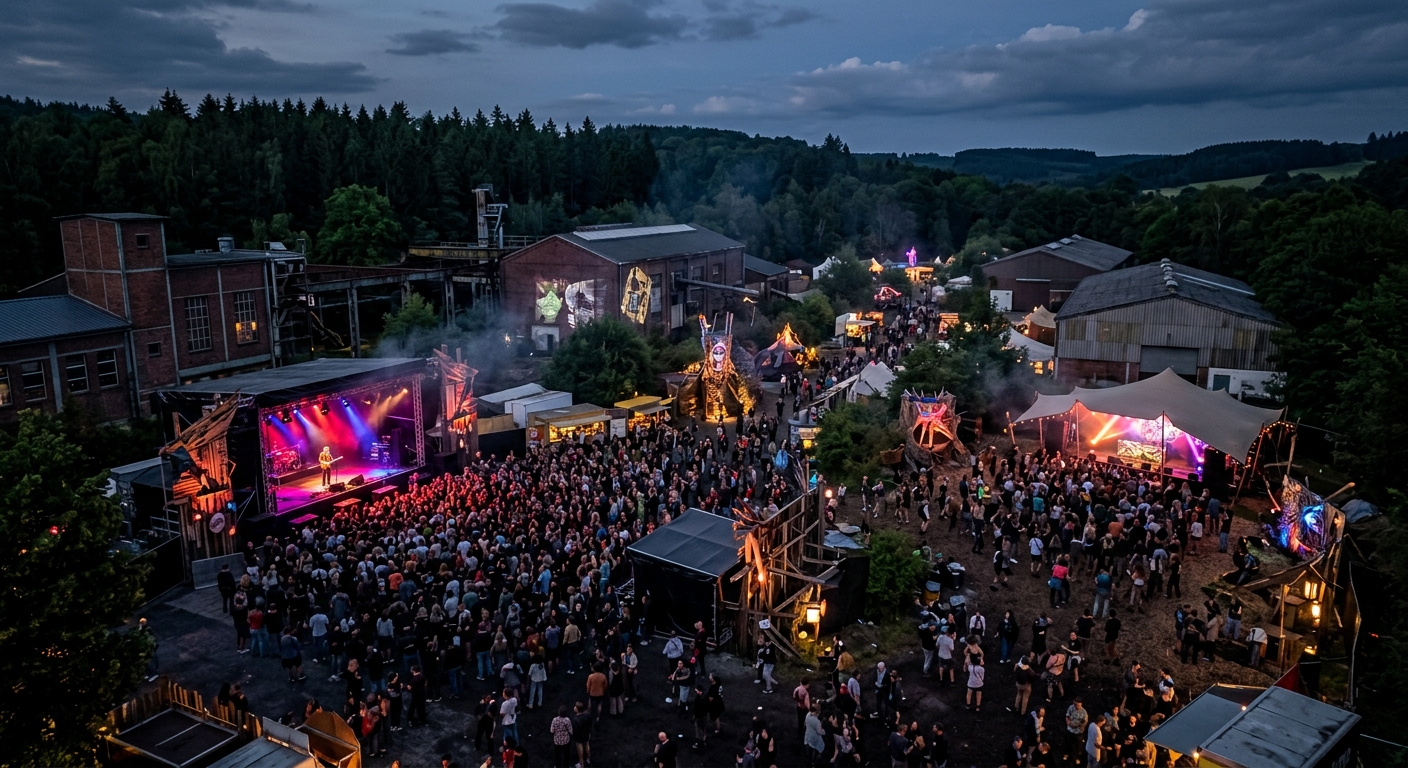
The Meakusma festival essence is rooted in a deliberate rejection of commercial interests in favor of artistic expression and sonic risk. Held at the Alter Schlachthof, a former slaughterhouse turned events space in the small Belgian city of Eupen, it operates closer to an art institution than a music business. With 140 acts on the 2026 bill alone, the ratio of artists to audience creates an intimacy most underground music festivals cannot replicate at any budget.
The Belgium music scene rarely gets credit for producing something this singular. Eupen is a German-speaking pocket of East Belgium with a population under 20,000, and the fact that a festival of this ambition exists there, rather than in Brussels or Antwerp, says everything about Meakusma’s priorities. The location is the first curatorial decision.
What Makes Meakusma Unique?
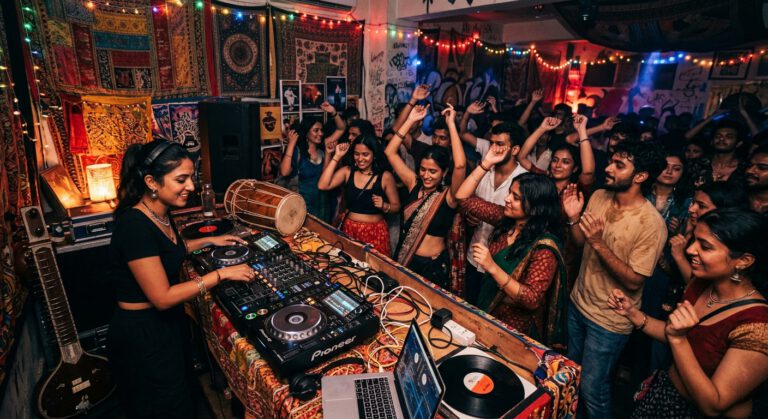
Meakusma’s uniqueness comes from its refusal to separate experimental music from club music. The programming treats avant-garde artists and DJ sets as part of the same continuum. I’ve seen festivals attempt this split-personality trick before; most fail because they silo the stages. Meakusma doesn’t. A set from Demdike Stare sits in the same ecosystem as a Senegalese percussionist performing with recycled instruments. That porousness is the point.
Historical Context of Meakusma
Meakusma history stretches back over two decades, and the 2026 edition marks the festival’s 21st year. It grew from a small community event into one of the most respected platforms for experimental and underground sound in Europe. As The Quietus reported in their 2026 lineup announcement, the festival has maintained its identity without chasing scale, a rare discipline in an era when most independent events either grow or die.
Curatorial Model: A New Festival Approach
The curatorial model at Meakusma works through a quality-over-commercial filter: artists are selected to create a cohesive four-day experience rather than to sell tickets based on name recognition. This is the opposite of the algorithm-driven booking strategy most mid-size European festivals now use, where Spotify monthly listener counts determine billing order. Meakusma’s artistic vision treats lineup diversity as a structural principle, not a marketing line.
The result is a program where you might encounter Garth Erasmus drawing on Khoisan heritage alongside the Broken String Ensemble in one room, then walk into a DJ Plead set built on percussive club deconstructions in the next. That kind of range doesn’t happen by accident. It happens because someone with deep listening hours made the call, and the question behind human versus algorithmic curation becomes very concrete here.
How Does Curatorial Selection Work?
Curatorial selection at Meakusma operates on relationships and listening, not booking agent influence. The festival team programs collaborations that wouldn’t exist elsewhere: Valentina Magaletti performing with Maria Bertel and YPY, or Demdike Stare paired with Cherrystones. These are not obvious pairings. They’re the product of people who actually follow these artists’ work across years and know where the sonic overlaps live.
Impact of Curators on Lineup Diversity
The curators’ impact on lineup diversity is visible in the geographic and genre spread of the 2026 bill. Anderson do Paraíso brings dark, downtempo baile funk from Belo Horizonte. Dudù Kouate, a member of the Art Ensemble of Chicago, commands over 200 instruments. Carmen Villain occupies a space between dub and cosmic fourth world. No booking algorithm would produce this combination. It requires a human ear that values friction between genres as much as harmony within them.
Meakusma 2026 Lineup Highlights
The Meakusma 2026 lineup features 140 acts spanning experimental, electronic, and avant-garde music, running September 3rd through 6th at the Alter Schlachthof in Eupen. As Resident Advisor confirmed in their lineup coverage, featured artists include Carmen Villain, DJ Plead, Loma Doom, Nosedrip, JASSS, Bruce, k means, Low End Activist, Brokenchord, and Samson A.K. The breadth here is the story.
What strikes me about this bill is how it refuses a center of gravity. There is no genre anchor. JASSS brings industrial-adjacent intensity; Ben Vince works in saxophone-led ambient zones; Raisa K operates in a completely different rhythmic vocabulary. If you’re building a European underground festival itinerary for 2026, Meakusma belongs at the top precisely because it cannot be summarized in a single genre tag.
Featured Artists and Performances
Among the featured artists, the collaborative performances stand out most. Valentina Magaletti, already a Meakusma mainstay, will perform alongside Maria Bertel and YPY from Japan. Garth Erasmus and the Broken String Ensemble, featuring Stefan Schneider of the TAL label, promise heavily atmospheric, resistance-rooted sound. I’A’V, the trio of Inês Malheiro, Arianna Casellas, and Violeta Azevedo, trace dreamlike songs through arpeggios and glassy electronic textures. These are performances designed for this specific context; they won’t tour arenas afterward.
Emerging Talents to Watch
The emerging talents on the 2026 bill include Ibraham Alfa Jnr, a British-Nigerian artist drawing on minimalist frameworks, and Mother from the UK. Low End Activist and k means represent a generation of producers whose work circulates through Bandcamp and small-run vinyl rather than playlist placement. Meakusma gives these artists a stage proportional to their ambition rather than their follower counts, which is exactly the function an underground festival should serve.
Cultural Significance of Meakusma
The cultural significance of Meakusma lies in its proof that a festival can sustain itself for 21 editions without compromising artistic integrity. In a European festival market increasingly dominated by corporate sponsorship tiers and VIP upsells, Meakusma’s continued existence is a structural argument: community values and curatorial seriousness can hold an event together without mainstream concessions.
Eupen is not Berlin. It is not Amsterdam. The fact that artists from Belo Horizonte, Dakar, Tokyo, and London converge on a small Belgian city each September speaks to the festival’s reputation within the global underground. The venue itself, a converted slaughterhouse, carries an industrial honesty that matches the programming. Nothing about the setting pretends to be something it isn’t.
How Meakusma Influences Local Scene
Meakusma’s local scene influence operates year-round through its associated record label and event series, not just during the September festival window. Eupen’s cultural infrastructure has been shaped by the festival’s presence over two decades. Local venues host Meakusma-adjacent programming, and the festival functions as a gateway for East Belgium’s small but dedicated community of listeners and musicians to connect with experimental and avant-garde currents from across the world.
Global Impact on Underground Music
Meakusma’s global impact on underground music is less about scale and more about signal. When a festival consistently books artists two or three years before the wider circuit catches on, it becomes a reference point for programmers, label heads, and DJs paying attention. I’ve watched names appear on Meakusma bills and then surface across European club programming 18 months later. The festival doesn’t set trends intentionally; it just listens earlier and more carefully than most.
The Future of Meakusma and Underground Festivals
The future of Meakusma points toward a model other underground festivals are beginning to study: small capacity, deep curation, multi-day immersion, and zero reliance on headliner economics. As mid-size commercial festivals across Europe face rising costs and shrinking margins, Meakusma’s lean structure and community involvement look less like an outlier and more like a survival blueprint. The festival’s 21-edition track record is its own proof of sustainability.
The question is whether other events can replicate the conditions. Meakusma benefits from Eupen’s low overhead, a dedicated volunteer base, and institutional relationships built over decades. Those are not things you can copy from a business plan. They grow from commitment to a place and a sound.
What Lies Ahead for Meakusma?
Future plans for Meakusma will likely involve expanding its installation and workshop programming alongside the music, deepening the festival’s identity as a multi-disciplinary arts event rather than a pure music gathering. The 2026 edition already includes workshops and installations as core programming, not afterthoughts. If the festival continues at this scale, it will remain one of the few European events where the word “underground” still means something concrete rather than aspirational.
Trends in Underground Music Festivals
The clearest trends in underground festivals point toward smaller footprints, stronger local ties, and artist-led or community-led organizational models. Sustainability is no longer a branding exercise; it is an economic necessity for events operating outside corporate sponsorship. Meakusma anticipated this shift years ago. The festivals that survive the next decade will be the ones that understood what Meakusma has practiced since the beginning: you do not need to grow to matter.