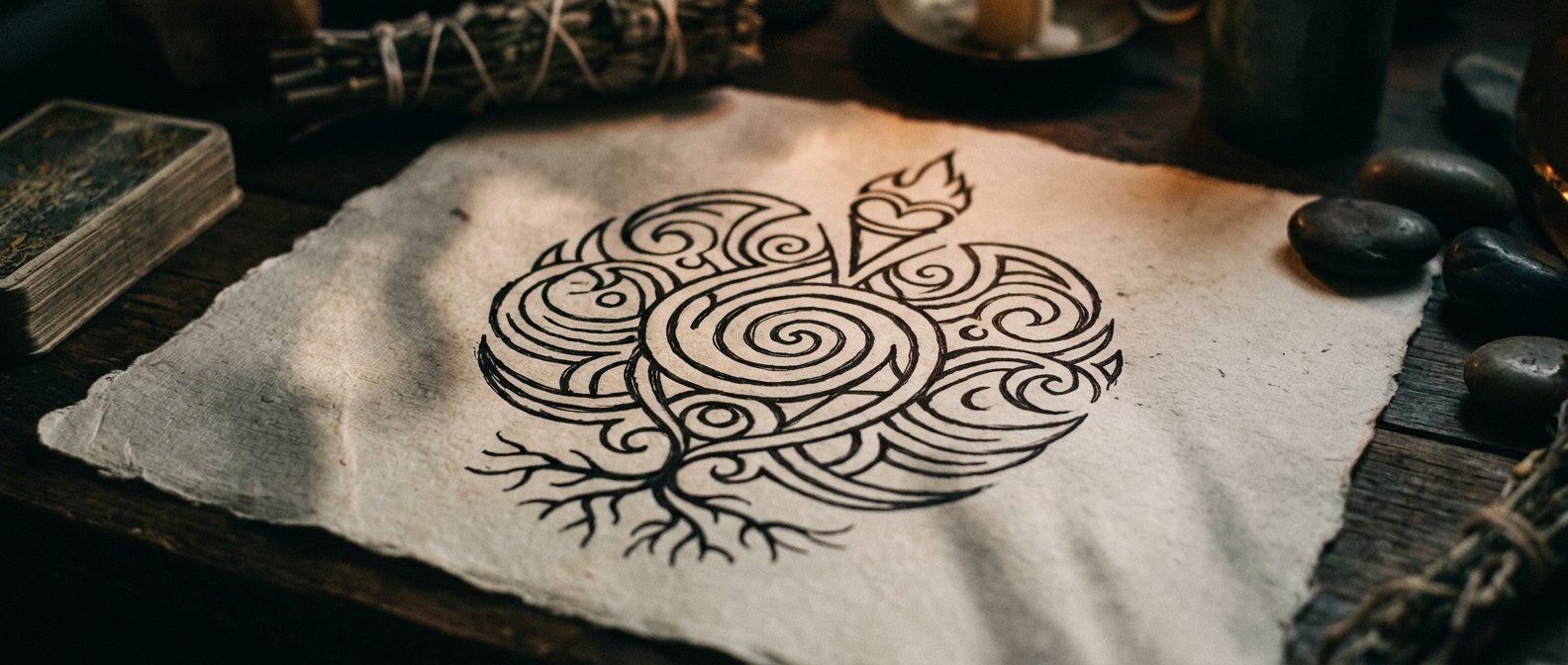
Octo Octa Sigils for Survival acid house album built from personal ritual, analog machines, and a decade of living as a trans woman in a scene that doesn’t always want you alive. Released on the T4T LUV NRG label in 2026, it is Maya Bouldry-Morrison’s fourth full-length record and her most emotionally direct. Eight tracks, each bound to a hand-drawn sigil, map the space between ecstatic dancefloor release and quiet survival. This is not a record about acid house. It is acid house repurposed as spellcraft.
The Evolution of Acid House Sounds
Acid house has evolved from its late-1980s Chicago origins into a global production language, but its core remains the squelchy, resonant filter sweep of the Roland TB-303. What started as a cheap bass machine repurposed by Phuture and DJ Pierre became the backbone of UK warehouse culture, Goa trance offshoots, and eventually the contemporary hardware revival that artists like Octo Octa now channel into deeply personal work.
The difference between acid house in 1988 and acid house in 2026 is intent. Early acid was accidental alchemy; today’s producers approach the 303 knowing exactly what those filter cutoffs do to a body at 3 a.m. Octo Octa sits in that lineage but pulls it somewhere warmer, closer to the ecstatic house tradition of Larry Heard and Fingers Inc. than to the harder-edged acid of Armando or Adonis.
How Acid House Influences Octo Octa
Acid house influence runs through Octo Octa’s work not as pastiche but as emotional architecture. The 303 patterns on Sigils for Survival don’t scream; they breathe. Maya uses acid lines the way a vocalist uses vibrato: to add tension and release within phrases that are already carrying weight. It is acid filtered through queer communal ritual rather than warehouse hedonism.
Key Tracks Shaping the Album’s Sound
Tracks like „First Intention Right Here Right Now“ and „Keep Pressing On“ establish the album’s sonic identity early: rolling percussion, warm acid sequences, and a sense of forward momentum that feels physical. „Hypnotic Cycle“ leans harder into repetition as meditation, while „Just Listen“ strips things back, letting space do the emotional work. I’ve sat with this tracklist enough times to know that the sequencing is deliberate; each track hands off energy to the next like a relay.
Themes of Resilience and Identity
Sigils for Survival is explicitly about resilience and identity as a trans woman navigating a decade of public life. Maya Bouldry-Morrison has spoken openly about not knowing whether she would survive this long, and the album marks ten years since she publicly came out as transgender in November 2015. The record treats survival not as passive endurance but as active magic: each track paired with a sigil designed to bind intention to sound.
This is not identity as marketing angle. The themes here are structural. They shape the chord choices, the vocal cadences, the decision to include hand-played dulcimer and recorder alongside drum machines. The vulnerability is load-bearing, not decorative. Similar approaches to emotional directness in electronic music have surfaced in records like Blawan’s grief-driven industrial work, but Octo Octa’s register is warmer, more communal.
Exploring Queer Identity in Music
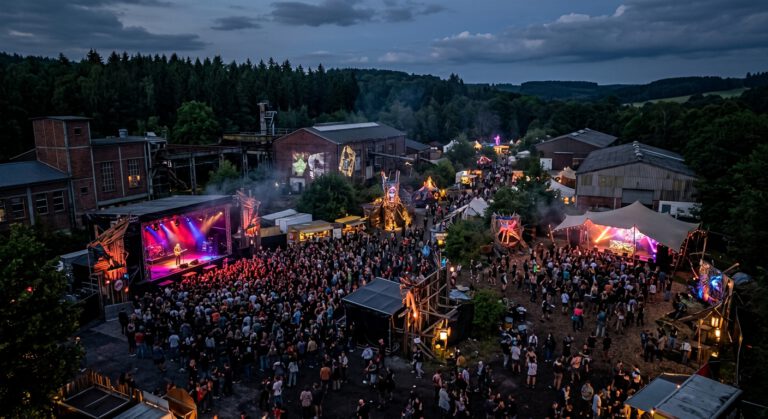
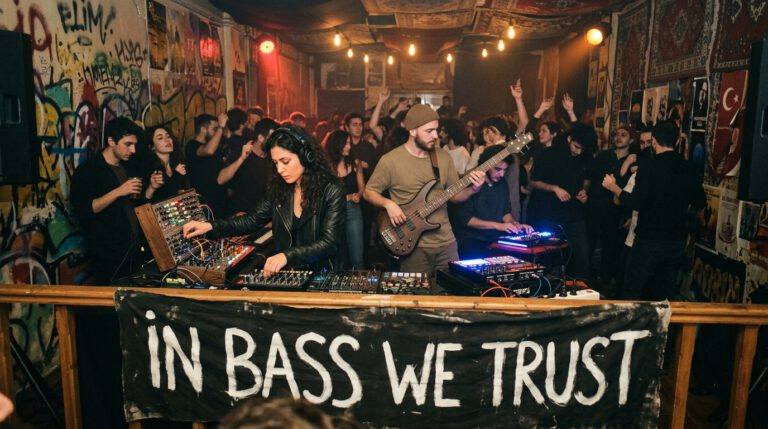
Queer identity in Octo Octa’s music is not subtext. Maya’s voice carries spells of love, protection, and transformation across the album, and the T4T LUV NRG parties she co-hosts with Eris Drew have built a real-world infrastructure for queer dancefloor community. The music and the spaces it creates are inseparable. I watched a room shift at a T4T night once; the energy wasn’t just acceptance, it was recognition. That feeling is encoded in these tracks.
Resilience in the Face of Adversity
Resilience in music often gets reduced to lyrical platitude, but on Sigils for Survival it is compositional. The tracks build through repetition and accumulation rather than dramatic drops or breakdowns. There is no crisis-and-resolution arc. Instead, the album moves like someone putting one foot in front of the other, finding rhythm in persistence. Maya described the album as „my attempt to encapsulate the intentions and techniques that I used to move through life into a spell.“ That framing is precise: resilience here is method, not metaphor.
Production Techniques Behind the Album
Sigils for Survival was created entirely on hardware instruments and later mixed in Logic, a production workflow that prioritizes tactile immediacy over digital precision. Maya recorded the album in roughly one month, preserving MIDI-clock drift and off-grid timing rather than quantizing her machines to a click. The result is a rhythmic pocket that feels alive, where drum hits land slightly ahead or behind the grid in ways that give the music a human pulse.
This approach stands in sharp contrast to the hyper-quantized production dominating melodic techno’s current wave. Where that scene often prioritizes pristine arrangement, Octo Octa’s production techniques embrace imperfection as texture. The machines interact with each other rather than with a master clock, and you can hear it in the way hi-hats flutter against kick patterns with a looseness that no plug-in emulation quite replicates.
Innovative Use of Synths and Samples
Beyond her signature analog synths, Maya incorporated hand-played dulcimer, hand-pan, and recorder into the album’s palette. These acoustic instruments sit alongside drum machines and acid lines without sounding like a genre experiment. They feel native to the compositions because they were played live into the same signal chain. The synths and samples work together as a single organism rather than as layered production elements stacked in a DAW.
Layering and Textural Depth in Tracks
The textural depth on Sigils for Survival comes from restraint as much as accumulation. Maya doesn’t pile frequencies; she places them. A recorder melody might occupy the exact frequency pocket a synth pad vacated two bars earlier. The off-grid recording method means that layers interact unpredictably, creating micro-variations that reward close listening. This is production as live performance, captured rather than constructed, and it gives the album a presence that over-produced records simply cannot match.
Cultural Impact of Sigils for Survival
The cultural impact of Sigils for Survival extends well beyond its Bandcamp sales or streaming numbers. As The Quietus noted in their review, the album arrives at a moment when trans visibility in electronic music is both more prominent and more politically contested than at any point in the genre’s history. The record functions as a cultural document: proof that queer underground spaces produce art of lasting consequence, not just party flyers.
Maya’s sister, artist Hope Morrison, incorporated each of the album’s hand-drawn sigils into original paintings that comprise the physical edition’s artwork. That collaboration between sound and visual art reinforces the album’s position as a complete cultural object, not just a collection of tracks. It sits alongside records from labels like Fachwerk in demonstrating that independent electronic music can carry aesthetic weight that major-label releases rarely attempt.
How the Album Resonates with Audiences
Audience resonance with Sigils for Survival is rooted in specificity. The album does not try to speak to everyone; it speaks from a particular life and trusts that the emotional truth will translate. Listeners who have never attended a T4T LUV NRG party still respond to the warmth and urgency in these tracks because the production communicates what words alone cannot. The catalog number T4T018 may be niche, but the feeling is universal enough to cross scene boundaries.
Influence on the Queer Underground Scene
For the queer underground, Sigils for Survival is a reference point. It demonstrates that an album can be uncompromisingly personal, rooted in trans experience, produced on hardware in a month, and still stand as one of the most compelling acid house records released in years. The T4T LUV NRG infrastructure that Maya and Eris Drew built, from parties to a label to an Essential Mix, now has a flagship album that crystallizes everything the project stands for. That influence will ripple outward for years, shaping how the next generation of queer producers think about what an album can hold.