Spotify AI music is reshaping who gets heard and who gets buried. Tens of thousands of AI-generated tracks pour into the platform daily, competing for the same algorithmic slots that underground DJs and independent electronic producers depend on for survival. The damage is not theoretical; it is structural, measurable, and accelerating. This is what it looks like from inside the scene, and what can actually be done about it.
How Spotify AI Music Floods the Catalog Every Day
AI-generated music uploads now number in the tens of thousands per day, passing through distributor loopholes that treat synthetic tracks identically to human productions. This Spotify AI music catalog flooding has created a volume crisis where real artists compete against an effectively infinite supply of content optimized for passive consumption.
Spotify’s own co-CEO has doubled down on allowing AI-generated music on the platform, prompting widespread concern about royalty dilution and human artists being pushed out. The catalog is no longer just large; it is hostile to anyone without label infrastructure or playlist relationships.
How Fast Is AI Music Uploaded to Spotify
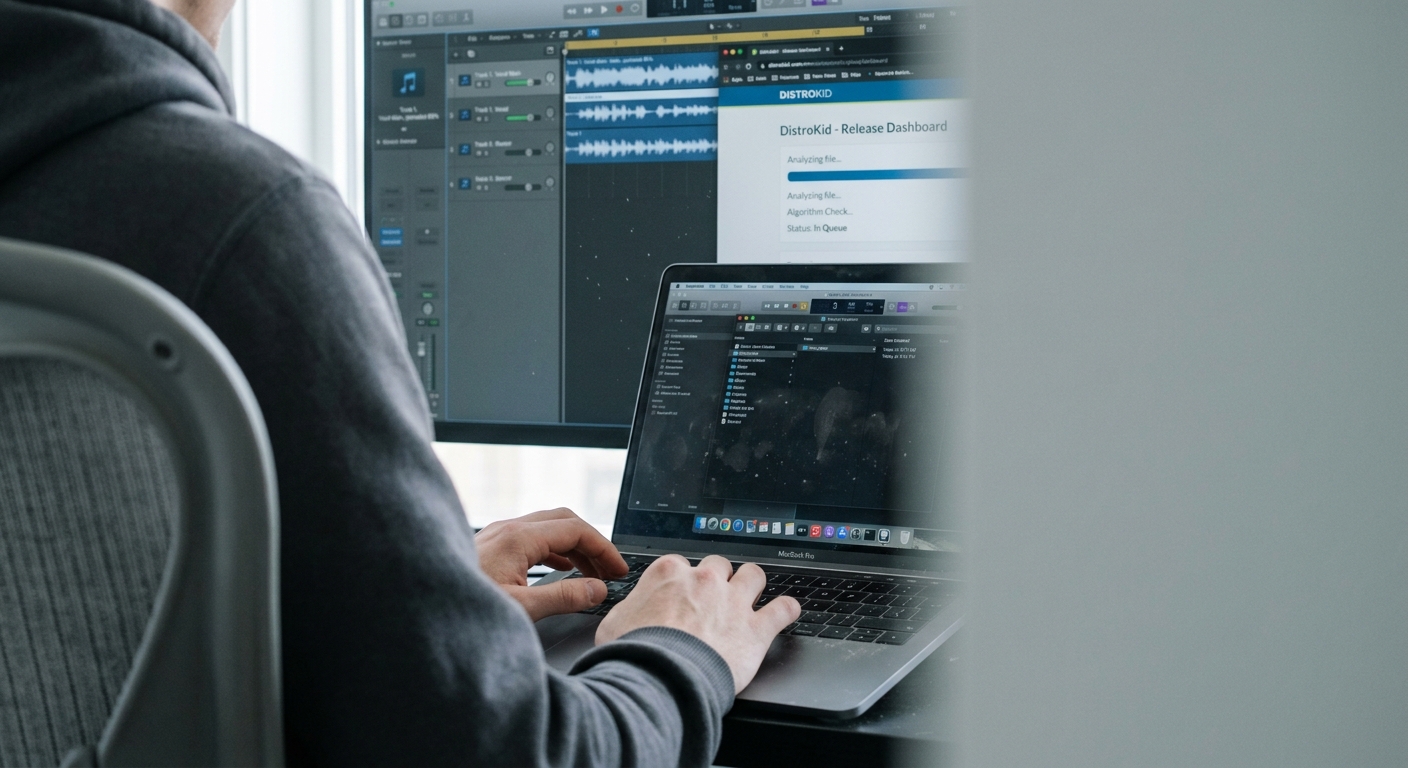
The AI music upload rate to Spotify is staggering. Distributors like DistroKid, TuneCore, and others process uploads with no meaningful distinction between a track produced over months in a studio and one generated by Suno or Udio in thirty seconds. The sheer velocity makes manual review impossible, and the number keeps climbing.
Which Genres Get Hit Hardest by AI Flooding
AI music genre flooding on Spotify hits hardest where mood and texture define the music more than artistic identity. Ambient, lo-fi, deep house, and functional electronic categories are saturated because AI tools can replicate their sonic characteristics with minimal effort. A 122 BPM deep house loop with soft pads and a four-on-the-floor kick is trivially reproducible. Genres built on personality, like dark industrial techno, are harder to fake but not immune.
Can Spotify’s System Detect AI-Generated Tracks
Spotify AI music detection remains inconsistent at best. The platform removed some AI content in a widely reported 2023 distributor purge, but no systematic detection framework exists. Most AI tracks pass standard metadata checks because they look identical to human uploads at the file level. Without a universal labeling requirement, the platform has no reliable way to distinguish synthetic from human-made.
How AI Tracks Steal Algorithmic Reach From Real DJs
AI-generated music exploits Spotify’s recommendation algorithm by engineering tracks for low skip rates and high completion rates, two of the core engagement signals the platform uses to surface content. This Spotify algorithm AI music advantage means synthetic tracks designed for passive background listening structurally outperform emotionally complex DJ productions in Discover Weekly, Radio, and Autoplay placements.
I’ve watched producers I know lose 30-40% of their monthly listeners over six months without changing anything about their release strategy. The algorithm didn’t penalize them; it just found cheaper content that hit the same engagement metrics.
How Spotify’s Algorithm Treats AI Music
The Spotify algorithm treats AI music the same as any other upload. It does not evaluate artistic intent or production origin. It reads engagement signals: completion rate, save rate, playlist adds, skip frequency. A two-minute AI loop with zero dynamic shifts will outperform a seven-minute DJ production with a three-minute build because the algorithm rewards frictionless listening, not artistry.
Does AI Music Suppress Real Artist Recommendations
AI music suppressing DJ recommendations on Spotify is not a conspiracy; it is a math problem. Every algorithmic slot occupied by a synthetic track is one fewer slot available for a human artist. When AI content floods genre tags like “melodic techno” or “organic house,” the recommendation pool dilutes. Underground DJs who depend entirely on algorithmic reach lose visibility to content that costs nothing to produce and nothing to replace.
What Metrics Does Spotify Reward That AI Exploits
Spotify engagement metrics most exploited by AI include completion rate, low skip percentage, and passive playlist retention. AI tracks are purpose-built for these signals. They avoid dynamic tension, sudden drops, or emotional peaks that might prompt a skip. A real DJ set builds tension; an AI track avoids it entirely. The platform rewards the latter.
Sync and Licensing Revenue Is Being Undercut by AI Music
AI music sync licensing competition is collapsing the mid-tier market where independent DJs earn consistent income. Royalty-free AI music platforms now offer tracks at a fraction of traditional sync fees, sometimes under $5 per track, directly undercutting producers who charge $200-$500 for similar placements. Brands and content creators are defaulting to AI for background and mood music because the cost difference is too large to ignore.
The damage concentrates where it hurts most. Independent electronic artists who built sustainable income from sync placements in fitness apps, YouTube content, and brand videos are watching that revenue evaporate. The quality gap between AI and human productions in functional music categories is narrowing fast.
How AI Music Undercuts DJ Licensing Rates
AI music undercutting DJ licensing rates is straightforward economics. When a content creator can generate a 120 BPM house track through an AI platform for free or near-free, the market rate for a human-produced equivalent collapses. I’ve spoken with producers who had standing relationships with sync libraries that have gone quiet since mid-2024. The libraries are not closing; they are filling their catalogs with AI.
Are Sync Agencies Replacing Human Artists With AI
Some sync agencies are replacing artists with AI music, particularly for lower-budget placements. The economics are brutal: an AI track has no royalty obligations, no negotiation overhead, and no exclusivity demands. Agencies that once curated human talent now maintain hybrid catalogs where AI fills the functional slots and humans are reserved for premium, identity-driven placements. The middle ground is disappearing.
Which Licensing Categories Are Most Vulnerable to AI
DJ licensing categories most vulnerable to AI are ambient, lo-fi electronic, workout music, and background mood tracks. These categories are defined by texture and tempo rather than artistic signature. A 100 BPM ambient pad progression or a 140 BPM workout track with generic energy is exactly the use case AI is optimized to serve cheaply. Producers who built income around these placements need to diversify urgently.
The Survivability Crisis Facing Underground Electronic Artists
Underground and independent electronic artists are uniquely threatened by AI music on Spotify because they lack the insulation that mainstream acts enjoy. Major artists have label backing, editorial playlist relationships, and brand recognition that buffer them from algorithmic dilution. Underground DJs depend almost entirely on organic algorithmic reach, making them the first casualties when AI content floods their genre tags and mood playlists.
The crisis is not abstract. Artists releasing on small labels like EXHALE Records or Spazio Disponibile have built audiences through years of consistent output and scene presence. AI saturation threatens to make that slow-build strategy unviable on streaming platforms alone.
Why Underground DJs Are Uniquely Vulnerable to AI
Underground DJs are vulnerable to AI music because their growth model depends on the same algorithmic pathways AI content exploits. Without pre-built fanbases or playlist curator relationships, niche electronic producers rely on Discover Weekly, Release Radar, and genre-based recommendations. When those systems fill with synthetic content, organic growth stalls. A producer making 128 BPM melodic techno in a bedroom in Tbilisi cannot outproduce an AI that generates hundreds of tracks per day.
How AI Music Affects Niche Genre Discoverability
Niche genre discoverability on Spotify suffers directly from AI music saturation. When AI tracks populate tags like “organic house” or “minimal techno,” the signal-to-noise ratio collapses. Listeners searching for genuine organic house productions encounter an undifferentiated wall of content. The genres that depend most on curation and taste become the hardest to navigate.
Is Spotify Still Viable for Independent DJ Growth
Spotify viability for independent DJ growth is declining but not zero. Artists who treat the platform as one channel among several, rather than their primary growth engine, can still extract value. But relying on Spotify alone for audience building is now a high-risk strategy. The artists I see growing are the ones who use Spotify for credibility while building direct relationships through live performance, email lists, and community platforms.
What DJs Can Actually Do to Fight Back Against AI Music
DJs can protect their reach and income from AI music competition by shifting strategy: optimizing verified Spotify profiles for editorial playlist pitching, diversifying to platforms that reward human artistry, and building revenue streams AI cannot replicate. Passive streaming income alone is no longer a defensible business model for independent electronic artists.
The producers who will survive this shift are the ones treating their identity, taste, and live presence as primary assets rather than treating tracks as interchangeable content units.
How DJs Should Optimize Spotify Profiles Against AI
DJ Spotify profile optimization in the AI era means prioritizing signals that synthetic content cannot easily generate: verified artist status, consistent editorial playlist pitching through Spotify for Artists, and encouraging direct fan saves and follows rather than passive streams. These engagement signals carry more algorithmic weight and are harder for AI to replicate at scale. Clean metadata, proper ISRC codes, and genre tagging discipline also improve long-term visibility against catalog noise.
Which Platforms Are Safer for DJ Music Discovery
The best platforms for DJ music remain Bandcamp and SoundCloud. Bandcamp offers direct sales and a community that actively values human artistry; its buyer base skews toward collectors who care about provenance. SoundCloud still holds cultural authority in electronic music, supporting long-form DJ mixes and the kind of human curation that algorithms cannot replicate. Neither platform is immune to AI, but both structurally favor human creators more than Spotify does.
How DJs Can Build Income Streams AI Cannot Replace
DJ income streams AI cannot replace include live performance fees, Patreon or membership subscriptions, curated DJ sets with documented crowd energy, merchandise, and direct fan relationships through email lists. These revenue sources are tied to identity and presence, not to interchangeable audio files. Your taste, your selections at 4 a.m. in a concrete room, your ability to read a floor and shift the energy: no model replicates that.
The Industry Reckoning Spotify Must Face Over AI Music
Spotify AI music policy reform is overdue and structurally conflicted. The platform’s business model benefits from high catalog volume because more content means more listening hours, which means more ad revenue and subscription retention. This creates a fundamental tension between Spotify’s commercial incentives and the interests of human artists who need the platform to differentiate their work from synthetic noise.
As composer Michael Whalen argues in his analysis of recent AI licensing agreements, voluntary deals between labels and AI companies only bind the parties who sign them, leaving independent artists unprotected. The gap between industry rhetoric and actual enforcement remains enormous.
Will Spotify Introduce Mandatory AI Music Labeling
Spotify mandatory AI music labeling is under discussion but not yet implemented as a universal requirement. The platform has introduced some transparency measures and acknowledged the issue publicly, but a comprehensive disclosure system that covers all uploads does not exist. Without mandatory labeling at the distributor level, listeners and curators have no reliable way to distinguish AI from human content.
How Music Unions Are Responding to AI on Streaming Platforms
Music unions and advocacy groups, including the Artist Rights Alliance, are actively lobbying for regulatory protections against AI music on streaming platforms. Their proposals include mandatory AI disclosure on all uploads, minimum royalty floors that make AI spam economically unviable, and algorithmic weighting that favors verified human artists. DJs and producers should support these efforts directly; collective action is the only force large enough to shift platform incentives.
What Policy Changes Could Protect Human Artists on Spotify
The most impactful policy changes protecting human artists on Spotify would combine mandatory AI content labeling, minimum per-stream royalty thresholds that eliminate the economic logic of AI spam, and algorithmic preference for verified human creators. Federal legislation, not just voluntary agreements, is likely necessary because platform self-regulation has consistently prioritized catalog growth over artist welfare. The underground cannot wait for Spotify to solve a problem that benefits Spotify’s bottom line.