The underground electronic music festival circuit in 2026 is sharper, stranger, and more spread out across Europe than it has been in years. Familiar names keep refining their programming while newer events in overlooked cities pull serious bookings and even more serious crowds. This guide maps the festivals worth building a summer around, from the ones you already know to the ones your favorite DJ is quietly telling friends about. If you are planning your year around an underground electronic music festival 2026 Europe has enough options to fill every weekend from May through October.
Top Underground Electronic Music Festivals in 2026
The best underground electronic music festivals in 2026 include Dekmantel in Amsterdam, Dimensions in Croatia, Kappa FuturFestival in Turin, and Sónar in Barcelona. Each runs a programming philosophy that prioritizes curation over headliner spectacle, and collectively they represent the strongest corridor of underground bookings on the continent. The global EDM market sits at roughly USD 12.03 billion in 2026, but the underground slice of that figure operates on entirely different economics: smaller capacities, higher artistic risk, deeper loyalty.
What separates these from mainstream festival packages is intent. Dekmantel books across tempos and decades; Dimensions uses Fort Punta Christo’s architecture as a sound design element. Kappa FuturFestival fills a post-industrial park in Turin with programming that swings from ambient to peak-time 138 BPM techno without apology. These are not lineups assembled by algorithm.
Key Highlights of Each Festival
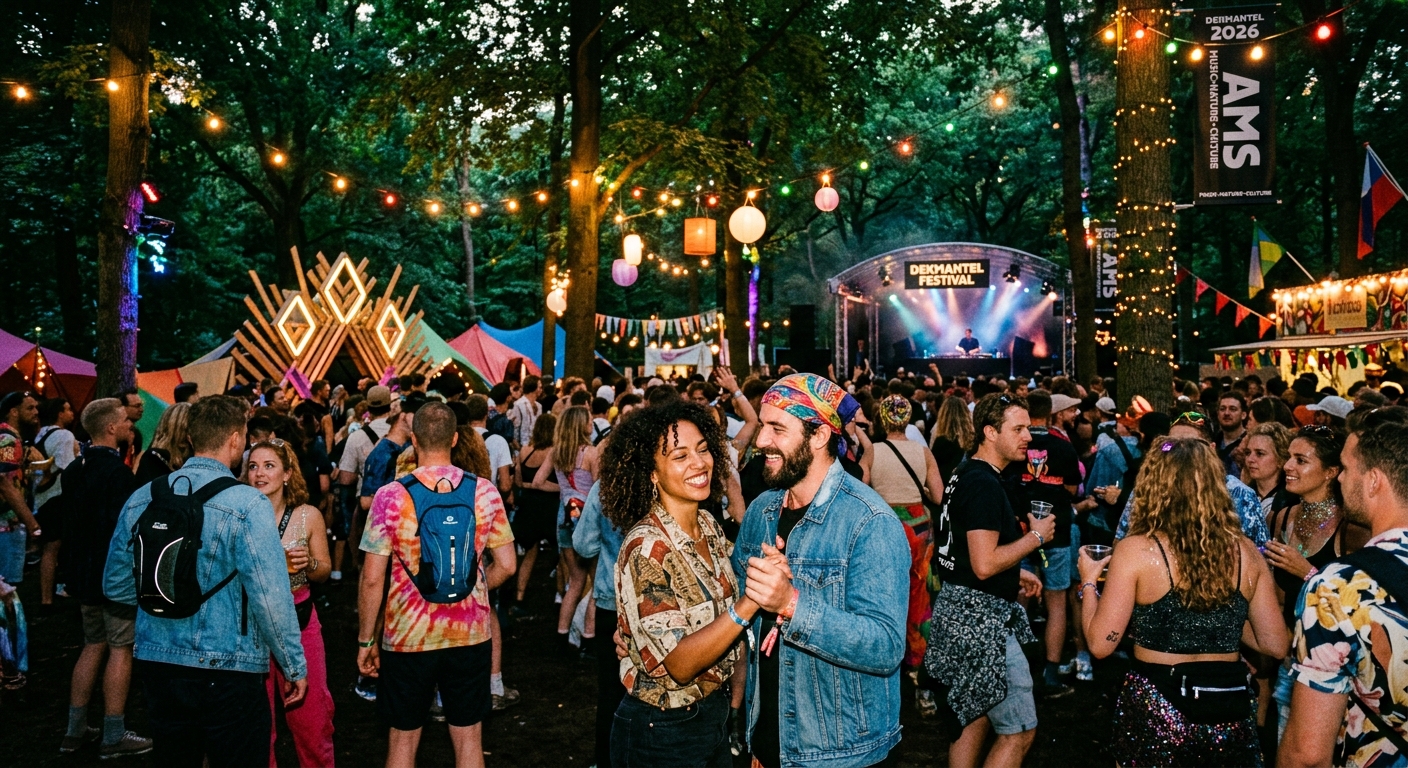
Festival highlights vary wildly because each event solves a different problem. Dekmantel’s daytime program runs ambient and experimental sets in Amsterdam’s Bos park, giving the schedule a dynamic range most festivals ignore. Dimensions stages its closing sets inside a 19th-century fortress where the reverb is part of the performance. I’ve watched a room of 300 people go completely still during a dub techno set in that fort, the stone walls doing half the mixing. Kappa FuturFestival, meanwhile, stacks its stages with melodic techno and peak-time techno acts that reward anyone willing to stay past midnight.
What Makes Them Unique?
Unique festival features come down to site, sound, and selection philosophy. Dimensions is built around acoustic architecture; the venue shapes the music rather than the other way around. Dekmantel treats record culture as seriously as live performance, running a market and panel program alongside its stages. Sónar splits into day and night editions that feel like two entirely different events. The common thread is that none of these festivals chase the biggest possible name. They chase the most interesting possible set.
Must-Visit Locations for Festival Enthusiasts
The best cities for underground festivals in Europe remain Berlin, Amsterdam, Barcelona, and Turin, but the circuit is expanding into less obvious locations for underground festivals. Zagreb, Tbilisi, and Porto now host events with programming depth that rivals the established capitals. Croatia’s Pag Island and the Adriatic coast continue to anchor the summer calendar, with Zrće Beach alone hosting multiple electronic events from June onward, tickets starting around €60.
The shift matters because it changes the economics. A weekend in Turin or Zagreb costs half of what Amsterdam demands, and the crowds skew younger and more local. That mix changes the floor energy in ways you feel immediately.
Cities Hosting Notable Festivals
Amsterdam hosts Dekmantel and ADE’s satellite events. Barcelona runs Primavera Sound (June 3-7, 2026 at Parc del Fòrum) and Sónar back to back, making it possible to build a full week of programming from two festivals. Berlin’s club infrastructure, from Tresor to RSO, feeds directly into its open-air festival calendar. Turin’s Kappa FuturFestival turns Parco Dora into one of Europe’s best temporary venues. These are cities for festivals because the local scene supports the events year-round, not just during the festival window. For anyone interested in how Berlin’s nightlife sustains itself beyond festival weekends, the infrastructure runs deep.
Hidden Gems in Europe
Hidden festival locations worth tracking include Norbergfestival in Sweden, set inside an abandoned mine, and Meadows in the Mountains in Bulgaria’s Rhodope range. Georgia’s capital Tbilisi runs Bassiani-affiliated outdoor events that pull bookings from Berlin and London. These smaller events cap attendance deliberately, sometimes under 2,000 people, which creates a density of attention that larger festivals cannot replicate. I spent a weekend at a 600-capacity event in rural Portugal last year where the sound system outperformed half the clubs I’ve played in major cities.
Festival Experiences: What to Expect
Attendees at underground electronic music festivals should expect immersive, multi-sensory environments where music programming drives every design decision. Unlike mainstream festivals that segment entertainment into discrete zones, underground events blur the boundaries between stages, installations, and social spaces. The festival vibe skews participatory; you are not an audience member watching a show, you are part of the room’s energy equation.
The culture around these events has matured. Harm reduction teams are standard. Sound quality is a point of pride, not an afterthought. Programming runs deep into morning hours because the music demands it.
Atmosphere and Vibe at Festivals
The festival vibe at underground events is defined by intentional discomfort with spectacle. There are rarely LED walls or pyrotechnics. Lighting leans minimal, functional, sometimes barely there. The focus stays on the DJ, the system, and the crowd’s collective response. At Dimensions, the vibe shifts dramatically between the beach stage at sunset and the fortress rooms after midnight. At Dekmantel, the atmosphere in the Boiler Room tent runs hot and chaotic while the forest stage stays contemplative. These contrasts are the point.
Food, Art, and Culture Integration
Festival culture at the underground level integrates art and food as structural elements rather than add-ons. Sónar’s daytime program includes technology showcases and audiovisual installations that feel native to the event’s identity. Many smaller festivals commission site-specific art that responds to the location. Food programs increasingly feature local vendors rather than generic festival catering, which matters when you are spending three or four days on site. The integration reflects a broader shift: attendees at underground events expect the non-music hours to carry the same curatorial standard as the lineup itself. Labels like Keinemusik have built entire brand identities around this all-encompassing approach to event design.
Essential Tips for Attending Festivals
Preparation for an underground festival differs from mainstream event planning because the infrastructure is often more rugged. Many underground events use remote or unconventional sites: forests, abandoned industrial complexes, coastal cliffs. Cell service is unreliable. Charging stations are scarce. The best tips for attending festivals start with accepting that you are trading convenience for atmosphere.
Experienced attendees build their packing lists around self-sufficiency. The goal is to minimize the number of times you need to leave the music to solve a logistics problem.
What to Pack for Comfort
Packing for festivals means layering. European nights drop to 10°C even in July, and underground events run until sunrise. A lightweight down jacket, high-quality earplugs (not the foam kind; invest in filtered ones rated for -20dB), a headlamp, and a refillable water bottle cover the essentials. A portable battery pack is non-negotiable if your phone is your ticket and your map. Skip the rain poncho and bring a proper waterproof shell; you will thank yourself at 5 a.m. in a Croatian field.
Navigating Festival Grounds Efficiently
Festival navigation at multi-stage events requires advance planning. Download the festival app or screenshot the site map before you arrive, because data connections inside festival grounds are unreliable at best. Identify the stages that matter most to you and build a rough route between them, accounting for walking time. At larger sites like Kappa FuturFestival’s Parco Dora, stage-to-stage walks can take 10 to 15 minutes. Arriving early to a stage beats fighting through a packed corridor mid-set. Agree on a physical meeting point with your group rather than relying on messages that may never send.
Upcoming Trends in Underground Festivals
The most significant trends in underground festivals for 2026 center on sustainability mandates, decentralized programming, and genre cross-pollination. Festivals are booking across genre lines more aggressively than before: amapiano and afro house acts now appear on techno-heavy lineups, and experimental ambient sets are earning prime-time slots. The economic pressure is real too; with the global EDM market projected to reach USD 23.8 billion by 2035 at a 7.88% CAGR, underground events are finding ways to grow without sacrificing identity.
The other clear signal is geographic redistribution. Booking agents are routing artists through secondary European cities more frequently, which feeds new festival ecosystems in places that had none five years ago.
Innovations in Festival Experiences
Festival innovations in 2026 lean toward spatial audio and site-responsive sound design rather than flashy technology. Several European festivals now deploy multi-channel speaker arrays that change the listening experience based on where you stand in the crowd. Cashless payment systems are standard, but the more interesting innovation is programming structure: festivals like Dekmantel and Sónar are building non-linear schedules where sets overlap intentionally, forcing attendees to make choices rather than passively consuming a single main stage.
Sustainability in Festival Practices
Sustainable festivals are no longer a marketing angle; they are an operational requirement. The EU’s tightening waste regulations mean that European festivals face real compliance costs for single-use plastics and generator emissions. Leading underground events have responded by shifting to reusable cup systems, solar-powered secondary stages, and partnerships with local transit authorities to reduce car traffic. Meadows in the Mountains in Bulgaria has run a leave-no-trace policy for years. The economic incentive aligns with the ethical one: festivals that reduce waste also reduce operating costs, which keeps ticket prices closer to the €60 to €150 range that underground audiences expect rather than the €300-plus that mainstream festivals now demand.