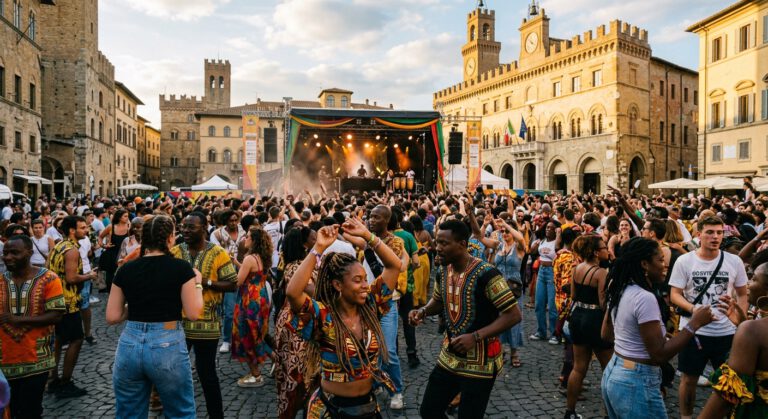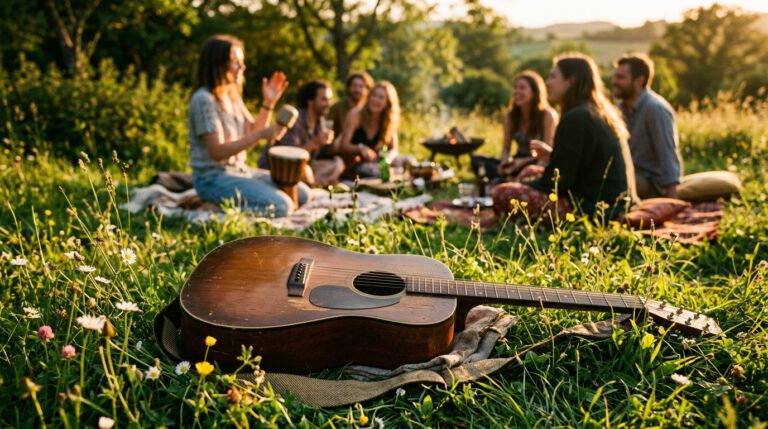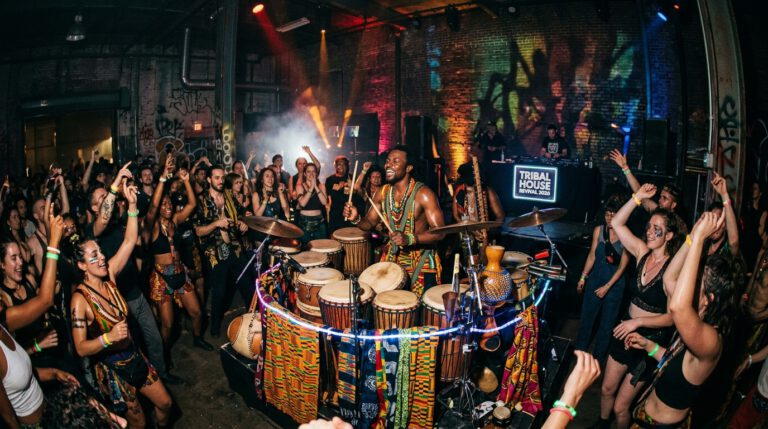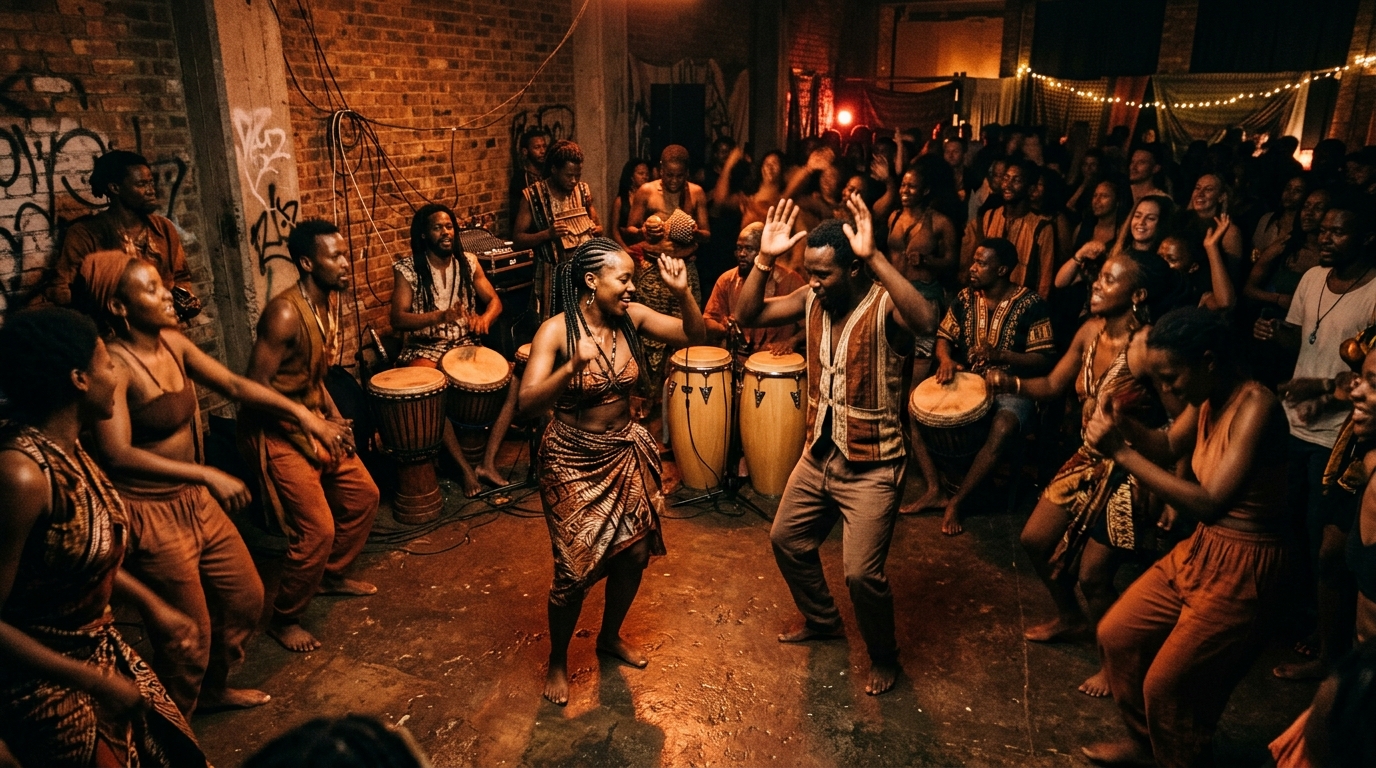
Two genres born from South African soil, often lumped together by outsiders who hear African percussion and assume they’re listening to the same thing. They’re not. The amapiano vs afro house difference runs deep: different tempos, different instruments, different rooms, different intentions. One wants you to sway with a drink in your hand at a Sunday afternoon session in Soweto. The other wants to drive you into the floor at 2 a.m. under strobe lights in a warehouse. Understanding what separates them is the starting point for hearing either one properly.
Understanding Amapiano’s Unique Characteristics
Amapiano is a South African genre that fuses house, jazz, and lounge music elements into a laid-back, bass-heavy sound typically sitting between 110 and 115 BPM. According to Wikipedia’s house music taxonomy, amapiano originated in Gauteng province, emerging from the same creative ecosystem that produced kwaito but carving out a completely distinct sonic identity built on wide log-drum bass and shimmering piano stabs.
What makes amapiano immediately recognizable is its mood. It’s unhurried. The production breathes. There’s space between the kick and the melody that most house subgenres would fill with another percussion layer or a vocal chop. Amapiano leaves it empty, and that emptiness is the point.
What Instruments Define Amapiano?
The amapiano instruments that define the genre are the log drum (a deep, rounded bass synth that anchors every track), jazzy piano melodies played in staccato patterns, and shakers that replace traditional hi-hats. Producers often layer soft pad synths underneath to create warmth. I’ve sat in sessions in Johannesburg where the entire track was built around a single log-drum pattern before anything else was added; that bass is the foundation, not the decoration.
How Amapiano Evolved Over Time?
Amapiano evolution traces back to the mid-2010s in townships across Gauteng, where bedroom producers blended bacardi house and kwaito sensibilities with jazz-inflected keys. By the early 2020s, the genre had broken internationally, with artists performing at major festivals across Europe and North America. The sound itself shifted: early amapiano was rawer, more percussive, closer to deep house in its minimalism. Recent productions lean heavier on vocal hooks and pop structures, a commercial pivot that has split opinion among purists.
Exploring the Essence of Afro House
The afro house essence sits at the intersection of traditional African rhythmic structures and modern electronic production, running at a faster clip, typically 120 to 125 BPM. It is a subgenre of house music that incorporates elements of kwaito, tribal house, deep house, and soulful house, driven by layered percussion and organic instrumentation rather than the sparse, bass-forward approach of amapiano.
Where amapiano creates intimacy, afro house builds communal energy. The tracks are designed for peak-time floors, for moments when a room full of strangers locks into the same polyrhythmic groove. The spiritual dimension is real; afro house borrows from ceremonial drumming traditions and channels that energy through four-on-the-floor kicks.
What Sounds are Typical in Afro House?
Typical afro house sounds include djembe and conga patterns layered over electronic kicks, call-and-response vocal arrangements (often in Zulu, Xhosa, or Yoruba), and melodic elements drawn from kalimba, marimba, or kora. The percussion is dense and polyrhythmic, stacking three or four rhythmic layers where amapiano might use one. Synthesizers appear, but they serve the groove rather than leading it.
How Did Afro House Develop?
Afro house development began in South Africa’s underground club scene in the early 2000s, growing from the same deep house and kwaito roots that fed much of the country’s electronic music. Producers in Johannesburg and Durban started weaving traditional African percussion into house frameworks, and the sound spread to Angola, Mozambique, and eventually European clubs. Black Coffee’s crossover success brought global visibility, but the genre had been thriving on local dancefloors for over a decade before international audiences caught on.
Key Differences Between Amapiano and Afro House
The key amapiano vs afro house differences come down to tempo, instrumentation, and energy. Amapiano operates in the 110 to 115 BPM range with sparse arrangements built around log-drum bass and piano; afro house pushes 120 to 125 BPM with dense polyrhythmic percussion and organic instrumentation. One is a slow burn, the other is a sustained fire.
I’ve played both in the same set, and the transition between them is never smooth unless you’re willing to use a long blend and let the tempo creep up gradually. They occupy different emotional registers. Trying to drop an amapiano track into a peak-time afro house set kills the momentum; going the other direction overwhelms the groove. They coexist in South African culture, but they don’t substitute for each other.
How Do Their Rhythms Differ?
Amapiano and afro house rhythms differ fundamentally in density and swing. Amapiano uses a bouncy, syncopated rhythm pattern with heavy emphasis on the off-beat, often driven by a single shaker loop and a kick that sits back in the mix. Afro house layers multiple percussion voices (congas, shakers, claps, djembe) into interlocking polyrhythmic patterns that create forward momentum. The amapiano groove invites a head-nod; the afro house groove demands full-body movement.
What Are Their Cultural Roots?
Both genres share South African cultural roots, but they draw from different wells. Amapiano’s cultural DNA connects to township jazz, kwaito, and the bacardi house parties of Gauteng’s informal settlements. Afro house pulls more directly from pan-African drumming traditions and the deep house lineage of Chicago and New York, filtered through a distinctly Southern African lens. The cultural context matters: amapiano is daytime music, braai music, taxi-rank music. Afro house belongs to the club, to the after-party, to the spiritual release of a late-night floor.
Popular Artists in Amapiano and Afro House
The most influential amapiano and afro house artists have shaped not just their respective genres but the broader trajectory of South African music’s global reach. Kabza De Small and DJ Maphorisa are the names most associated with amapiano’s commercial explosion, while Black Coffee and Culoe De Song built the international infrastructure for afro house years earlier.
What separates the two artist ecosystems is how they operate. Amapiano artists often release music at a relentless pace, dropping multiple projects per year to maintain momentum on streaming platforms. Afro house producers work on longer cycles, building albums and EP campaigns around festival seasons and international touring schedules. The business models reflect the music: amapiano is fast, immediate, high-volume; afro house is patient and strategic.
Who are the Leading Amapiano Artists?
Leading amapiano artists include Kabza De Small (widely regarded as the king of the genre), DJ Maphorisa, and Major League DJz, whose Balcony Mix series helped introduce amapiano to global audiences through YouTube and social media. Younger producers continue to push the sound forward, but these three remain the commercial and creative center of gravity. DJ Maphorisa’s touring schedule now includes headlining dates in Los Angeles, a clear signal of how far the genre has traveled from Pretoria living rooms.
Which Artists Excel in Afro House?
The top afro house artists include Black Coffee, whose Grammy win cemented the genre’s credibility in Western markets, alongside Da Capo, Enoo Napa, and Caiiro. These producers share a commitment to long-form musical storytelling; their tracks often run seven to nine minutes, building tension through incremental percussion additions rather than drops. The afro house producer is a marathon runner. The amapiano producer is a sprinter. Both are athletes, but the training is different.
How to Experience Amapiano and Afro House
The best way to experience amapiano and afro house is to hear them in their intended contexts. Amapiano sounds best at outdoor day parties, in cars, at social gatherings where conversation flows between tracks. Afro house demands a proper sound system, a dark room, and enough space to move. Streaming both genres on Spotify or Apple Music gives you the catalog, but it strips away the physical experience that makes each genre hit differently.
Both genres are increasingly accessible outside South Africa, with dedicated club nights and festival stages appearing in London, Berlin, New York, and Los Angeles. The live experience is non-negotiable if you want to understand why these genres matter beyond the playlist.
Where to Find Amapiano Music?
To find amapiano music, start with curated playlists on Spotify and Apple Music, but go deeper through YouTube channels and SoundCloud pages run by South African DJs who upload mixes weekly. The genre moves fast; by the time a track lands on a major playlist, it may already be months old in Johannesburg. Following producers directly on social media gives you access to unreleased material and private links that never make it to DSPs. That’s where the real amapiano lives.
How to Enjoy Afro House Events?
To enjoy afro house events properly, arrive early and stay late. The genre rewards patience; DJs build sets over two to three hours, and the best moments come deep into the night when the room has thinned out and only the committed dancers remain. I’ve watched a Da Capo set clear casual listeners by the 90-minute mark and then watched the remaining crowd reach a collective state that no short set could produce. Look for dedicated afro house nights rather than multi-genre lineups; the sound needs room to breathe, and a 45-minute slot between a techno act and a hip-hop DJ does it no justice.