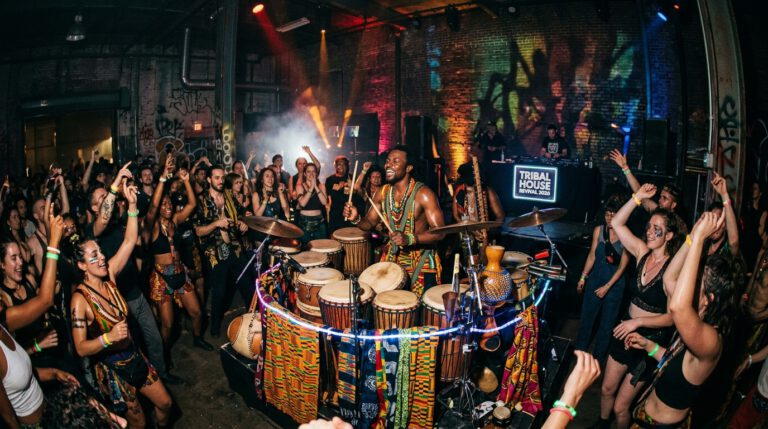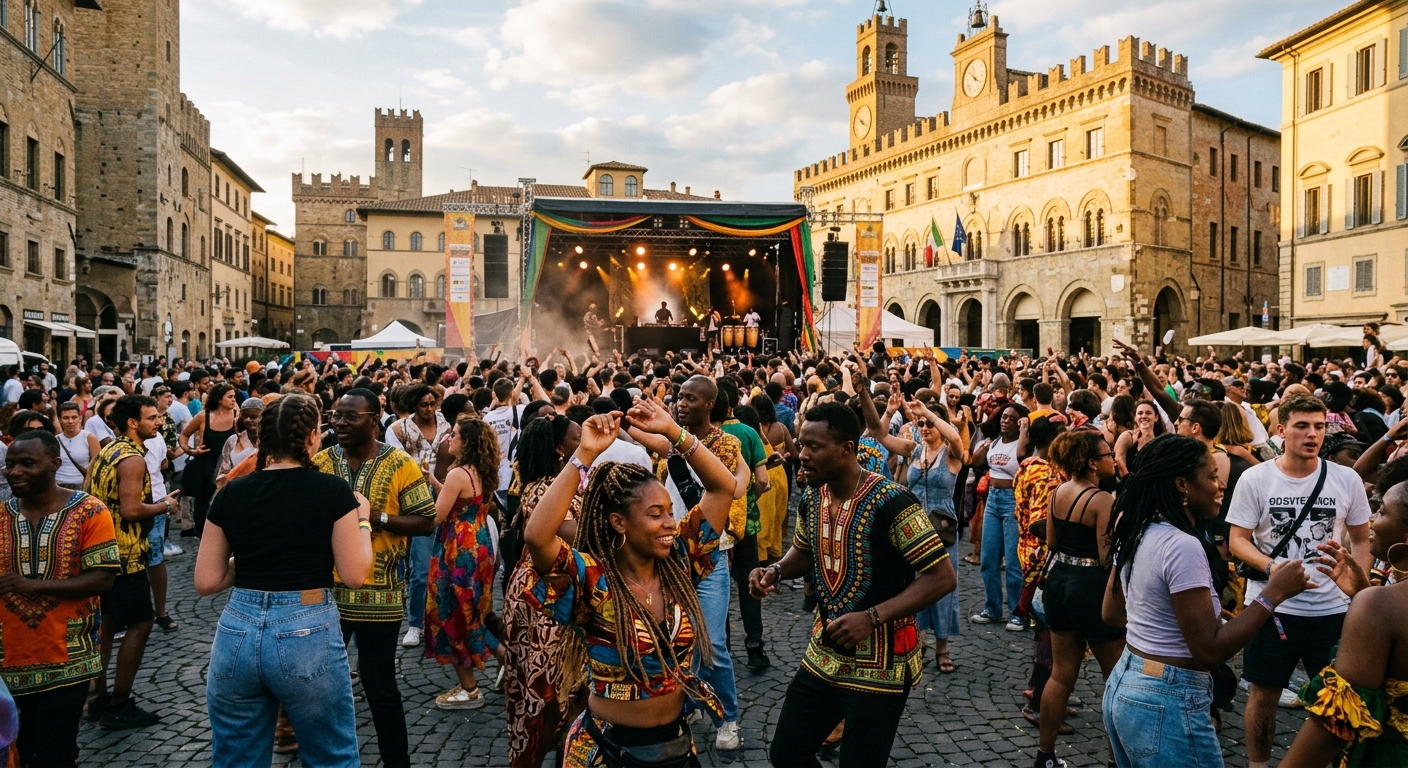
Something shifted on European dancefloors in 2025, and by early 2026 it was impossible to ignore. Afro House global expansion across Europe in 2026 is not a prediction; it is a fact playing out in real time across festival lineups, label rosters, and streaming data. The genre climbed from 10th place on Splice in 2023 to 2nd place by the end of 2025, logging an 82 percent year-on-year increase in producer searches. That kind of momentum does not belong to a trend. It belongs to a cultural shift. From London warehouse nights to open-air stages in Cyprus and Budapest, the polyrhythmic pulse of South African-rooted house music has become the defining sound of European club seasons.
The Rise of Afro House in Europe
Afro House is rising in Europe because it fills a gap that melodic techno and minimal left wide open: emotional directness paired with rhythmic complexity. According to IMS Ibiza 2026 data reported by CDA Magazine, the genre reached 1.3 million searches on Splice, trailing only trap at 1.4 million. European producers and DJs are not borrowing the sound casually; they are building entire sets and identities around it.
The cultural pull runs deeper than numbers. Keinemusik’s DJ sets at Ibiza residencies normalized Afro House in spaces that once programmed only tech house and deep house. Labels like MoBlack and Madorasindahouse had already built the infrastructure; European audiences finally caught up. I watched a room in Thessaloniki lose its mind to a shekere loop at 3 a.m. last summer, and nobody in that crowd needed a genre explainer.
What is Afro House music?
Afro House music is a subgenre born in South Africa during the late 1990s and 2000s, fusing traditional African percussion with four-on-the-floor house structures. Its BPM sits in the 120 to 126 range, but the rhythmic identity comes from layered polyrhythms: djembes, congas, shekeres, and talking drums weaving around the kick. Vocals in Zulu, Xhosa, or Angolan Portuguese add a melodic depth that separates it from its European cousins. If you want to understand how Afro House differs from Amapiano, the percussion architecture is the clearest dividing line.
Why is it popular in Europe?
Afro House popularity in Europe comes down to versatility and emotional resonance. The genre works at a sunset festival stage and inside a dark basement club at peak hour. European audiences raised on techno and progressive house respond to the rhythmic density because it demands physical engagement without sacrificing warmth. The organic textures, kalimba samples, and kora melodies offer something synthetic-heavy genres simply cannot: a feeling of being connected to something older than the room you are standing in.
Key Cities Embracing Afro House Culture
London, Limassol, and Budapest are the three European cities where Afro House culture has rooted most visibly in 2026. Each city brings a different audience and infrastructure, but the common thread is promoters who treat the genre as a headliner, not a warm-up slot. These are not token bookings; they are full-night programming commitments.
The spread follows diaspora networks and Mediterranean festival circuits. Cities with strong African and Afro-Caribbean communities adopted the sound first, but the second wave is hitting places with no obvious demographic connection, proving the music carries itself on pure sonic merit.
How is London shaping Afro House?
London Afro House is shaped by the city’s deep West African and Southern African diaspora communities, which created a built-in audience long before mainstream promoters noticed. Nights in Brixton, Peckham, and Hackney Wick have run Afro House programming for years. The city’s role is curatorial: London connects South African producers to European booking circuits, functioning as a gateway. I’ve seen lineups at London warehouse events that would headline a Johannesburg festival, playing to crowds where half the room flew in from Paris or Amsterdam.
What role does Cyprus play?
Cyprus Afro House thrives because the island sits at the crossroads of Mediterranean, Middle Eastern, and European club cultures. Limassol’s beach club circuit and Ayia Napa’s late-season programming have increasingly featured Afro House headliners, blending the genre’s warmth with the island’s open-air setting. The result is a hybrid atmosphere that draws Greek, Lebanese, and British tourists into the same room. Cyprus is not producing the music yet, but it is becoming a critical performance market, similar to what Ibiza did for tech house a decade ago.
Why is Hungary a hotspot?
Hungary Afro House owes much of its momentum to Budapest’s festival infrastructure, particularly events connected to the Sziget ecosystem and the city’s ruin bar culture. Hungarian promoters have a history of programming eclectic electronic lineups, and Afro House fits naturally alongside the tribal house revival already gaining traction in Central Europe. The city’s low cost of living also attracts touring DJs who can afford longer residencies, building deeper local followings than a single fly-in date allows.
Influential Artists Driving the Movement
The Afro House artists reshaping European dancefloors in 2026 are not newcomers; most have spent years building catalogs on African and South American circuits before European demand caught up. Black Coffee remains the genre’s most visible ambassador, having recently performed a 360-degree orchestral show for 14,000 people at the Arènes de Nîmes, a 2,000-year-old Roman amphitheater in France. That is not a club booking. That is a cultural statement.
Behind the headliners, a generation of producers is feeding the pipeline. South African artist CIZA, recently signed to Deep Root Records (the label founded by Francis Mercier and Ajamu Kambon), already commands over 2.49 million monthly listeners and more than 1.13 million social media followers as of May 2026. His genre-blending approach, spanning Afro House, 3-step, and broader electronic music, represents the new archetype: African identity, global audience.
Who are the top Afro House DJs?
The top Afro House DJs in 2026 include Black Coffee, Culoe De Song, Enoo Napa, and Da Capo on the established tier, with CIZA, Shimza, and several Deep Root Records affiliates pushing the next wave. Francis Mercier himself bridges the production and A&R sides, curating rosters that feed European festival demand. The Afrotech subgenre has also produced its own DJ stars who lean harder into minimal and techno-adjacent territory, expanding the genre’s reach into rooms that would never book a traditional house act.
How are they impacting Europe?
The impact of Afro House artists on Europe is structural, not just aesthetic. They are changing how European promoters think about programming. A Black Coffee headline slot at a Roman arena or a CIZA set at a Lisbon festival normalizes African electronic music at the top of the billing, not buried in a side tent. European producers are responding by incorporating African percussion samples and vocal styles into their own work, creating cross-pollination that strengthens the genre’s commercial footprint. The influence runs both directions now, and that reciprocity is what separates a real movement from a passing wave.
The Future of Afro House in Europe
The future of Afro House in Europe points toward deeper genre hybridization and institutional acceptance. By late 2026, expect major European festivals to program dedicated Afro House stages rather than scattering bookings across existing lineups. The economics support it: Afro House draws younger, more diverse crowds, and sponsors have noticed.
The sound itself is splintering in productive ways. Afro-tech pushes toward darker, more minimal territory. Organic Afro House leans into live instrumentation. And a new Afro-futurist strain is emerging that folds synthesizer experimentation into traditional rhythmic frameworks, pulling the genre closer to what Latin Afro House producers in Miami have been building independently.
What trends are emerging in 2026?
The most significant 2026 Afro House trends are the rise of Afro-tech as a standalone club genre and the integration of live orchestral elements into headline performances. Black Coffee’s Nîmes show is the template: large-scale, cinematic, and rooted in African musical identity. On the production side, producers are moving beyond sample packs toward recording original African percussion and vocal sessions, which gives tracks a specificity that sample-based production cannot match. David Guetta has publicly acknowledged Afro House’s dominance, signaling that the genre’s influence has reached even the commercial mainstream.
How will Afro House evolve?
The evolution of Afro House will follow two parallel tracks. One leads deeper underground, where Afro-tech and minimal-influenced producers strip the genre to its rhythmic skeleton, building hypnotic sets at 122 BPM that could hold a Berghain crowd. The other leads toward arena-scale spectacle, with live orchestras, visual design, and narrative arc replacing the traditional DJ-and-decks format. Both paths are valid, but the underground route will produce the more interesting music. The arena path will produce the bigger cultural moments. Between those two poles, Afro House in Europe has room to grow for years without exhausting itself.