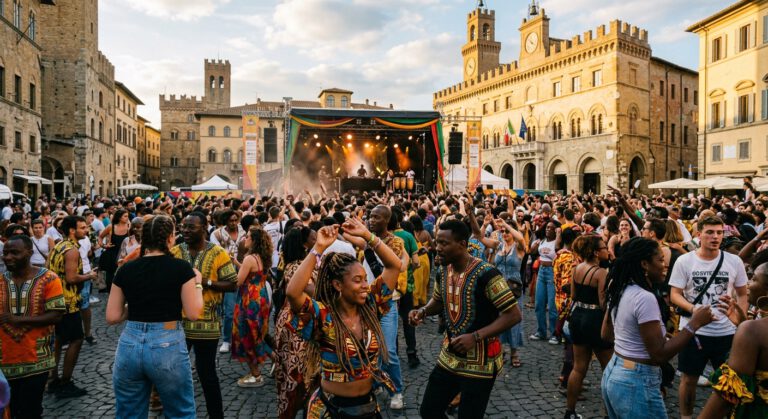
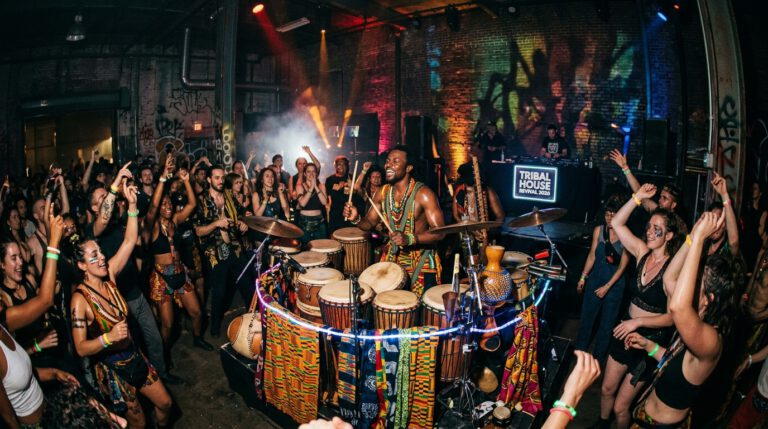
Something shifted in 2026. Not a gradual drift, but a clear line drawn in the sand of the Balearic coast. Major League DJz Ibiza 2026 amapiano secured a 20-week Friday residency at Chinois Ibiza, and with it, amapiano stopped being a curiosity on European dancefloors and became a fixture. This is the moment African club music fully entered the European festival circuit, not as a guest slot or a novelty booking, but as a headlining force with its own night, its own crowd, its own gravity.
The Rise of Amapiano in Global Music
The rise of amapiano in global music stems from a collision of South African township creativity, social media virality, and a deep house lineage that European ears already understood instinctively. The genre’s characteristic log drums, wide bass pads, and rhythmic patterns sitting around 110 to 115 BPM gave it a tempo sweet spot that slots between deep house and afro house without competing with either. As IMS Ibiza 2026 signaled, the electronic music industry is evolving across culture and identity, and amapiano sits at the center of that shift.
What made the genre’s popularity explode wasn’t just the sound. It was the culture around it: the piano people events in London, the Scorpion Kings sets that packed out venues across three continents, the TikTok clips that turned township dance moves into global vocabulary. Producers like Kabza De Small, DJ Maphorisa, and DBN Gogo built a pipeline from Soweto to the world.
What is Amapiano’s Cultural Impact?
Amapiano’s cultural impact extends far beyond music. It reintroduced South African youth culture to a global audience on its own terms, not filtered through Western A&R decisions. The genre carries historical sonic elements like the whistle, which traces back to apartheid-era township communication, now recontextualized as a dancefloor signature. That kind of layered meaning is rare in electronic music. I’ve watched rooms full of people who couldn’t locate Pretoria on a map move to those whistles like the sound was always theirs.
How Amapiano Influences Global Genres?
Amapiano’s global influence shows up in production choices across genres that would never name it directly. UK garage producers have started borrowing its bass weight. Latin producers in Miami are folding its rhythmic structures into afro house hybrids. Even melodic techno acts have started pulling percussive textures from the amapiano palette. The influence isn’t always credited, but it’s audible if you know what to listen for.
Major League DJz: Pioneers of Amapiano
Major League DJz are twin brothers Bandile and Banele Mbere from South Africa, and their role in amapiano’s global push has been singular. They didn’t invent the genre, but they built the bridge. Their “Balcony Mix” series on YouTube became the format that introduced amapiano to millions outside the continent, turning casual livestreams into cultural events with millions of views per session.
Their significance lies in understanding that amapiano needed more than good tracks to travel. It needed a visual identity, a party format, a vibe that could translate across languages. The Balcony Mix did that. It became the genre’s Boiler Room before Boiler Room fully caught on.
Who are Major League DJz?
The Major League DJz identity is rooted in versatility. Bandile and Banele started by blending hip-hop, house, and kwaito before amapiano crystallized as a genre. Their early career in Johannesburg’s club scene gave them a reading of crowds that most electronic acts never develop. They don’t just play tracks; they conduct energy. That DJ duo instinct, two people reading a room simultaneously, gives their sets a conversational quality that solo acts struggle to replicate.
What Makes Their Sound Unique?
The Major League DJz sound sits at the intersection of amapiano’s rhythmic core and a broader afro house sensibility. Where purist amapiano producers keep things sparse, the twins layer in vocal chops, deeper sub-bass, and percussive fills that make their sets work in rooms built for house music. I’ve heard them shift a set from straight amapiano into something closer to afrotech territory without losing a single body on the floor. That range is their weapon.
Ibiza 2026: Amapiano Takes Center Stage
Ibiza in 2026 gave amapiano its most significant European platform yet. Major League DJz launched a 20-week Friday residency at Chinois Ibiza, running from May 29 through October 9, alongside the Echoes of Tomorrow crew. This isn’t a one-off festival slot or a guest appearance on someone else’s night. It’s a season-long commitment from a venue betting that amapiano can hold a weekly crowd on the island.
Chinois already programs nights with artists like Todd Terry and La Troya, so this isn’t a niche room experimenting with a trend. It’s a venue with serious programming credibility saying: this genre belongs here, every week, all summer.
What Can We Expect from Ibiza 2026?
Ibiza 2026 expectations point toward a broader diversification of the island’s sonic identity. The IMS conference this year focused on shifts in culture and identity within electronic music, and amapiano’s presence is the most visible proof. Expect the ripple effect to hit other venues. When one room proves a genre can hold a weekly crowd through peak season, competitors follow. The economics are straightforward: a packed Friday for 20 weeks changes booking strategies island-wide.
How Will Amapiano Shape Ibiza’s Sound?
The amapiano Ibiza sound will likely evolve into something distinct from what you hear in Johannesburg or London. That’s how the island works. It absorbs genres and creates local mutations. The 112 BPM grooves will sit alongside Ibiza’s existing deep house and organic house programming, and DJs who play multiple styles will start weaving amapiano tracks into sets that weren’t built for them. That cross-pollination is where new subgenres are born.
Impact on African Electronic Music Scene
Amapiano’s African impact is rewriting the economics of who gets booked, where, and for how much. A 20-week Ibiza residency for a South African act signals to promoters across Europe that African electronic artists can anchor a night, not just guest on one. According to CNN’s reporting on Africa’s music boom, the continent’s global influence is growing, though many artists still struggle to access the infrastructure that turns streams into touring careers.
The structural challenge remains distribution and management. South African producers can make world-class music in a bedroom in Pretoria, but getting that music onto the right playlists, into the right booking agents’ inboxes, and onto the right festival stages still requires networks that favor artists already inside the European and American systems.
How Does This Influence Other Artists?
Amapiano’s influence on artists across the African continent is most visible in how producers from Nigeria, Ghana, and Kenya are now incorporating its rhythmic DNA into their own work. The genre’s success gives other African electronic producers a proof of concept: you don’t need to make music that sounds European to get booked in Europe. That psychological shift matters more than any single booking. Artists working in adjacent genres like afro house are finding that audiences primed by amapiano are more receptive to African sounds broadly.
What Are the Future Prospects for Amapiano?
Amapiano’s future prospects hinge on whether the genre can build sustainable infrastructure or whether it remains dependent on a handful of breakthrough acts. The Chinois residency is a test case. If it sells consistently through October, expect 2027 to bring multiple amapiano residencies across the island. If it falters, the genre risks being filed under “trend” rather than “movement.” The smart money says it holds. The sound is too infectious, the community too committed, and the cultural moment too real to collapse after one summer.
The Cultural Exchange of Amapiano
Amapiano promotes cultural exchange by functioning as a two-way channel. South African sounds move into European rooms, and European production techniques, marketing strategies, and touring infrastructure flow back to the continent. This isn’t a one-directional export. It’s a conversation, and the conversation is getting louder every season. Events like Piano People in London and the Gondwana Festival’s London connection show that the exchange is already institutionalizing.
The genre carries its heritage audibly. The log drums reference earlier South African electronic traditions. The vocal cadences draw from kwaito and township jazz. When these sounds hit a Chinois dancefloor on a Friday night in Ibiza, they carry Johannesburg with them, whether the crowd knows it or not.
How Does Amapiano Promote African Culture?
Amapiano showcases African culture through its sonic architecture, not through explanation. The genre doesn’t need liner notes or cultural context panels to communicate. Its rhythms carry the DNA of South African street culture, its vocal styles carry township storytelling traditions, and its dancefloor energy carries the communal spirit of gatherings that predate any club. When a room full of strangers in Ibiza moves to those patterns, African culture isn’t being presented. It’s being felt.
What Are the Benefits of Cultural Exchange?
The benefits of cultural exchange in music are concrete, not abstract. New sounds create new markets. New markets create new revenue streams. New revenue streams fund the next generation of producers. When amapiano opens doors in Ibiza, it doesn’t just benefit Major League DJz. It creates booking precedent for every African electronic act that follows. The exchange also pushes European producers out of creative comfort zones, forcing innovation in scenes that had started to feel circular. That pressure is a gift, even when it’s uncomfortable.