There are labels that release music, and then there are labels that build something harder to name. A feeling, maybe. A recognisable pulse that runs through every release, every event, every sleeve design. The Keinemusik collective underground label sits firmly in the second category, and heading into 2026, its influence on how independent electronic music operates has only grown more apparent. What began as a loose creative arrangement between Berlin-based artists has quietly become one of the most studied models in underground music, not because it chased mainstream validation, but precisely because it never did. The question people keep asking is a fair one: what actually makes this collective work?
Introduction to Keinemusik Collective
The Keinemusik collective operates at an interesting intersection, somewhere between underground label, artist agency, and creative commune. It doesn’t fit cleanly into the standard industry mould, which is part of why it resonates so deeply with people who’ve grown tired of how most electronic music gets packaged and sold. Rooted in the Berlin music scene, the collective has built a reputation that extends well beyond the city, touching house music and techno music communities across Europe and beyond.
What is Keinemusik Collective?
At its core, Keinemusik Collective is a Berlin-based music collective and label founded by a group of artists who wanted to release music on their own terms. The essence of what they do isn’t really about catalogue size or streaming numbers. It’s about maintaining a consistent aesthetic identity across every touchpoint, from the music itself to the visual language, the events, the merchandise. There’s a coherence to it that feels intentional without feeling corporate. That’s a difficult thing to sustain, and most labels don’t manage it.
How did Keinemusik start?
The Keinemusik origins trace back to Berlin in the early 2010s, when &ME, Rampa, and Adam Port began releasing music together under a shared banner rather than scattering their output across different imprints. The founding logic was straightforward: keep creative control, stay close to the music, avoid the compromises that come with outside ownership. That stubbornness is exactly why it still sounds like something worth caring about. What started as a practical arrangement between friends eventually grew into a fully realised label with a global following, without ever abandoning the principles it started with.
Key Success Factors of Keinemusik
Ask anyone who follows the underground electronic music space what the Keinemusik success factors are, and you’ll get different answers depending on who you ask. Some point to the music itself. Others point to the events. But the more you look at how the collective actually operates, the clearer it becomes that the real engine behind their longevity is something structural: the way they’ve built community, and the way collaboration functions not as a marketing tactic but as a genuine working method. These aren’t strategies bolted onto a label. They’re the way the label breathes.
How does Keinemusik build community?
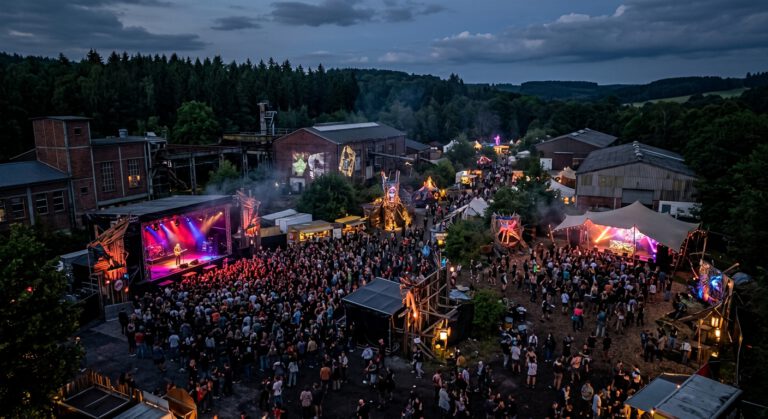
The community building approach at Keinemusik isn’t built on follower counts or algorithmic reach. It’s built on consistency and trust. Club nights that feel curated rather than commercial. Releases that reward close listening. A visual identity that people genuinely want to wear and display. The community that’s formed around the collective isn’t passive, it’s participatory. People feel some ownership over it, because the collective has always projected a sense of shared values rather than brand messaging. What community-building strategies does Keinemusik use? Primarily this: they treat their audience as people who understand the music, not consumers who need to be converted.
What role does collaboration play?
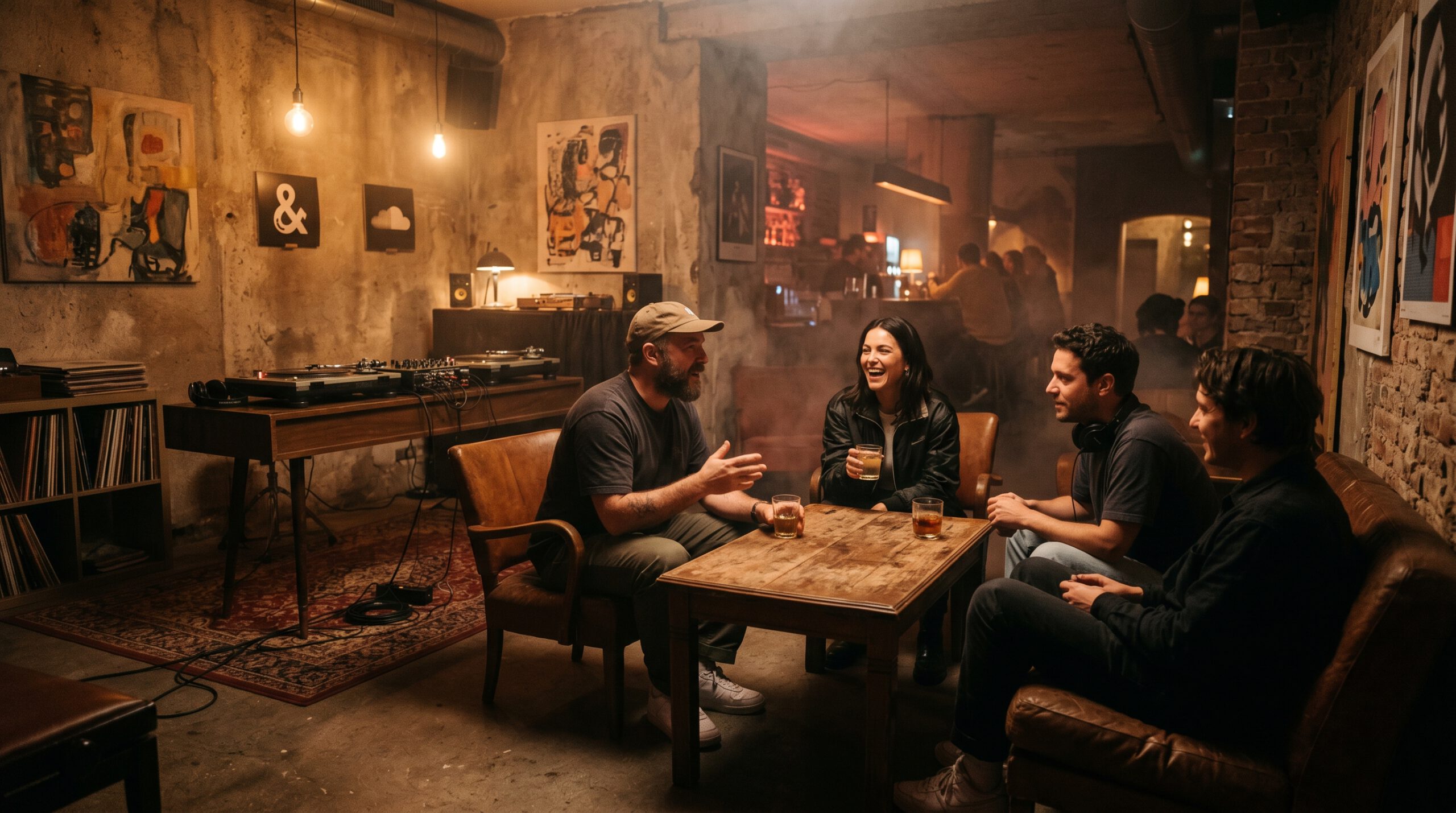
For Keinemusik, collaboration in music isn’t a feature of the label, it’s the structural foundation. The fact that &ME, Rampa, and Adam Port all operate as individual artists whilst sharing a label means the creative output is always in dialogue with itself. Tracks bleed into each other stylistically. Events feel coherent because the people behind them share a genuine aesthetic language. Why is collaboration important for Keinemusik? Because it removes the isolation that kills a lot of independent labels. There’s a shared ownership of the creative direction, which means no single person carries the weight of defining what the label is. That distributed authorship keeps things alive.
Marketing Strategies of Keinemusik
The Keinemusik marketing strategies are worth studying not because they’re aggressive, but because they’re almost invisible. There’s no sense of a campaign being run at you. And yet the collective maintains a remarkably consistent online presence, a strong visual identity, and a release schedule that keeps the audience engaged without ever feeling oversaturated. The approach is less about marketing in the traditional sense and more about curation, making every touchpoint feel considered rather than pushed.
What marketing channels does Keinemusik use?
The marketing channels Keinemusik leans on most heavily are the ones that reward authenticity: SoundCloud mixes, Resident Advisor features, Instagram for visual storytelling, and curated playlists on streaming platforms that place their artists in context rather than isolation. Event marketing plays a significant role too, each live appearance reinforcing the label’s aesthetic rather than simply promoting a release. Which marketing channels are effective for Keinemusik? The ones that feel like extensions of the music rather than advertisements for it. There’s a difference, and audiences feel it immediately.
How important is social media?
The social media importance for Keinemusik is real, but it’s calibrated. They use platforms like Instagram not as broadcast tools but as mood boards, sharing artwork, behind-the-scenes fragments, and visual references that reinforce the label’s aesthetic without over-explaining it. The impact of social media on Keinemusik’s success is perhaps most visible in how it’s allowed the collective to build a global audience without losing the intimacy of an underground operation. That’s a genuinely difficult balance. Most labels tip one way or the other. For a deeper look at how electronic labels approach independent label strategies in the digital age, the dynamics Keinemusik navigates are increasingly common across the scene.
Lessons for Other Underground Labels
The lessons from Keinemusik aren’t really secrets. They’re just things that require patience and conviction to actually execute. The collective didn’t arrive at its current position through a clever pivot or a viral moment. It got there by being consistent over a long period of time, by resisting the temptation to scale too fast, and by keeping the creative work at the centre of every decision. For independent labels trying to find their footing, that’s both encouraging and slightly uncomfortable, because it means there’s no shortcut.
What can labels learn from Keinemusik?
The most transferable thing about learning from Keinemusik is the commitment to identity before reach. The collective knew what it sounded like, what it looked like, and what kind of events it wanted to throw before it worried about how many people were paying attention. What strategies can other labels adopt from Keinemusik? Start with coherence. Build the aesthetic language first. The audience follows when the identity is genuine, not when the promotion is loud. Strong branding isn’t a cosmetic layer applied to the music, it’s the framework that makes the music legible to the people who need to find it. If you’re thinking about how underground labels position themselves for long-term relevance, the way electronic music branding shapes listener loyalty is a useful frame for understanding what Keinemusik has built.
How to foster a loyal fanbase?
Building fanbase loyalty in underground electronic music comes down to one thing more than anything else: never treating your audience like they need to be managed. Keinemusik’s fanbase is loyal because the collective has consistently respected their intelligence, releasing music that doesn’t pander, throwing events that prioritise atmosphere over spectacle, and communicating with a tone that assumes the listener already understands the culture. What strategies help in building a loyal fanbase for labels? Deliver something real, repeatedly, over time. Don’t chase trends. Don’t over-explain the music. Let the work carry the weight, and trust that the right people will find it. There’s a particular kind of floor this music was made for, and the people standing on it know exactly what they’re there for.