Latvia’s underground electronic music scene in 2026 is one of Europe’s best-kept secrets, built on cheap rent, repurposed Soviet architecture, and a generation of producers who treat Baltic cold as a sonic texture. Almost no English-language dance press covers it with any regularity. As The Quietus’ Jakub Knera noted in his June 2026 dispatch, the Latvian creative scene is “built around curiosity, experimentation, and collaboration rather than stylistic purity.” That ethos runs through every warehouse party in Torņakalns and every modular set at Kaņepes Kultūras centrs. This is a scene report from inside the rooms where it’s happening.
Why Latvia’s Underground Electronic Scene Is Growing in 2026
Latvia underground electronic music 2026 growth is driven by a convergence of affordable post-industrial space, EU cultural funding reaching independent Riga promoters, and a steady trickle of artists priced out of Berlin relocating eastward. The Riga techno scene has roughly doubled its active monthly events compared to 2022, with promoters running regular nights in spaces that cost a fraction of comparable Berlin or Amsterdam rent.
The growth isn’t hype-driven. It’s structural. A young post-Soviet generation, many born after independence, treats reclaimed factories and Soviet-era buildings not as novelty backdrops but as inherited infrastructure. Figures like Kaspars Groševs (Figūras), who operates simultaneously as musician, visual artist, curator, and gallery director, embody the cross-disciplinary restlessness that defines the scene’s character.
What Drives Latvia Underground Electronic Music Growth
The primary Latvia electronic music growth drivers are economic: warehouse space in Riga’s industrial districts runs at roughly €3–5 per square meter, making it viable for collectives to hold long-term leases rather than one-off pop-ups. EU Creative Europe grants have quietly funded several Riga-based electronic collectives since 2023. The result is infrastructure, not just parties.
How Soviet-Era Spaces Became Riga Techno Venues
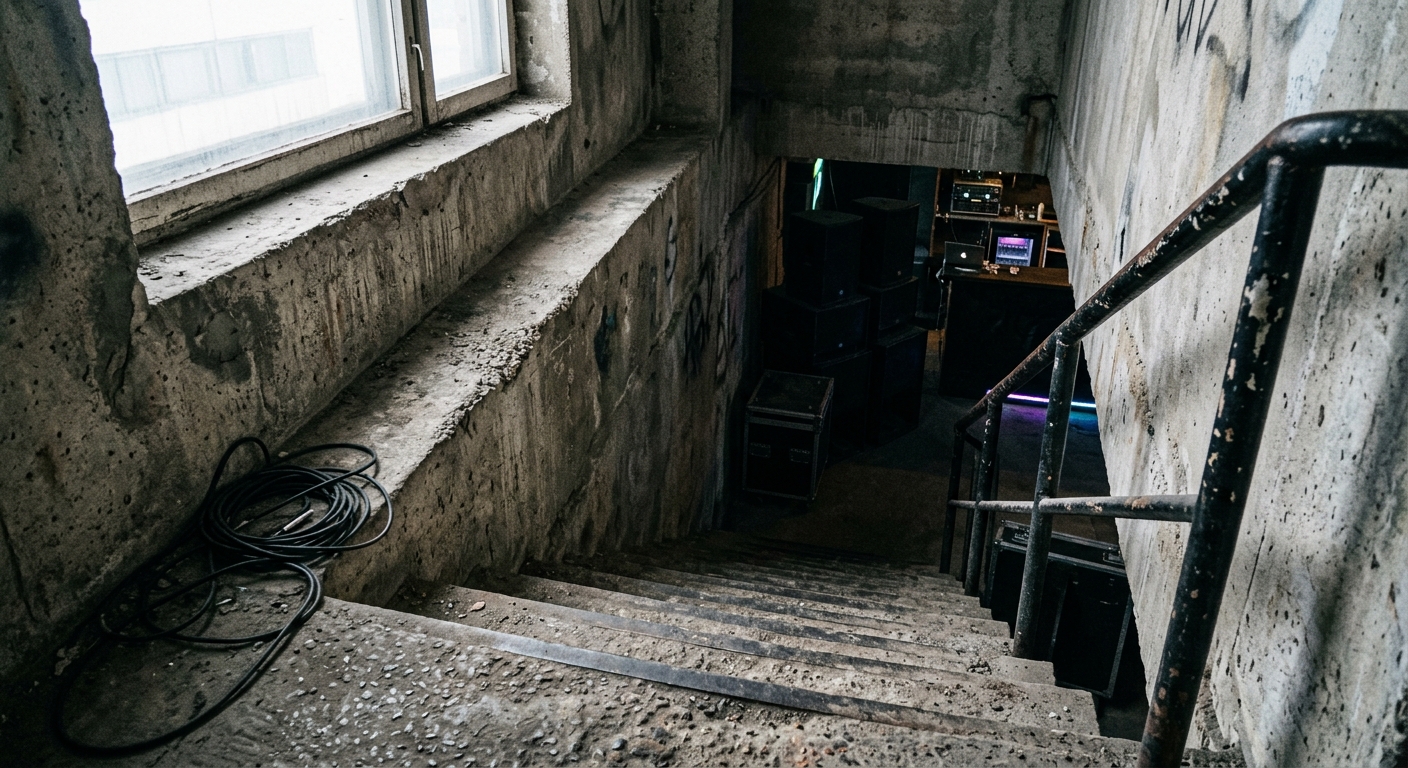
Soviet industrial venues across Riga, particularly in the Spīķeri quarter and along the Daugava riverbank, sat derelict through the 1990s and 2000s. Promoters began converting them into techno venues around 2015, drawn by raw concrete acoustics and capacities that suited 200-to-400-person events. The buildings weren’t renovated to look industrial; they simply were. That authenticity is part of what makes the sound feel different here.
Which Cities Beyond Riga Host Underground Electronic Events
Beyond Riga, Latvia electronic music cities include Liepāja, where the port’s industrial heritage has cultivated a distinct micro-scene centered on darker, harder techno. Jūrmala hosts seasonal open-air events during the Baltic summer months, and Valmiera has seen sporadic but growing activity. Liepāja’s scene is the most self-sustaining of the three, with its own local promoters operating independently of the Riga circuit.
Riga’s Key Venues Shaping Baltic Club Culture
Riga’s underground electronic venues operate across a spectrum from established cultural centers to rotating, unlicensed warehouse spaces accessible only through word-of-mouth Telegram channels. The Spīķeri quarter and basement clubs near the Central Market anchor the permanent circuit, while Torņakalns hosts the more transient, members-first events that keep the scene feeling genuinely underground.
What distinguishes these spaces from their Western European counterparts is a consistent prioritization of sound system quality over capacity. I’ve been in Riga rooms holding maybe 150 people where the rig would embarrass mid-tier Berlin clubs twice the size. That intimacy shapes everything: the bookings, the crowd behavior, the music that gets played.
Riga’s Most Important Underground Electronic Venues
The most important Riga underground venues include Kaņepes Kultūras centrs, which programs everything from techno to noise, and the repurposed factory spaces in Spīķeri that host rotating collectives. Newer unlicensed venues in Torņakalns operate on an invite or word-of-mouth basis, keeping capacity deliberately low. These spaces function more like Berlin’s early 2000s scene than Berlin’s current one, which is struggling with its own post-tourist identity crisis.
Which Riga Clubs Focus on Experimental and Ambient Formats
Several Riga experimental ambient electronic clubs and art centers regularly program modular synthesis, drone, and electroacoustic performances alongside conventional club nights. Independent black-box spaces and institutional galleries like Kim? Contemporary Art Centre, where Figūras recently held a solo exhibition incorporating live jam sessions, blur the line between gallery and venue. This experimental tier gives Riga a depth that purely club-focused cities lack.
How Riga Venue Capacities Compare to Berlin Counterparts
Most active Riga underground venues hold between 100 and 400 people. Compare that to Berghain’s 1,500 or Tresor’s 700. The smaller Riga vs Berlin club capacity gap means tighter rooms, closer proximity to the DJ, and a fundamentally different energy. Promoters here treat 250 as a full house, and the music selection reflects that: fewer peak-time bangers, more slow-building hypnotic sets in the 125–132 BPM range.
Latvian Producers and DJs Defining the Sound in 2026
Latvian electronic music artists in 2026 are building a recognizable sonic identity rooted in Baltic geography: field recordings from pine forests and coastline, minor-key melodic structures drawn from Latvian choral traditions, and a textural coldness that separates their output from Central European techno. Several producers have released on Lithuanian and Estonian labels, reinforcing a pan-Baltic creative identity over narrow national branding.
The scene’s most compelling figures resist easy categorization. Elizabete Balčus combines electronic beats with operatic singing, flute, and theatrical performance. Figūras moves between DJ sets, painting exhibitions, and curatorial projects. This interdisciplinary instinct, common across the Latvian scene, produces music that sounds like it comes from somewhere specific rather than from a DAW template.
Leading Latvian Underground Electronic Artists to Know
Among the leading Latvian underground electronic artists, Figūras stands out for his restless movement between disciplines and his role as a connector within the Riga scene. Elizabete Balčus, who has performed at Ljubljana’s MENT festival and toured Poland, represents the avant-pop edge. A growing wave of producers operating under aliases tied to Latvian mythology are gaining traction on Bandcamp, where the economics of streaming make less sense for niche underground releases.
Sonic Influences Shaping Latvian Techno and House Producers
Latvian techno sonic influences include Baltic folk tonality, field recordings from the Latvian coastline and Gauja National Park, and the lo-fi production aesthetics of early Eastern European electronic music. The result sits somewhere between the dub techno of Chain Reaction and the organic textures of Scandinavian ambient, but with a darker, more mineral quality. Producers here reach for reverb tails that sound like cathedral stone, not warm vinyl crackle.
Are Latvian DJs Booking Internationally in 2026
Latvian DJs are increasingly booking internationally in 2026, though the circuit remains concentrated within the Baltic and Northern European corridor. Tallinn, Vilnius, Warsaw, and Helsinki are the primary external markets. A handful of Latvian artists have appeared on Resident Advisor event listings outside the Baltics, and cross-border label relationships with Lithuanian and Estonian imprints are opening doors to European festival bookings that would have been inaccessible five years ago.
How Baltic Cross-Border Networks Amplify Latvia’s Reach
Latvia, Estonia, and Lithuania share active touring circuits, collaborative label projects, and festival lineups that function as a unified Baltic electronic music network. DJs regularly move between Tallinn, Riga, and Vilnius on weekend bookings, and promoters in all three capitals cross-list events. This infrastructure reduces the isolation that previously limited each national scene to its own small domestic audience.
The pan-Baltic identity is now something promoters actively market to Western European audiences. A 2026 guide to Baltic festivals lists 39 music festivals across the three states, with a significant share featuring dedicated electronic programming. That density, for a combined population under seven million, signals genuine cultural momentum rather than scattered one-offs.
How Latvia, Lithuania, and Estonia Share Electronic Music Infrastructure
Baltic electronic music infrastructure sharing operates through informal but consistent channels: shared booking agents, cross-border label rosters, and festival lineups that treat the three capitals as a single routing circuit. A Riga-based DJ can play Vilnius on Friday, Tallinn on Saturday, and be home by Sunday. The geographic compactness (Riga to Tallinn is roughly four hours by road) makes this economically viable in a way that larger countries can’t replicate.
Baltic Festivals That Connect Underground Electronic Communities
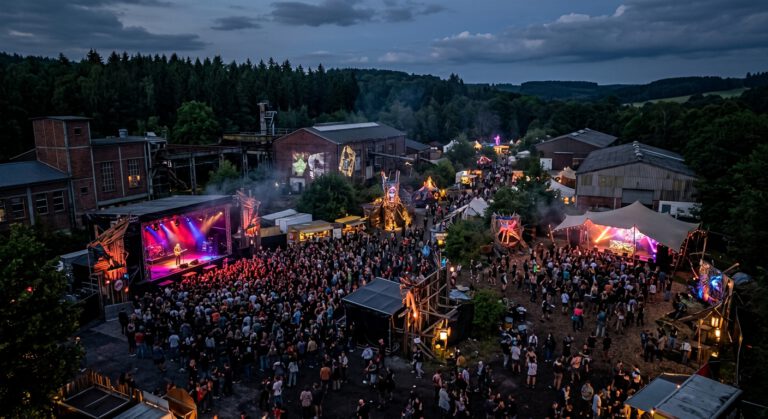
Baltic underground electronic festivals include forest events near the Estonian border, coastal open-airs along the Latvian shoreline, and warehouse weekenders in Vilnius. These gatherings increasingly attract attendees from Finland, Poland, and Germany seeking alternatives to oversaturated Western European festival circuits. Ticket prices at Baltic events run 40–60% lower than comparable Western festivals, which creates a genuine cost incentive for adventurous ravers.
Do Baltic Labels Distribute Latvian Electronic Music Abroad
Baltic label distribution of Latvian electronic music is growing but still modest. Lithuanian and Estonian imprints handle much of the regional distribution, while Bandcamp remains the primary direct-to-listener channel for international reach. A few Latvian releases have appeared on pan-European distribution networks, but the scene’s international footprint is still primarily built through DJ bookings and festival appearances rather than label-driven sales.
Barriers, Politics, and the Fight for Latvian Club Culture
Latvia’s club culture policy challenges center on the absence of a formal nighttime economy framework. Unlike Berlin, which adopted a dedicated club culture commission, or Amsterdam with its nachtburgemeester (night mayor), Riga has no institutional advocate for nightlife. This leaves underground venues legally exposed to noise ordinances, inconsistent licensing enforcement, and gentrification pressure in formerly industrial districts.
I watched a Torņakalns warehouse night get shut down at 2 a.m. over a noise complaint that wouldn’t have registered in any city with proper nightlife policy. That kind of arbitrary enforcement is the scene’s biggest structural threat, more damaging than any lack of funding or talent.
Legal Challenges Facing Riga Underground Electronic Venues
Riga underground venue legal challenges include zoning restrictions in industrial-to-residential conversion zones, fire safety codes designed for commercial buildings rather than event spaces, and a permitting process that offers no specific category for music venues. Promoters operating unlicensed spaces risk fines and closure with each event. The legal ambiguity forces the best programming underground in the literal sense: hidden, temporary, and deliberately hard to find.
How Latvian Nightlife Policy Compares to EU Counterparts
Latvia nightlife policy lags behind EU counterparts that have formalized club culture protections. Berlin’s Club Commission, Amsterdam’s night mayor office, and the UK’s Agent of Change principle all provide models that Riga advocacy groups are pushing the city council to adopt. Without these frameworks, Latvian promoters bear the full legal and financial risk of every event, a burden that discourages investment in permanent infrastructure.
What Role Cultural Funding Plays in Latvia’s Electronic Scene
Latvia cultural funding for electronic music comes primarily through two channels: the Latvian Culture Ministry’s occasional export grants and EU Creative Europe funding that has reached several Riga-based collectives. State support covers perhaps 10–15% of the scene’s operating costs; the rest is self-funded through door revenue and bar sales. This keeps the scene independent but financially precarious, with most promoters operating at break-even or slight loss.
How to Access Latvia’s Underground Electronic Scene as a Visitor
Visitors can find underground electronic events in Riga through Resident Advisor’s Riga listings, Latvian Telegram channels run by local collectives, and Instagram accounts of promoters and venues. Word-of-mouth remains essential for the best unlisted warehouse events, which often require following specific promoter accounts or knowing a local contact. Arriving without prior digital research significantly limits access.
The scene rewards preparation. Riga is not Berlin, where you can stumble into a world-class club on any given Saturday. Here, the best nights are curated, announced late, and filled by people who were already paying attention.
How Tourists Find Underground Electronic Events in Riga
To find underground electronic events in Riga as a tourist, start with Resident Advisor’s Riga page and the Instagram accounts of Kaņepes Kultūras centrs and local collectives. Telegram is the primary channel for last-minute warehouse event announcements. Asking staff at Riga’s record shops (particularly those in the Old Town and near the Central Market) yields better leads than any travel guide or hotel concierge.
Entry Etiquette at Latvian Underground Clubs
Latvian underground club entry etiquette is less performatively strict than Berlin’s door culture but no less intentional. Dress practically; nobody is checking your outfit, but showing up visibly drunk or in a large tourist group will get you turned away. Respect the space. Phones stay in pockets during sets. The rooms are small enough that one person filming disrupts the entire atmosphere.
Best Time to Visit Riga for Electronic Music
The best time to visit Riga for electronic music is late May through early September, when outdoor events and festival programming peak alongside the long Baltic daylight hours. Winter months (November through February) concentrate activity indoors, and the 16-hour darkness creates an intensity that suits all-night club sessions. Summer offers variety; winter offers immersion. For pure underground club culture, the cold months win.