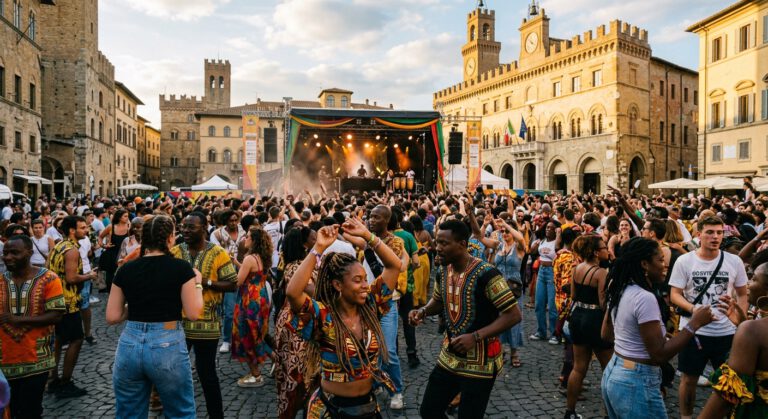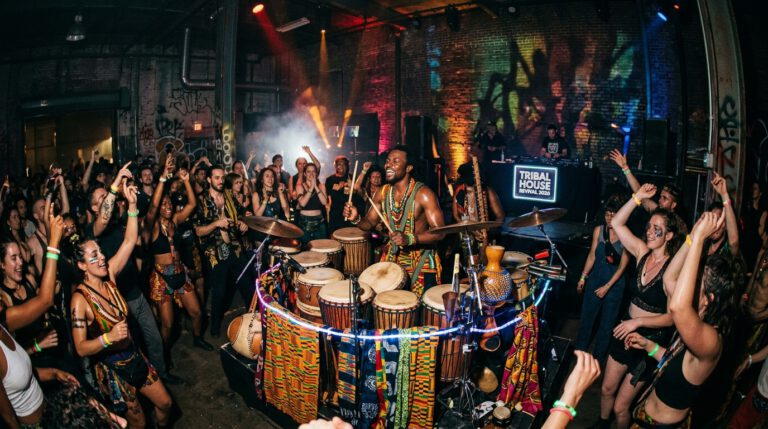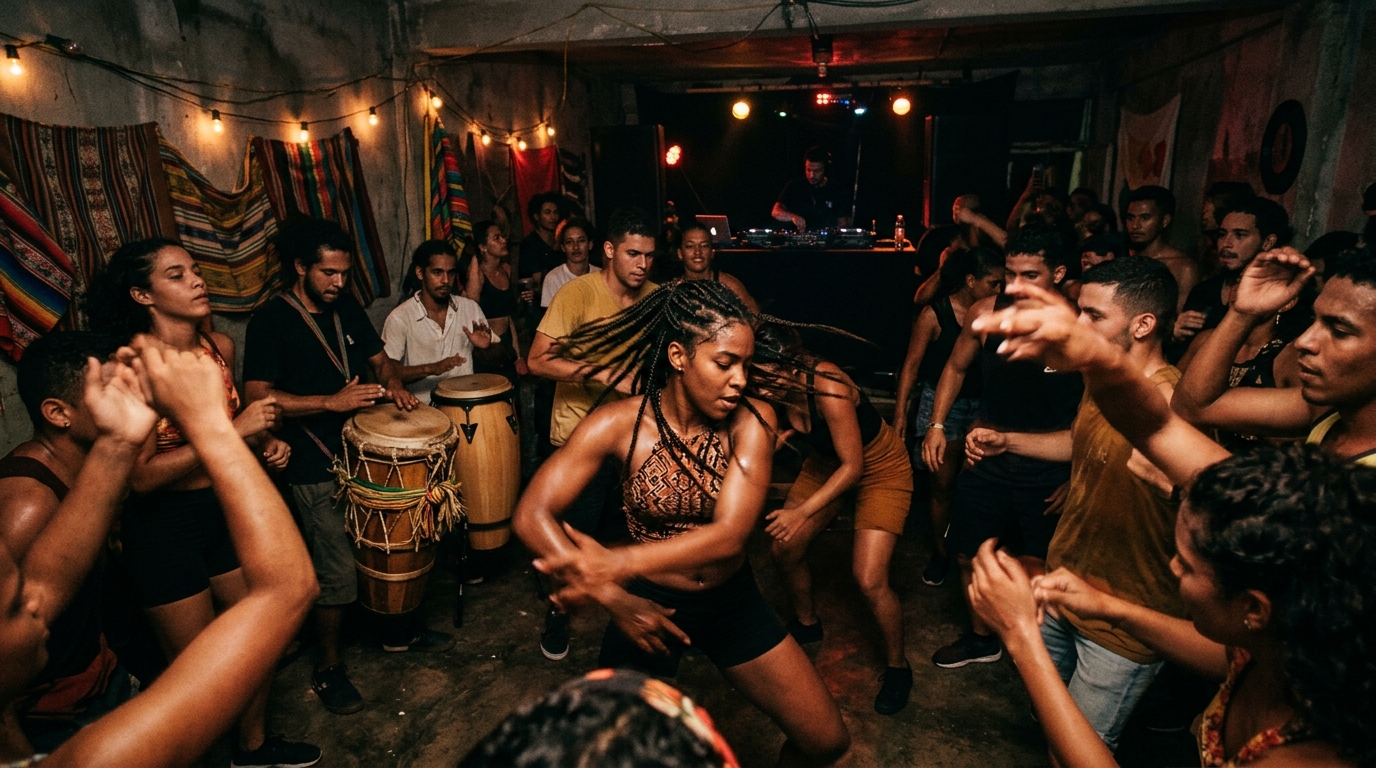
Raptor house music is an electronic genre rooted in the barrios of Venezuela, fusing aggressive bass-driven production with the rhythmic DNA of traditional Venezuelan music. It emerged from communities where censorship, classism, and economic exile threatened to silence it entirely. As ARTE’s Tracks documentary series noted, this “electro rugissante des barrios vénézuéliens” was destined to disappear, yet it now resonates across the global electronic scene. The story of raptor house is one of survival through sound, a genre that refused to stay local because the energy was too raw to contain.
Understanding the Origins of Raptor House Music
Raptor house music was shaped by the collision of Venezuelan street culture, traditional rhythmic patterns like tambores and gaita, and the cheap availability of pirated production software in Caracas and Maracaibo during the late 2000s and early 2010s. Producers in working-class neighborhoods built tracks on cracked DAWs, layering aggressive electronic elements over percussion rooted in Afro-Venezuelan traditions.
The genre’s creation was never an academic exercise. It came from block parties and informal sound systems where DJs needed tracks loud enough to cut through the noise of an entire barrio. That functional pressure, the need to physically dominate a space with limited gear, gave raptor house its signature density and confrontational energy. Similar stories of electronic music born from economic constraint echo in Detroit’s relationship with techno, though the sonic outcome in Venezuela landed somewhere far more visceral.
What Influenced Raptor House’s Creation?
The influences behind raptor house draw from Venezuelan folkloric percussion, reggaeton’s rhythmic aggression, and the stripped-down aesthetics of European techno that filtered into South America through internet forums. Producers like DJ Babatr and DJ Deep RH absorbed these threads and processed them through a distinctly barrio sensibility. The result was never polished. It was never supposed to be. The roughness is the point, a direct reflection of the conditions it was made in.
Key Artists Behind Raptor House
Key raptor house artists include DJ Babatr, DJ Deep RH, DJ Sueldo Minimo, and Anaco, all of whom have been instrumental in pushing the genre from Venezuelan neighborhoods onto international platforms. I first encountered DJ Babatr’s productions through a set rip shared on a Latin American electronic music forum, and the sheer wall of low-end pressure was unlike anything coming out of European or North American scenes at the time. These artists carry the genre’s identity because they lived through the conditions that created it; their credibility is biographical, not curated.
The Distinctive Sound of Raptor House
The distinctive raptor house sound is defined by overdriven bass, rapid-fire percussion patterns often exceeding 140 BPM, and a deliberate lo-fi production aesthetic that rejects the clean mastering standards of mainstream electronic music. Synthesizers are pushed into distortion rather than sculpted for clarity, and the low end is designed to rattle cheap speaker systems at maximum volume.
Where most electronic genres aim for headroom and dynamic range, raptor house compresses everything into a dense, confrontational wall. The sonic philosophy is closer to punk than to Berlin minimal. Venezuelan instruments and vocal samples occasionally surface, but they are chopped and brutalized rather than presented with ethnographic reverence. This is not world music with a beat; it is club music with a geographic scar.
What Are the Key Characteristics?
Defining raptor house characteristics include distorted kick drums, layered percussive loops drawn from tambor patterns, aggressive high-hat programming, and vocal chops that often reference Venezuelan slang or street culture. The tracks are built for physical impact in small, enclosed spaces. Production values are intentionally raw. If a track sounds too clean, it does not belong in a raptor house set. That roughness is a genre marker, not a limitation, and it separates raptor house from the polished output of melodic techno’s emotional vocabulary.
How Does Raptor House Differ from Other Genres?
A raptor house genre comparison against reggaeton, hard techno, or even guaracha reveals a sound that borrows from all three but commits to none. Reggaeton shares the Latin rhythmic backbone, but raptor house strips away the pop melody. Hard techno shares the distortion and tempo range, but raptor house carries a rhythmic complexity that four-on-the-floor patterns cannot replicate. The closest European analog might be gabber in its maximalist aggression, but raptor house swings where gabber stomps. That swing, inherited from Afro-Venezuelan drum traditions, is what makes the genre feel alive rather than mechanical.
Cultural Impact of Raptor House Music
The cultural impact of raptor house extends beyond music into questions of class, visibility, and who gets to represent Venezuelan identity on a global stage. For years, the genre was dismissed by Venezuelan cultural gatekeepers as barrio noise, too rough and too associated with poverty to merit serious attention. That dismissal only deepened the genre’s underground credibility.
Academic institutions have begun examining the broader relationship between Venezuelan sound culture and identity. The University of Chicago hosted a lecture series on Venezuelan espiritismo and the principle of “fuerza” in sound, exploring how spiritual intensity and sonic force intertwine in Venezuelan traditions. Raptor house sits squarely in that lineage: sound as force, not decoration. The genre gave young Venezuelans a cultural export that did not require institutional approval or conservatory training.
How Has It Influenced Venezuelan Culture?
Raptor house’s cultural influence in Venezuela reshaped how barrio communities see their own creative output. Before the genre gained international traction, electronic music production in Venezuela was largely associated with middle-class scenes in Caracas that looked toward Europe for validation. Raptor house inverted that hierarchy. I watched a clip from a Caracas block party where the DJ was treated with the reverence of a local hero, not because of streaming numbers but because the music was theirs. That kind of ownership is rare in electronic music, where genres often get extracted from their origin communities before the originators benefit. The parallel to afro house’s migration into American cities is hard to ignore.
Global Reception of Raptor House
Global raptor house reception has accelerated since the Venezuelan diaspora carried the sound to cities like Miami, Madrid, and Bogotá. DJs in European clubs have started integrating raptor house tracks into peak-time sets, drawn to the genre’s raw energy and its ability to shock a room out of predictable programming. The ARTE Tracks documentary episode featuring DJ Babatr, DJ Deep RH, DJ Sueldo Minimo, and Anaco marked a significant moment of European media recognition. The genre is no longer a regional curiosity; it is a reference point for producers looking to inject Latin American intensity into electronic sets.
The Future of Raptor House Music
The future of raptor house depends on whether the genre can scale without losing the lo-fi aggression that defines it. As international interest grows, the pressure to clean up productions for streaming platforms and festival sound systems creates a tension between accessibility and authenticity. Spotify’s algorithm rewards clarity and consistent loudness; raptor house’s distorted, compressed aesthetic fights against those optimization standards.
The genre’s next chapter will likely be written by the Venezuelan diaspora producers who carry the sound’s DNA but operate in cities with better studio access and larger audiences. Whether that migration preserves or dilutes the original energy is the real question. Similar tensions played out when African club sounds crossed into London’s festival circuit, and the results were mixed.
What Trends Are Emerging in the Genre?
Emerging trends in raptor house include collaborations between Venezuelan producers and European techno artists, hybrid sets that weave raptor house tracks into broader Latin electronic programming, and a growing collector market for early raptor house recordings that were originally distributed on USB drives and burned CDs. Some producers are experimenting with slower tempos around 125 BPM, pulling the genre closer to house music territory while retaining the distorted textures. That slower variant risks smoothing out what makes raptor house confrontational, but it opens doors to DJ sets where the genre can coexist with deep house and tech house without clearing the floor.
How Are New Artists Shaping Raptor House?
New artists in raptor house are arriving with better production tools and broader musical references, which changes the sound’s texture without necessarily abandoning its core identity. Younger Venezuelan producers who grew up hearing raptor house at block parties now study sound design on YouTube and reference everything from UK bass music to Brazilian baile funk. The genre is absorbing new inputs faster than it did a decade ago. The risk is homogenization; the opportunity is a raptor house that speaks multiple sonic languages while keeping its Venezuelan accent intact. The artists who matter will be the ones who resist the temptation to polish away the grit that made the genre worth exporting in the first place.