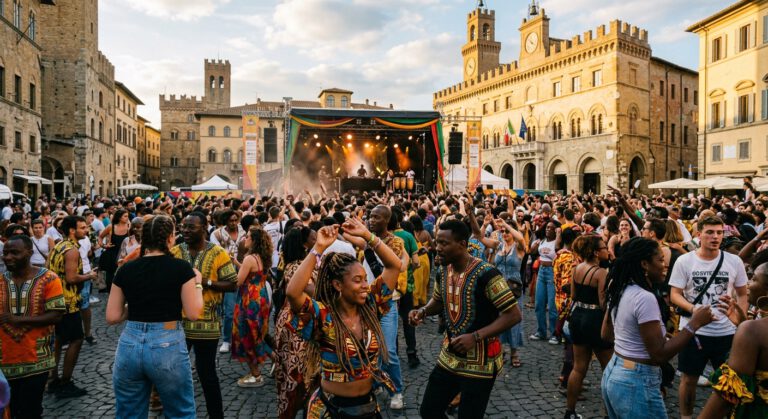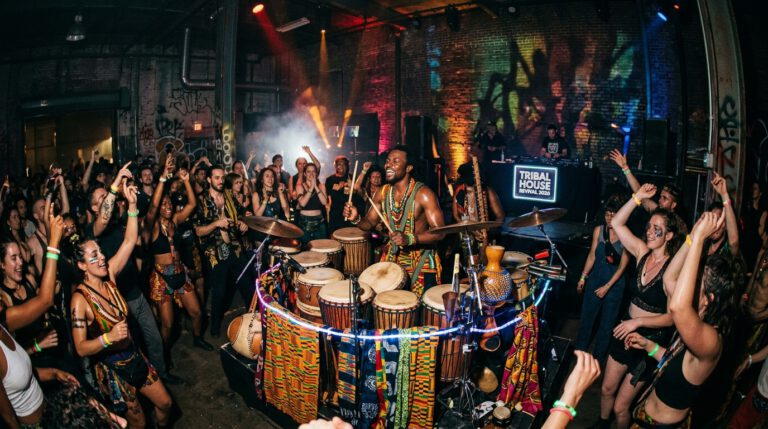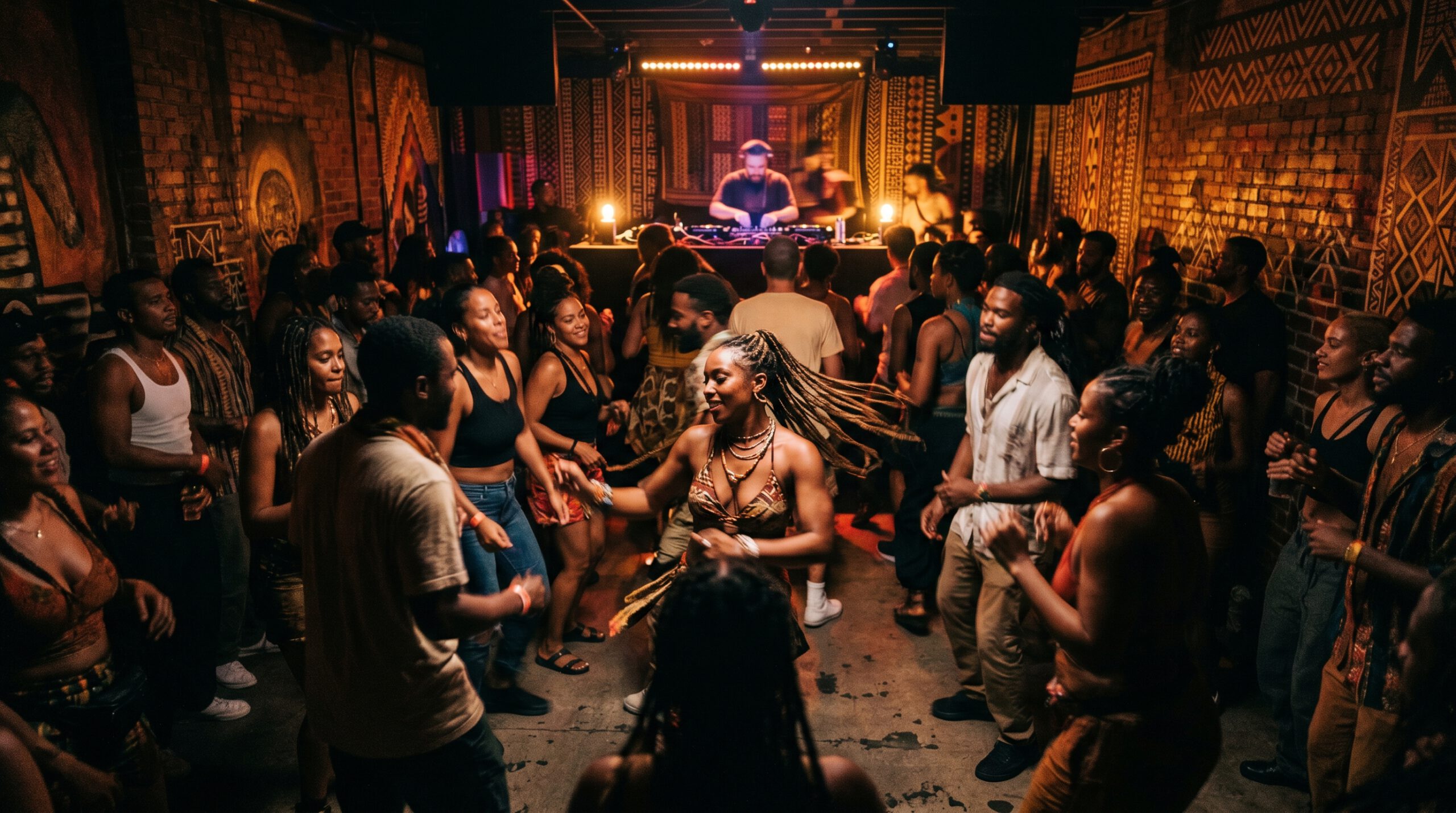
There’s a particular kind of energy that arrives before a genre fully lands in a city. You feel it in the warm-up sets, in the conversations happening near the bar, in the way a crowd responds to a rhythm they half-recognise but can’t yet name. That’s where afro house Los Angeles 2026 currently sits: not quite arrived, not quietly waiting either. Something is shifting in the underground, and the people paying attention can already hear it. The question isn’t whether Afro house will find its footing in LA. It’s whether the city’s club infrastructure is ready to hold what the music actually demands.
What Is Afro House Music?
Afro house music sits at a genuinely interesting crossroads. It draws from the percussive depth of traditional African musical structures and runs that through the architecture of deep and tech house, producing something that doesn’t behave like either parent genre on its own. The tempos tend to hover between 120 and 125 BPM, but the rhythmic feel is rarely what those numbers suggest. There’s a looseness in the groove, a sense that the beat is breathing rather than marching. That’s not accidental. It’s structural.
Defining Afro House Genre Elements
The Afro House elements that define the sound aren’t decorative additions layered on top of a house framework. They’re load-bearing. Layered percussion, often drawing from West and Southern African rhythmic traditions, sits inside the groove rather than on top of it. Vocals, when present, carry weight beyond texture: chants, calls, fragments of language that feel ceremonial without performing ceremony. And then the bass. Deep, round, patient. It doesn’t rush. Some tracks take three minutes to arrive anywhere, and that patience is the point entirely. The genre rewards listening rather than just dancing, though it does both at once.
Origins of Afro House Music
Afro House origins trace most directly to South Africa, where producers and DJs in Johannesburg and Cape Town began fusing local township sounds with imported European house structures during the late 1990s and early 2000s. The genre grew out of a scene that was already deeply invested in the emotional and communal possibilities of dance music. Black Coffee is widely cited as one of the figures who brought the sound to international attention, releasing work on his own Soulistic Music imprint and building a reputation that moved from Johannesburg clubs to Ibiza residencies to Coachella headline slots. Culoe De Song, another South African artist, contributed a more introspective strand to the genre’s early identity. These weren’t producers chasing a trend. They were building something from the inside out.
Key Artists in Afro House
Beyond the foundational names, the Afro House artists shaping the current sound include Themba, whose sets move between deep house and Afro house with a fluidity that makes the distinction feel academic, and Enoo Napa, whose productions carry a darker, more atmospheric quality than much of what gets labelled under the same genre umbrella. The Keinemusik collective, whilst not strictly an Afro house outfit, has absorbed elements of the sound into its broader aesthetic in ways that have helped expose it to European audiences who might otherwise never have encountered it. You can read more about how Keinemusik built a model for underground label success that other scenes, including the Afro house world, have studied carefully.
What makes Afro House unique? Afro house blends traditional African rhythms with modern electronic beats, creating a danceable, emotionally resonant sound that carries genuine cultural weight rather than surface-level exoticism. Who are the pioneers of Afro House? South African DJs and producers, most notably Black Coffee and Culoe De Song, established the genre’s international credibility through releases on labels like Soulistic Music and through sustained touring across European festival circuits.
Kimotion: A Game Changer in LA
Kimotion Afro House is a phrase that’s been circulating in LA underground circles with increasing frequency. Kimotion is an LA-based DJ and producer whose programming has been consistently oriented towards bringing Afro house into spaces that would typically default to tech house or melodic techno. What’s interesting isn’t just the music selection. It’s the context being built around it.
Kimotion’s Vision for Afro House
According to Kimotion’s event programming and publicly stated direction, the approach centres on building a sustained audience rather than capitalising on a moment. The consistency matters more than the spectacle, even when spectacle is what the city usually rewards. LA has a tendency to embrace sounds in waves: intense interest, then oversaturation, then abandonment. Kimotion’s programming suggests a different strategy. Smaller, more focused events. Sets that build over time rather than arriving fully formed. A curatorial identity that treats Afro house as a complete culture, not a flavour to be borrowed. Whether that patience pays off in a city with a short attention span for anything that doesn’t immediately scale is an open question. But it’s the right instinct.
Upcoming Events Featuring Kimotion
Kimotion events in Los Angeles have been structured around intimate venue formats, prioritising audience engagement over capacity. The programming typically features both local DJs working in adjacent genres and international artists from the Afro house circuit, creating a cross-pollination effect that serves the music better than a purist booking policy would. These aren’t one-off showcase nights. The intention, based on the event series structure, is to build something cumulative: a regular gathering that develops its own identity over time, which is how underground scenes actually form rather than how they’re usually marketed.
Impact on Local Artists and DJs
The impact on local artists has been observable in the way younger LA-based DJs are beginning to incorporate Afro house elements into sets that previously leaned exclusively on American house traditions or European techno influences. That kind of cross-pollination doesn’t happen through press releases. It happens because someone is consistently putting the music in front of people who are paying attention. There’s something worth noting about how scenes shift: it’s rarely the biggest event that changes things. It’s the third or fourth smaller one, where the right people are in the room and something clicks.
Who is Kimotion? Kimotion is an emerging LA-based DJ and producer focused on expanding Afro house’s presence in Los Angeles through consistent event programming and a curatorial approach that prioritises cultural depth over trend-chasing. What events is Kimotion hosting? Kimotion is hosting a series of intimate events in Los Angeles designed to introduce Afro house to new audiences, featuring local and international acts within a format built for sustained scene development rather than one-time spectacle.
Afro House’s Rise in Los Angeles
What’s happening with the rise of Afro house LA isn’t isolated from broader shifts in how the city’s underground audiences are consuming dance music. LA has always been a city of multiple simultaneous scenes, and the conditions that allow a genre like Afro house to take root are more present now than they were five years ago. The demographic mix, the diaspora communities with direct cultural connections to the music’s origins, the general fatigue with certain strands of European techno that dominated the underground for a decade: all of these are creating space.
Current Trends in Afro House 2026
Afro house trends in 2026 reflect a broader global pattern in which the genre is moving away from being exclusively associated with South African artists and towards a more distributed production geography. Producers in Lagos, Nairobi, London, and Amsterdam are contributing to the sound in ways that are expanding its vocabulary without diluting its identity. In LA, this translates into a scene that doesn’t feel like a transplant from somewhere else. It’s beginning to develop its own local inflections, which is the clearest sign that a genre is genuinely taking root rather than just passing through.
Venues Embracing Afro House Culture
Afro house venues in LA are still relatively limited, but the direction is clear. Spaces that built their reputations on deep house and minimal techno programming have begun incorporating Afro house nights, responding to audience requests and booking enquiries that have increased noticeably. Sound Nightclub and Exchange LA have both hosted events with Afro house elements in their programming, though dedicated nights rather than mixed-bill appearances remain the exception rather than the rule. The infrastructure is there. What’s been missing is the sustained demand signal, and that’s what figures like Kimotion are working to establish. For a sense of how underground scenes develop their own spatial identity, the writing on how Berlin’s night culture formed around specific venues and communities offers a useful parallel.
Demographics of Afro House Fans
Afro house demographics in LA are broader than the genre’s marketing typically acknowledges. The core audience includes members of African and African-American diaspora communities who recognise the cultural lineage in the music, but the wider listener base extends into Latino communities, where the percussive energy connects to familiar rhythmic frameworks, and into the city’s general underground dance music audience, which has always been more open to genre crossover than its reputation for trend-following might suggest. That breadth is an asset. It means Afro house in LA isn’t dependent on a single community for its survival.
Why is Afro House popular now? The genre’s rhythmic depth and cultural specificity resonate with audiences who have grown tired of more formulaic electronic music, and LA’s diverse demographic composition makes it particularly receptive to sounds with strong diaspora connections. What venues support Afro House in LA? Venues including Sound Nightclub and Exchange LA have begun incorporating Afro house programming, with dedicated nights becoming more frequent as audience demand grows.
Is Afro House Breaking into LA Clubs?
The question of whether Afro house in LA clubs is genuinely breaking through is really a question about booking infrastructure and promoter confidence. The music has the audience. What it still needs is the institutional support: agents willing to pitch Afro house artists to club bookers, promoters willing to take the financial risk on nights that don’t have the name recognition of established EDM or techno events, and venues willing to build the kind of consistent programming that allows a scene to develop its own identity rather than remaining a curiosity on a mixed bill.
Comparing Afro House to Other Genres
The Afro house comparison to other genres matters because it shapes how club bookers think about risk. Against mainstream EDM, Afro house looks niche. Against deep house or minimal techno, it looks accessible. The honest answer is that it occupies a position similar to where Afro-Latin electronic music sat in the mid-2010s: culturally specific enough to have a dedicated following, rhythmically universal enough to work on a general dance floor. That positioning is an advantage, not a limitation. The genres that tend to last in club culture are the ones that don’t fully belong to any existing category. You can explore how similar dynamics played out in melodic techno’s emotional development, where a sound that resisted easy categorisation eventually built one of the most loyal underground audiences in contemporary electronic music.
Influences from the Global Scene
Global influences on Afro house arriving in LA come through multiple channels. European festival circuits, particularly in Germany and the Netherlands, have been booking Afro house artists for several years, generating a body of recorded sets and live documentation that circulates through streaming platforms and reaches LA audiences who have never attended those events. The Afro house tracks appearing on underground selections built around emotional architecture reflect exactly this kind of cross-continental filtering: sounds that originated in Johannesburg, passed through Ibiza and Amsterdam, and arrived in Los Angeles carrying the weight of a genuinely international scene behind them.
Future of Afro House in LA
The future of Afro house LA looks more concrete than speculative at this point. The scene has its early adopters, its dedicated promoters, and its growing venue relationships. What it hasn’t yet produced is the breakout moment: the night that gets written about, the booking that signals to the wider industry that LA is serious about the genre. Those moments are partly manufactured and partly accidental. But the conditions for one are present. By 2026, if the current trajectory holds, Afro house won’t be a niche interest in LA. It’ll be a recognisable strand of the city’s underground identity, the way Afro-beat-influenced sounds became woven into London’s club fabric over the course of a decade, quietly and then all at once.
How does Afro House compare to other genres? Afro house offers a distinct cultural and rhythmic experience that sets it apart from mainstream EDM and European techno, combining the emotional depth of deep house with percussive structures rooted in African musical traditions. What is the future of Afro House in LA? With growing audience interest, increasing venue support, and dedicated promoters like Kimotion building sustained programming, Afro house is positioned to establish a significant presence within LA’s underground club scene by 2026.