Analog drum machines from the mid-1970s to early 1980s continue to shape contemporary music production, and a new roundup from MusicRadar’s Plugin Week 2026 highlights the best software options for capturing their distinctive sound. The feature focuses on three classic machines — the Roland TR-808, the Roland CR-78, and a third unit covered in the full article — examining their histories, their cultural impact, and where producers can find accurate plugin recreations today.
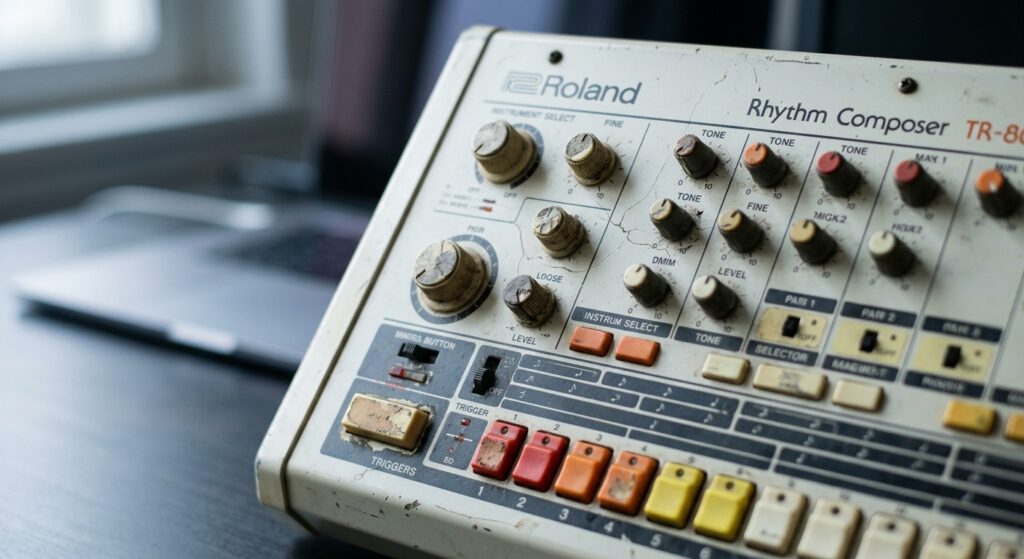
The Roland TR-808 Rhythm Composer, released in 1980 at a launch price of £765, was built entirely on analog circuitry and featured 16-button XOX-style programming across the front panel, with storage for up to 32 patterns. Production ceased in 1983, but not before the machine found its way into recordings that would define its legacy. Recording engineer Mike Butcher noted that Marvin Gaye was the first artist to use the TR-808 as its own instrument rather than as a drum kit imitation, deploying it across the full drum track of Sexual Healing. Whitney Houston’s I Wanna Dance with Somebody brought the 808’s cowbell sound to mainstream attention, while Afrika Bambaataa & the Soul Sonic Force cemented its connection to hip-hop. The machine’s sinusoidal kick eventually became central to techno and a wide range of electronic genres.
With used hardware units now selling for several thousand pounds — often without MIDI capability — plugin alternatives present a practical solution. Roland offers its own official 808 plugin at £133/$149 through Plugin Boutique, or via Roland Cloud subscription. UVI’s Prime8+, which runs inside the UVI Workstation, is available for €39, and Sample from Mars offers processed 808 samples across multiple formats. MusicRadar also provides free 808 sample packs directly on its site.
The Roland CR-78 predates the 808 and holds the distinction of being the first mass-produced programmable drum machine, though full programming required the separately sold and rarely owned WS-1 Programmer. Most users relied on its onboard presets, which still found their way into iconic recordings. Soft Cell used the CR-78’s Foxtrot pattern as the rhythmic backbone of their cover of Tainted Love, and Phil Collins employed the Disco 2 preset on In the Air Tonight ahead of the track’s famous live drum entry. The machine also allowed selective muting of sounds during playback, giving artists a degree of real-time flexibility.
Roland has released an official CR-78 plugin recreation, and Cherry Audio has produced its own version featuring accurate graphics, XOX-style pattern programming, and a standalone application mode. Both options give producers access to the original preset patterns alongside the ability to build custom rhythm tracks — something the original hardware rarely offered in practice.
The broader point running through the feature is that these machines were commercial failures on release, dismissed for not sounding enough like real drums. It was only when cash-strapped producers picked them up cheaply in the late 1980s and 1990s that their actual character was recognized and embraced. Plugin versions now make that character more accessible than ever, without the cost or upkeep of aging hardware.
Source: Latest from MusicRadar