Somewhere between the Tien Shan mountains and the concrete Soviet housing blocks of Almaty, a scene has been building for years with almost no English-language documentation. The electronic music Central Asia underground scene operates through closed Telegram channels, word-of-mouth invitations, and a handful of labels that treat anonymity as a feature, not a limitation. Vzletnaya, a creative association founded in Kazakhstan in 2018, has become the most visible thread connecting this region’s producers to the outside world. This is the story of a scene that didn’t wait for permission.
Why Central Asia Has a Hidden Electronic Scene
Central Asia underground electronic music exists because the same conditions that suppress cultural infrastructure also create the pressure for it. Language barriers, near-zero English-language press coverage, and distribution channels built around Telegram rather than Spotify have kept the region invisible to Western audiences for over a decade. The parallel with North Macedonia’s leftfield scene, which The Quietus documented as thriving “despite a major lack of musical infrastructure,” is striking.
The difference is scale. Central Asia’s geographic mass, spanning five countries across nearly four million square kilometers, makes even regional coordination difficult. Producers in Bishkek and Tashkent can share a sonic vocabulary but rarely share a stage. That fragmentation has produced fiercely local identities rather than a homogenized regional sound, which is part of what makes the music worth hearing.
What Drives Underground Music in Post-Soviet States
Post-Soviet underground music draws energy from a specific tension: the remnants of state cultural apparatus colliding with a generation raised on internet access. In Kazakhstan and Kyrgyzstan, young producers grew up surrounded by Soviet-era industrial architecture and simultaneously absorbing Berlin techno through YouTube and SoundCloud. The result is a DIY ethos born not from punk ideology but from practical necessity. There is no grant funding pipeline. There are no A&R scouts. You build it or it doesn’t exist.
How Isolation Shaped Central Asian Rave Culture
Central Asian rave culture isolation produced something unexpected: a sound that doesn’t reference Western club music as its primary axis. When you can’t easily attend Berghain or Fabric, you stop trying to replicate them. I’ve heard sets from Almaty producers that sit around 128-132 BPM but carry a rhythmic weight closer to ritual percussion than four-on-the-floor utility. Geographic distance forced creative independence, and that independence became identity. Similar dynamics shaped Latvia’s underground electronic scene, though the Baltic corridor had far easier access to Western Europe.
Which Cities Anchor the Regional Underground Movement
Almaty is the gravitational center of Central Asia’s underground music cities, with the largest concentration of producers, venues, and event organizers. Bishkek follows, smaller but scrappier, with a community that punches above its weight. Tashkent has emerged more recently as Uzbekistan’s regulatory environment loosens incrementally. Astana hosts occasional events but remains more commercially oriented. The real energy lives in Almaty’s south side and Bishkek’s repurposed Soviet spaces.
Vzletnaya: The Label Defining Central Asian Techno
Vzletnaya is a creative association and record label based in Kazakhstan, established in 2018, that promotes underground music across Central Asia. According to its Resident Advisor label profile, Vzletnaya describes itself as promoting “the establishment of underground music in Central Asia.” It operates as both a release platform and a cultural organizing body, functioning more like a collective with a catalog than a traditional imprint.
What sets Vzletnaya apart from other regional efforts is its bilingual communication strategy and deliberate outreach beyond local Telegram networks. Most Central Asian labels remain entirely Russian-language operations. Vzletnaya has positioned itself as the entry point for anyone outside the region trying to understand what’s happening on the ground.
What Vzletnaya Is and Where It Operates
The Vzletnaya label origin traces to Kazakhstan, with connections extending across Kyrgyzstan and Uzbekistan. It functions from Almaty but isn’t a single-city operation. The label’s reach mirrors the diaspora patterns of Central Asian youth culture: producers move between cities, collaborate remotely, and release under aliases that shift between projects. Vzletnaya provides the connective tissue.
Which Artists Release Music on Vzletnaya
The Vzletnaya artists roster operates with deliberate opacity. Many producers release under aliases and maintain minimal public profiles, consistent with the underground ethos that defines the broader scene. The roster draws from Kazakhstan, Kyrgyzstan, and Uzbekistan, blending hard-edged techno with regional sonic textures. This approach mirrors labels like ZID in Paris, where confrontational sound takes priority over personal branding.
How Vzletnaya Differs from European Techno Labels
Vzletnaya vs European techno labels is not a comparison of quality but of operating conditions. Tresor or Ostgut Ton function within Berlin’s established club economy, with pressing plants, distribution deals, and decades of institutional support. Vzletnaya operates without any of that infrastructure. Every release is an act of logistics as much as artistry. The label’s cultural function, organizing community around sound in a region where that community has no institutional backing, makes it structurally closer to early Detroit imprints than to contemporary European operations.
The Sound Architecture of Central Asian Underground Techno
The Central Asian techno sound is defined by a collision between industrial-weight low end and tonal elements drawn from regional musical traditions. Tracks often sit in the 130-138 BPM range but carry a harmonic density unusual for functional techno. Modal scales inherited from Kazakh and Kyrgyz folk music create melodic movement that feels unfamiliar to ears trained on Western minor-key techno.
The production aesthetic leans raw. Limited access to high-end studio equipment and mastering chains means the music retains a grain that polished European releases sand away. That roughness is part of the appeal. I’ve played Central Asian tracks alongside Spazio Disponibile releases, and the textural contrast is immediate: both are hypnotic, but the Central Asian material carries a different kind of weight.
What Sonic Elements Define Central Asian Techno
Central Asian techno sonic elements include distorted kick drums layered with overtone-rich percussion, synthesizer lines that follow pentatonic and modal scales native to the steppe musical tradition, and a preference for reverb spaces that suggest vast physical environments rather than club rooms. The aesthetic is closer to post-Soviet industrial techno than to melodic European strains, but with a tonal warmth that industrial music typically avoids.
How Local Folk Instruments Appear in Club Music
Folk instruments in Central Asian club music appear most often as sampled or processed elements rather than live performance. The dombra, a two-stringed Kazakh lute, provides plucked melodic phrases that producers pitch-shift and layer into rhythmic patterns. The Kyrgyz komuz appears similarly, its raw timbre adding organic texture to otherwise synthetic arrangements. These aren’t decorative additions. They function as melodic anchors that give tracks a geographic specificity no synthesizer patch can replicate.
How Field Recordings Shape the Central Asian Sound
Field recordings in Central Asian electronic music serve as environmental signatures. Producers capture steppe wind, bazaar ambience, Soviet-era factory resonance, and urban street sound, then fold these into intros, breakdowns, and transitional passages. The practice connects the music to place in a way that pure synthesis cannot. It’s a production choice that carries cultural weight: these sounds are documentation as much as decoration.
Key Labels and Collectives Alongside Vzletnaya
Central Asia underground electronic music labels beyond Vzletnaya include a scattered network of smaller imprints and collectives operating primarily out of Almaty and Tashkent. Most release limited-run cassettes, digital EPs, and event-tied compilations through Bandcamp and private channels. The ecosystem is fragmented but creatively active, with each node serving a hyper-local community.
The challenge is visibility. Without English-language web presence or international press relationships, most of these operations remain invisible outside their immediate networks. Vzletnaya’s role as a gateway label is partly a function of this vacuum: it’s not necessarily the largest operation, but it’s the most legible one to outside observers.
Which Other Labels Operate in Central Asia’s Underground
Central Asia underground record labels beyond Vzletnaya are difficult to catalog precisely because many operate ephemerally, releasing a handful of tracks before going dormant or reforming under new names. Almaty hosts the densest concentration, with small imprints releasing dark techno and experimental club music. Tashkent’s scene is newer but growing, with collectives organizing around specific event series rather than formal label structures. The comparison to South Asian artists building new club music infrastructure is apt: both regions are constructing scenes from scratch.
Are There Central Asian Electronic Music Collectives
Central Asian electronic music collectives operate as the primary organizational unit of the scene, often more important than labels. These groups handle event production, artist development, visual identity, and community management simultaneously. Members juggle multiple roles, a pattern The Quietus identified in North Macedonia where people “often juggle several roles at once: playing in bands, organising gigs, hosting radio shows, releasing records.” The parallel across post-Soviet and post-Yugoslav spaces is not coincidental.
How Central Asian Labels Distribute Music Globally
Central Asian music global distribution relies heavily on Bandcamp and SoundCloud, with Telegram serving as the primary communication and promotion channel. Some labels have begun submitting releases to Beatport and seeking coverage from international outlets, though coverage remains sparse. The absence of traditional distribution infrastructure means that new listeners reach this music almost entirely through algorithmic accident or deliberate curation by DJs who dig deeper than the usual channels.
Rave Culture and Event Infrastructure Across the Region
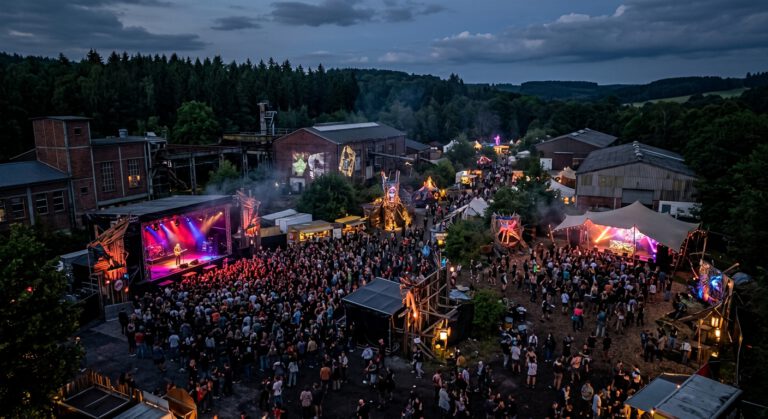
Central Asia rave culture underground events happen in repurposed Soviet industrial spaces, rural outdoor locations, and a small number of dedicated venues in Almaty and Tashkent. Events are typically announced 24-48 hours in advance through closed Telegram groups, keeping attendance small and regulatory attention minimal. The model mirrors early 1990s rave culture in the UK, though the motivations are different: this isn’t countercultural performance, it’s practical survival.
International music festivals have begun touching the region. DJ ANA ROVA recently documented performing at an international music festival in Uzbekistan, signaling that the country’s event infrastructure is developing, however unevenly.
Where Underground Raves Happen in Central Asia
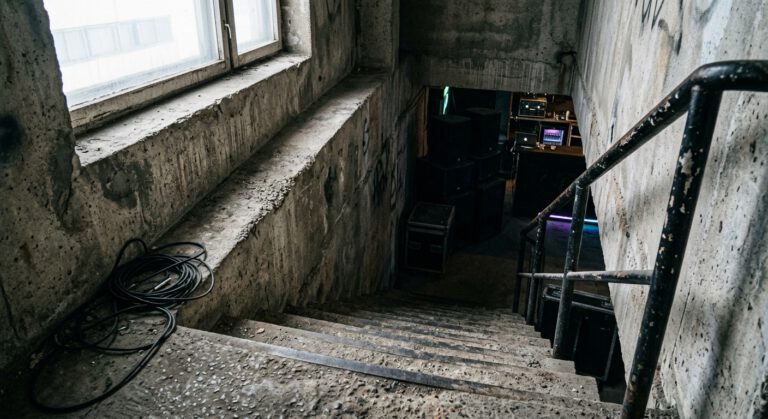
Underground rave locations in Central Asia favor spaces that carry their own atmosphere: abandoned factories on Almaty’s industrial outskirts, mountain clearings accessible only by shared transport, and Soviet-era cultural centers repurposed after hours. The architecture itself becomes part of the sonic experience. Concrete walls and metal ceilings create natural reverb chambers that shape how the music feels at volume. I walked into a basement space in a former industrial zone once where the room’s resonant frequency sat right around 50 Hz, and every kick drum became a physical event.
What Venues Host Electronic Music in Almaty and Tashkent
Almaty and Tashkent electronic music venues exist on a spectrum from semi-permanent club spaces to one-night-only locations. Almaty has a handful of bars and clubs that regularly program electronic music, though dedicated techno venues remain rare. Tashkent’s options are even more limited, with most events happening in rented spaces or private locations. The venue scarcity forces creativity: promoters become spatial designers, transforming whatever room they can access into something that works for a night.
How Promoters Navigate Local Legal Restrictions
Central Asia rave legal restrictions vary significantly by country. Kazakhstan offers the most permissive environment, with Almaty’s nightlife operating under relatively relaxed enforcement. Uzbekistan presents more challenges, with event permits difficult to obtain and noise regulations strictly applied. Promoters navigate these constraints through community vetting, minimal advance publicity, and relationships with sympathetic venue owners. The closed Telegram model isn’t just aesthetic preference; it’s operational security.
Why Vzletnaya Matters for Global Electronic Music
Vzletnaya’s global electronic music significance lies in its role as the first sustained effort to document and export Central Asian underground electronic music to international audiences. The label fills a geographic and cultural gap in the global club music canon that no European or American imprint has addressed. For curators, radio programmers, and listeners seeking non-Western club music perspectives, Vzletnaya is the clearest entry point into a scene that has operated in near-total silence for years.
The broader implication is structural. Techno history has been written almost exclusively through a Berlin-Detroit-London axis. Vzletnaya’s existence challenges that narrative not through argument but through evidence: here is the music, here is the culture, here is the community. It has always been here.
How Vzletnaya Influences Global Club Music Discourse
Vzletnaya’s global club music influence operates at the curatorial level rather than the mainstream. DJs who dig beyond Beatport’s front page encounter Vzletnaya releases and carry them into sets that reach European and Asian audiences. The label’s catalog has appeared in select international DJ sets and editorial contexts, creating slow but genuine crossover momentum. This mirrors how labels like Modularz built international reputation through quality and consistency rather than marketing spend.
Is Central Asian Techno Gaining International Recognition
Central Asian techno international recognition is in its earliest phase. Curators in Europe and Japan have begun actively seeking non-Western club music, and Vzletnaya’s bilingual presence positions it to benefit from that shift. Coverage from outlets like Resident Advisor remains sparse but growing. The scene is positioned where South African amapiano was around 2017: known to dedicated diggers, invisible to casual listeners, but carrying enough creative momentum that wider recognition feels inevitable rather than aspirational.
What Makes Vzletnaya a Landmark Label Historically
Vzletnaya’s landmark label history rests on a simple fact: it is the first Central Asian electronic music label to build a persistent, internationally accessible catalog while maintaining deep roots in the local underground. Founded in 2018 in Kazakhstan, it predates most Western awareness of the region’s scene by years. When the history of non-Western club music is written with the seriousness it deserves, Vzletnaya will be one of the names that anchored the Central Asian chapter. Not because it was the biggest, but because it was the first to insist the story be told.