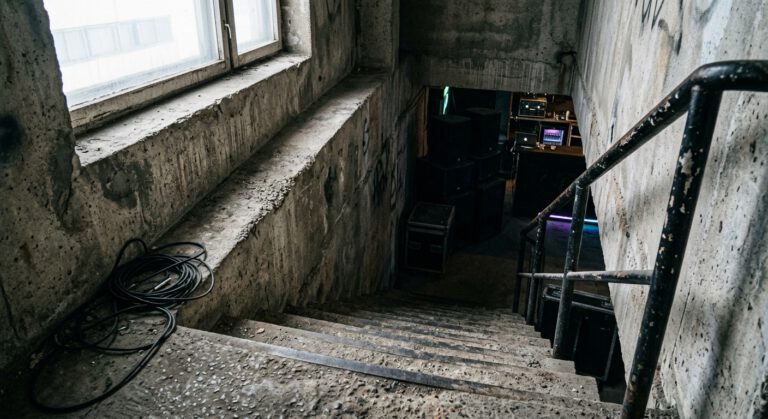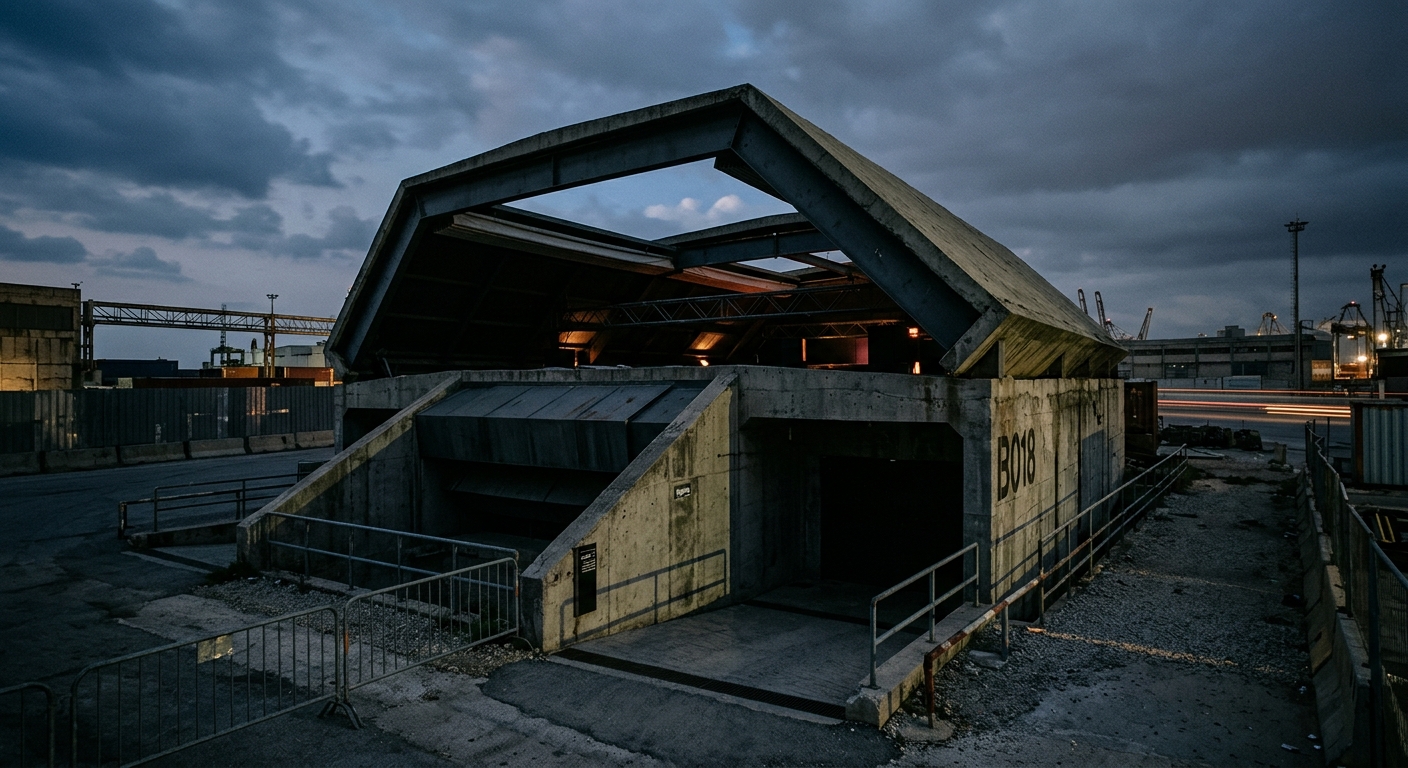
A concrete bunker sunk into the earth of Beirut’s Karantina district, invisible from the street, sealed shut like a scar in the ground. B018 is not just a club; it is a statement about survival, sound, and what happens when a city refuses to let its nightlife die. The B018 Beirut club reopening 2026 is the most significant venue comeback the Middle Eastern electronic music scene has seen this decade, and its ripple effects will reach far beyond Lebanon.
The Legacy of B018 Beirut in Electronic Music
The B018 Beirut legacy sits at the foundation of electronic music in the Middle East. Designed by architect Bernard Khoury, the venue’s bunker-like structure and iconic retractable roof made it unlike anything else on the global club circuit, a space where architecture itself carried political and emotional weight.
Few clubs anywhere have managed to fuse design, history, and sound programming with the same intensity. B018 became a reference point not just for Beirut’s nightlife but for anyone arguing that club culture could carry real cultural meaning outside of Berlin or London.
Historical Significance of B018
The B018 historical significance begins with its location. Built on a site in Karantina with deep ties to Lebanon’s civil war, the venue turned a place of trauma into a space for collective release. Khoury’s design, with its coffin-shaped tables and roof that peeled open to the night sky, was a deliberate confrontation with memory. That architectural provocation made B018 impossible to separate from the city’s broader story.
Influential Artists and Performances
Over the years, B018 hosted a rotating cast of international selectors alongside local residents who understood the room’s particular energy. The club’s programming leaned toward raw, underground electronic music: deep techno, stripped-back house, and the kind of sets that rewarded patience. I’ve spoken with DJs who played there and every one of them described the same thing: the room demanded honesty. You couldn’t hide behind a big drop when the walls were that close. Similar to how Berlin’s enduring nightlife shaped generations of producers, B018 shaped a regional generation that still carries its influence.
Cultural Impact of B018 on the Middle East
B018’s cultural impact on the Middle East extends well beyond music programming. The club functioned as proof that Beirut could sustain a serious underground scene through economic collapse, political instability, and a catastrophic port explosion in 2020. As Lebanon Traveler noted, B018 has been “a bunker, a tomb, or an underground hedonistic escape” depending on the era, and it served all three roles with conviction.
That resilience became a model. Promoters in Amman, Cairo, and Tunis watched what B018 did and understood that a local scene didn’t need permission from European tastemakers to exist. The artistic community that formed around the club created its own gravity.
B018 as a Safe Haven for Expression
B018 operated as a safe haven for expression in a region where nightlife often faces social and political friction. Inside the bunker, sectarian identity dissolved. The retractable roof opening at peak hour wasn’t just theatrical; it was a shared exhale. That kind of communal vulnerability is rare in any club, and it’s almost unheard of in a city navigating the pressures Beirut faces. The space gave local artists permission to be experimental without commercial compromise.
Role in Shaping Local Nightlife
B018’s nightlife role reshaped how Beirut positioned itself regionally. Before the club’s influence fully took hold, Beirut nightlife skewed commercial and bottle-service heavy. B018 carved out a counter-narrative: dark, underground, music-first. That split still defines the city’s scene today. Much like the way China’s techno underground carved space against mainstream expectations, B018 proved that a committed venue could redirect an entire city’s cultural identity.
The Future of B018: Reopening in 2026
The B018 reopening 2026 is confirmed for later this year in Karantina, with the venue stripping back the commercial format it had drifted toward and returning to its authentic underground roots. As Resident Advisor reported in May 2026, the club is set for a full return, and SceneNoise confirmed the venue’s commitment to raw, underground programming. The 2024 closure, triggered by a dispute surrounding the site, made the comeback uncertain for months.
What matters most is the stated direction. A return to underground programming rather than commercial bookings signals that the people behind B018 understand what made the space matter in the first place. Beirut nightlife doesn’t need another VIP lounge. It needs its primary pulse point back.
What to Expect from the Reopening
B018 reopening expectations center on a return to the venue’s original sonic identity: uncompromising electronic music in an architecturally singular space. I watched what happened to clubs that reopened after long closures and tried to chase commercial viability first; they lost the rooms that loved them. B018 appears to be making the opposite bet, and that bet is the right one. The exact opening date and full schedule haven’t been announced yet, but the commitment to stripping back the format is the clearest signal of intent.
Anticipated Changes and Innovations
B018 changes and innovations will likely include sound system and production upgrades, which are standard for any venue returning after years offline. But the real innovation here isn’t technological. It’s curatorial. Prioritizing local artist opportunities alongside international bookings, rather than defaulting to a festival-headliner rotation, would give the reopening genuine weight. The club’s bunker acoustics always rewarded lower-end frequency work; a properly tuned modern rig in that room could be devastating at 128 BPM.
B018’s Influence on Global Electronic Music Trends
B018’s global influence operates through a network of artists, promoters, and cultural workers who passed through the club and carried its ethos outward. The venue helped establish the idea that the Middle East and North Africa region could produce and sustain electronic music culture on its own terms, not as an exotic satellite of European scenes but as an independent node with its own aesthetic priorities.
That influence is measurable now. Lebanese and regional artists appear on lineups from Amsterdam Dance Event to Sónar. Labels rooted in Beirut’s scene distribute globally. The cultural exchange B018 initiated decades ago has matured into a two-way street, and the reopening will accelerate that traffic. Similar dynamics play out wherever a single venue anchors an entire regional identity, from ARTBAT’s UPPERGROUND reshaping Ukrainian techno’s global profile to Detroit’s relationship with Tresor in Berlin.
Connecting Local and Global Scenes
The B018 local global connection works because the club always functioned as a filter, not a mirror. International artists who played B018 had to adapt to the room’s intensity; local talent who emerged from its programming arrived on global stages already hardened by one of the most demanding dancefloors in the world. That exchange enriched both sides. Booking a Beirut-based selector at a European festival is no longer a novelty act; it’s a recognition of depth.
B018’s Role in Music Festivals
B018’s involvement in music festivals has historically taken the form of branded stages, curated showcases, and cross-promotional partnerships that spotlight both Lebanese and international artists. The reopening positions the club to reclaim that role at a moment when festival programmers are actively seeking non-European perspectives. A B018 stage at a major regional or international festival in 2026 or 2027 would carry more narrative weight than almost any other venue brand could offer right now. The story is too good, and more importantly, the music has always backed it up.