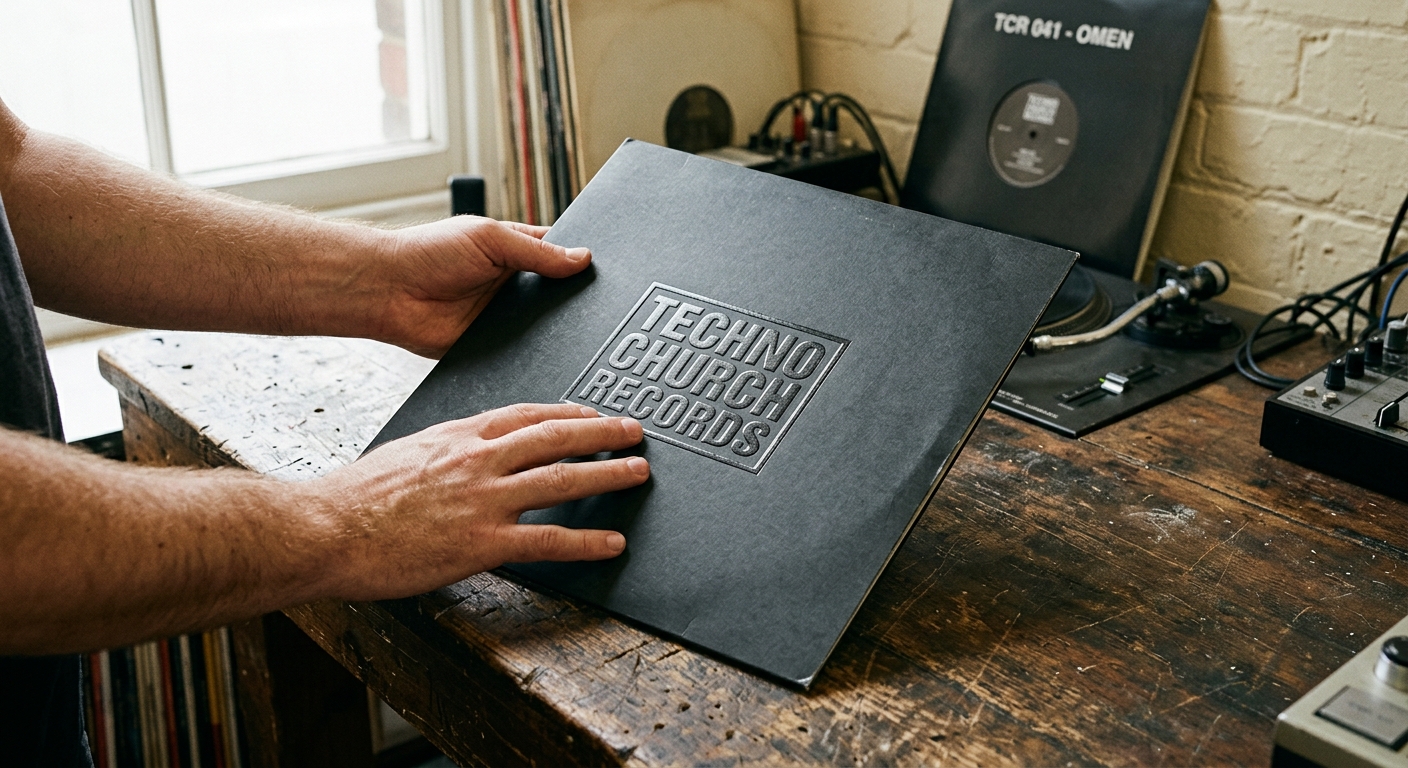
The American techno conversation has been locked on two cities for four decades. Detroit invented it. Chicago ran parallel with house. But the underground has always been wider than that origin story allows, and Techno Church Records Philadelphia is the kind of imprint that forces the map to expand. Based in Philadelphia and listed on Resident Advisor with an establishment date of 2026, this label and collective channels the city’s raw, unpolished energy into something that feels genuinely sacred on a dark dancefloor.
What Techno Church Records Is in Philadelphia
Techno Church Records is an independent Philadelphia-based techno label and underground music collective releasing spiritually charged electronic music rooted in the city’s club culture. The imprint operates from a philosophy that techno is communal ritual, not content, positioning itself against the algorithmic flattening that plagues so much of the streaming economy’s impact on underground DJs.
What sets this Philadelphia electronic music imprint apart is its refusal to separate the label from the community it serves. Techno Church doesn’t just release records; it anchors a scene that previously had no centralized identity. The collective’s SoundCloud presence features artists like De León, Pilas, and JFK, all operating within a shared aesthetic orbit that feels distinctly Philly.
Who Founded Techno Church Records in Philadelphia
The Techno Church Records founder built the project out of Philadelphia’s existing underground network, formalizing what had been a loose constellation of DJs, producers, and party organizers into a label with a name and a mission. The collective’s roots sit deep in the city’s warehouse and loft culture, which gave it both audience and purpose from the start.
Label or Collective: How Techno Church Records Operates
Techno Church Records functions as both a record label releasing digital and physical music and a cultural collective organizing events and community. This dual structure mirrors operations at imprints like EXHALE Records, where the label identity and the live experience feed each other. The label’s website (technochurch.us) serves as the hub connecting releases, events, and the broader Techno Church identity.
Philadelphia’s Techno Scene Before Techno Church Records
Philadelphia had a fragmented but passionate underground electronic music community long before Techno Church Records gave it a name. Warehouse parties and small club nights kept techno alive for years, but the scene lacked a label to anchor its output and give local producers a home address. The city’s contributions stayed invisible on the national map because nobody was pressing the records.
What Philly did have was density. I’ve driven the I-95 corridor enough times to know that a DJ could play a basement in Kensington on Friday, a Brooklyn loft on Saturday, and a D.C. warehouse on Sunday without breaking a sweat. That proximity created a circulation of sounds and bodies that kept the underground alive even without institutional support.
Philly’s Underground Clubs and Warehouse Parties Pre-Techno Church
Philadelphia’s underground clubs and warehouse spaces shaped the local techno scene by providing raw, unregulated rooms where DJs could play four, five, six-hour sets without commercial pressure. These weren’t branded nightlife experiences. They were concrete rooms with a sound system and a locked door, and the music that worked in those spaces had to be harder, darker, and more hypnotic than anything a bottle-service venue would tolerate.
Philadelphia’s Geographic Role in East Coast Techno
Philadelphia sits at the geographic center of the East Coast techno corridor, roughly equidistant from New York and Washington D.C. This positioning made the city a natural stopover for touring artists and a mixing chamber for sounds moving between those larger markets. The result was a local scene that absorbed influences from multiple directions without fully committing to any single city’s identity, creating the conditions for something original to emerge.
The Sound and Aesthetic of Techno Church Records Releases
Techno Church Records releases dark, driving, spiritually inflected techno that draws from industrial, acid, and raw club music traditions. The label’s production style favors hypnotic rhythmic structures and emotionally weighted atmospheres over polished, mix-ready sheen. Tracks on the label’s SoundCloud page confirm this aesthetic: De León’s “Tremor” and the collaborative “La Negra” both carry a gritty, percussive intensity that sounds built for concrete rooms, not festival main stages.
There’s a deliberate roughness to the Techno Church sound that separates it from the cleaner European techno dominating Beatport charts. The label’s aesthetic feels closer to the industrial techno punk crossover happening in live settings than to the melodic techno pipeline. It’s music that rewards physical presence over headphone listening.
BPM Range and Subgenre Influences in Techno Church Releases
Techno Church Records releases sit in the 130 to 140 BPM range typical of dark, peak-time techno, with acid lines, industrial textures, and raw percussion forming the core palette. The subgenre influences pull from acid techno, industrial techno, and the kind of uncompromising club music that labels like Modularz have championed on the West Coast. This isn’t background music. It’s built for the moment when the room locks in.
How Techno Church Records Differs from Detroit Techno
Where classic Detroit techno carries a futuristic, machine-soul elegance rooted in Motown’s post-industrial terrain, Techno Church Records channels something grittier and more visceral. I’ve played Detroit techno records back to back with East Coast underground cuts, and the difference isn’t subtle: Detroit reaches outward, toward space and possibility; Philly’s sound pushes inward, toward the body and the room. Techno Church’s output reflects Philadelphia’s specific urban texture rather than borrowing Detroit’s mythology.
Artists and Releases Defining Techno Church’s Catalog
The Techno Church Records catalog is built around Philadelphia-based producers and DJs embedded in the city’s underground club and rave culture. The label prioritizes artists who reflect the community’s values over those chasing mainstream recognition, which keeps the roster tight and the releases consistent in quality and intent.
This roster-first approach has made the label a trusted name among collectors and underground techno enthusiasts across the East Coast. The catalog functions less like a traditional discography and more like a living document of what Philadelphia’s techno underground sounds like right now.
Philadelphia Producers at the Core of Techno Church Records
Philadelphia techno producers associated with Techno Church include De León, whose tracks “Tremor” and the collaborative “La Negra” (with Pilas and JFK) represent the label’s sonic center. These artists aren’t parachuting in from other scenes; they’re products of the same warehouse nights and basement sessions that created the demand for a label like this in the first place.
Notable Releases in the Techno Church Records Catalog
Among the notable releases on Techno Church Records, De León’s “Tremor” stands out as a statement of intent: percussive, dark, and built for peak-time impact. “La Negra (Original Mix)” by Pilas, JFK, and De León shows the collaborative ethos that defines the label’s output. These aren’t vanity releases. They’re records that get played in sets because they work on dancefloors.
Why Techno Church Records Proves American Techno Runs Deeper
American techno did not stop at Detroit and Chicago. Cities like Philadelphia, Baltimore, Atlanta, and Los Angeles have developed serious, culturally rooted techno scenes independently, and Techno Church Records is the clearest proof that Philly belongs in that conversation. The label’s existence challenges the lazy shorthand that reduces American techno to two Midwest zip codes.
The broader pattern is unmistakable. Chicago’s underground electronic scene in 2026 continues to evolve beyond its house music origins, and Movement Detroit remains a pilgrimage site, but the real energy in American techno is increasingly distributed. Regional labels with regional identities are the future.
Emerging American Cities in Underground Techno
Beyond Detroit and Chicago, emerging American techno cities include Philadelphia, Baltimore, Atlanta, Los Angeles, and Pittsburgh, each carrying distinct sonic and cultural identities. Philadelphia’s contribution through Techno Church Records is particularly significant because it formalizes what had been an informal scene into something with a name, a catalog, and a physical address. That formalization is what turns a local scene into a node on the global map.
How Techno Church Records Positions Philadelphia in Techno’s Map
Techno Church Records positions Philadelphia as a self-sustaining node in the American techno underground by releasing music that reflects the city’s specific cultural texture: its grit, its Black musical heritage, its club culture. The label doesn’t try to sound like Detroit or Berlin. It sounds like Philly, and that regional authenticity is exactly what gives it credibility among people who care about where their music comes from and why it sounds the way it does.
How to Support and Follow Techno Church Records Today
The most direct way to buy Techno Church Records music is through the label’s own channels: Bandcamp for digital downloads and limited physical pressings, and the label’s website at technochurch.us for broader information about the collective’s activities. Select releases may also surface on Discogs through secondary market sellers as the catalog grows.
Following the label’s social media accounts and SoundCloud page is the most reliable method for tracking new drops and event announcements. Underground labels like this don’t operate on major-platform release schedules; they move on their own timeline, and if you’re not plugged in, you miss the window.
Where to Buy Techno Church Records Releases Online
You can buy Techno Church Records releases online through Bandcamp, where the label maintains a direct-to-fan storefront. This is the preferred channel for independent techno labels because it preserves margins and keeps the relationship between artist and listener unmediated by algorithmic gatekeepers. Digital purchases on Bandcamp also pay artists significantly more per sale than streaming equivalents.
Techno Church Records Live Events and Philadelphia Parties
Techno Church Records is connected to Philadelphia’s live underground event circuit, with affiliated nights and showcases that bring the label’s aesthetic to the dancefloor. These Techno Church Records Philadelphia events are typically announced through the label’s social channels and word-of-mouth within the local community. If you want to understand what this collective actually is, the party is the primary text; the records are the footnotes.