Movement Detroit 2026 is more than a festival weekend. It is the annual moment when the global techno community descends on Hart Plaza to take the pulse of a genre born in this city. This Movement Detroit 2026 guide breaks down the lineup, the stages, the tickets, the afterparties, and what this year’s curatorial decisions tell us about where techno is actually going. If you care about the underground, Detroit over Memorial Day weekend is where you need to be reading the room.
Why Movement 2026 Reads Like a Techno Forecast
Movement Detroit functions as a reliable techno cultural barometer because its booking philosophy prioritizes artistic credibility over commercial draw. Celebrating its 20th anniversary in 2026, the festival’s curatorial choices consistently signal which artists and subgenres are gaining institutional weight before the rest of the circuit catches up, as documented by Music Scene Media’s coverage of the 2026 edition.
No other festival occupies the same position. Sónar leans experimental. Awakenings leans peak-time. Movement sits at the intersection of Detroit’s founding mythology and the global underground’s present tense, and that tension is what makes its programming decisions so readable as a forecast.
What Makes Movement a Global Techno Barometer
Movement’s location in techno’s birthplace gives it a curatorial gravity that imported festival brands cannot replicate. The festival books across generations: Detroit originators like Carl Craig and Kevin Saunderson share stages with international names like Carl Cox and newer acts reshaping the genre’s edges. That intergenerational programming is what makes Movement a global techno barometer; it shows which new sounds the old guard is willing to stand beside.
How Detroit’s Lineup Reflects Underground Shifts
The Movement Detroit lineup reflects underground shifts by tracking which artists are moving from warehouse circuits and label showcases into headline slots. I’ve watched names go from playing 2 a.m. afterparty slots at Spot Lite to anchoring the Underground Stage within two years. That trajectory, visible in real time across the weekend, is a live map of where underground credibility is being reassigned. The live techno punk crossover gaining traction in 2026 is one clear example of a movement that showed up at Hart Plaza before it hit larger European festivals.
Booking Trends That Signal Genre Evolution in 2026
Movement 2026 booking trends point toward hybrid artists who blur the lines between industrial hardware sets, ambient explorations, and classic Detroit rhythms. Stronger representation from African and South American acts signals the festival is widening its definition of what belongs under the techno umbrella. These are not diversity gestures; they are curatorial bets on where the genre’s creative energy is concentrating, and the Afro house expansion into European circuits confirms the same pattern from the other direction.
Movement Detroit 2026 Lineup: Headliners and Hidden Gems
The Movement Detroit 2026 lineup balances legacy Detroit names with internationally acclaimed acts across its main stages. Carl Craig, Kevin Saunderson, Carl Cox, and Barry Can’t Swim are among the confirmed artists, with additional announcements typically rolling out through spring.
What matters more than the headline names is the curation beneath them. The mid-card and late additions are where Movement reveals its editorial instincts, and 2026’s emerging slots carry real weight for anyone tracking the underground.
Confirmed Headliners for Movement Detroit 2026
Movement 2026 confirmed headliners include Detroit techno pioneers Carl Craig and Kevin Saunderson alongside international heavyweights Carl Cox and Barry Can’t Swim. The spoken word artist jessica Care moore also appears, reinforcing Movement’s tradition of programming beyond strict DJ sets. These headline bookings anchor the Stargate and Underground stages with a mix of Motor City heritage and global reach.
Emerging Acts to Prioritize at Movement 2026
The emerging acts worth prioritizing at Movement 2026 are the ones occupying early afternoon and late-evening slots on the smaller stages. These are the sets where you hear what techno sounds like before the algorithms find it. I’ve consistently found that the artists booked into the Made in Detroit Stage slots end up on European festival lineups within 18 months. Prioritize the names you don’t recognize; that’s where the forecast lives.
Which Stages Feature Underground-Focused Sets
The Underground Stage inside the Amphitheater is Movement’s most consistently underground-focused programming space, and it earns that reputation year after year. Luke Hess opened the 2026 edition there with what Music Scene Media described as one of the most immersive sound experiences of the day. If your priority is deep, uncompromising techno, the Amphitheater is where you plant yourself.
Navigating Hart Plaza: Stages, Schedules, and Strategy
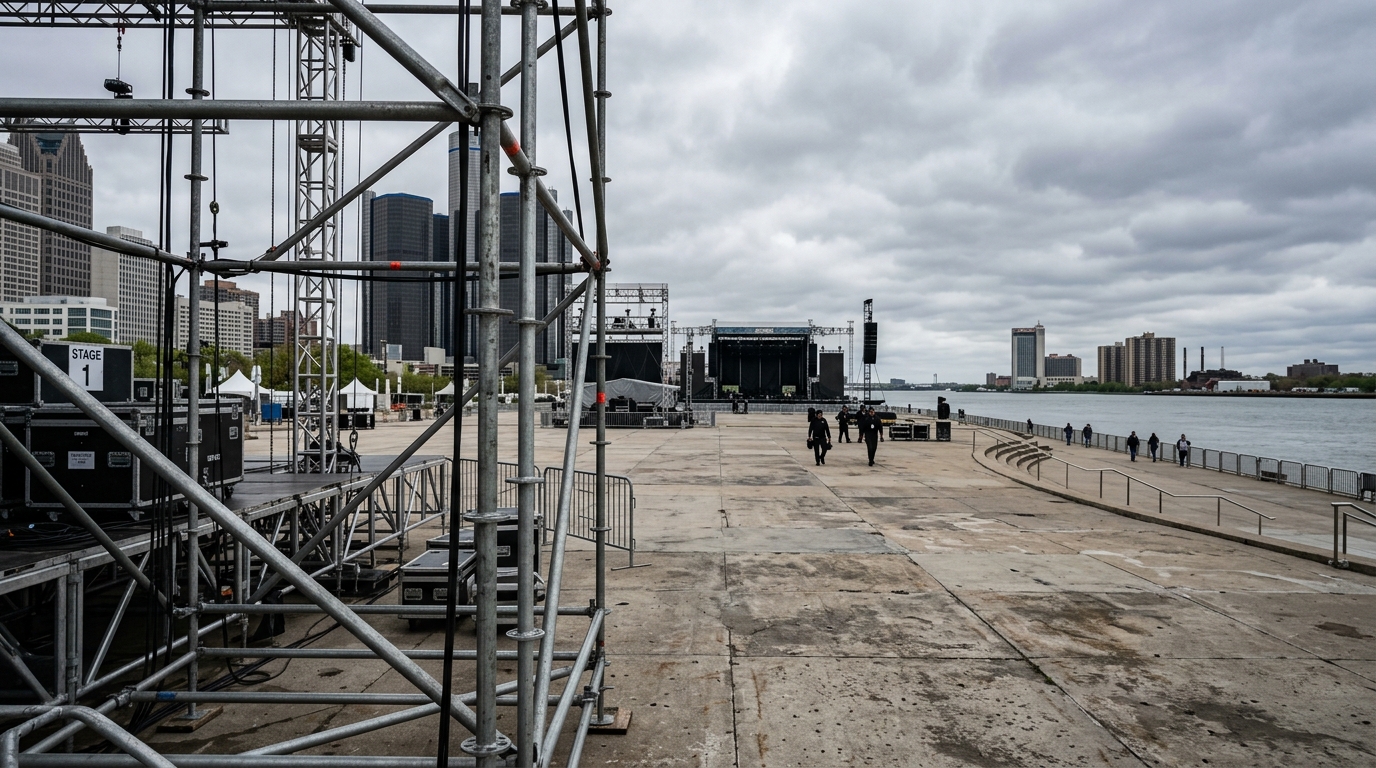
Hart Plaza hosts multiple distinct stages for Movement Detroit 2026, each carrying a different sonic identity. Yahoo Entertainment called Hart Plaza the world’s techno music nucleus during the 2026 edition, and the layout rewards attendees who plan their movement between stages in advance.
The compact footprint of Hart Plaza is both a gift and a challenge. Stages are close enough that you can catch the tail of one set and the opening of another, but schedule conflicts hit harder here than at sprawling rural festivals. Strategy matters.
How Many Stages Does Movement Detroit 2026 Have
Movement Detroit 2026 features multiple stages including the main Stargate Stage, the Underground Stage inside the Amphitheater, the Pyramid Stage, and the Made in Detroit Stage. Each stage carries a distinct programming identity: Stargate handles the biggest draws, the Underground goes deeper, and Made in Detroit spotlights local talent. The number of stages has remained consistent in recent years, keeping the festival’s footprint intentionally tight.
Best Stage Layout Strategy for Attendees
The best stage strategy at Movement Detroit is to anchor yourself at one stage per two-hour block rather than chasing individual sets. The Amphitheater’s Underground Stage rewards commitment because its enclosed acoustics shift dramatically depending on where you stand. Rushing between Stargate and the Pyramid Stage costs you five to eight minutes each way, which is enough to miss the opening build of a set. Pick your anchor, commit, and let the schedule conflicts go.
When Movement 2026 Set Times Go Live
Movement typically releases the official set times schedule one to two weeks before Memorial Day weekend, published on both the website and the official app. Downloading the app early is the move; it allows personalized schedule building and real-time stage updates. The 2026 festival runs Saturday through Monday, and set time announcements historically drop simultaneously across all channels.
Tickets, Passes, and What Movement 2026 Actually Costs
Movement Detroit 2026 tickets include single-day passes, three-day weekend passes, and VIP upgrades. According to BridgeDetroit’s festival guide, general admission weekend passes are priced at $227, with early bird tiers selling out within hours of release.
That $227 price point makes Movement one of the most accessible major electronic music festivals in North America. Compare that to Tomorrowland or ADE’s combined event costs, and the value proposition is clear, especially given the caliber of programming.
Movement Detroit 2026 Ticket Price Breakdown
The Movement Detroit 2026 ticket price breakdown starts at $227 for general admission weekend passes, with VIP upgrades adding dedicated viewing areas and expedited entry. Single-day passes offer a lower entry point for attendees who can only commit to one day. Prices increase in tiers as the event approaches, so purchasing directly through the official Movement website during early sale windows saves real money versus waiting.
Day Pass vs Weekend Pass: Which Is Worth It
The weekend pass wins for anyone serious about Movement. A single day gives you one slice of the programming, but the festival’s emotional arc builds across three days: Saturday is the warm-up energy, Sunday is the peak, Monday is the deep cut. If you’re flying in for Movement, a day pass is a half-measure. The weekend pass at $227 is the better value by any reasonable calculation, and it gives you access to the full curatorial arc the programmers designed.
Are Movement 2026 Tickets Still Available
Movement historically sells out weekend passes well before Memorial Day weekend, though single-day passes sometimes remain available closer to the event. Checking the official ticketing page regularly is the safest approach. Secondary market options exist through platforms like Tixel and TicketSwap, but they carry price markups and authenticity risks that buying direct avoids entirely.
Detroit’s Underground Circuit Beyond the Festival Gates
Movement Detroit 2026 afterparties and satellite events generate a dense ecosystem of programming across the city that rivals the festival itself. Mayor Mary Sheffield proclaimed May 18 through 25 as Detroit Techno Week, and venues from Spot Lite to UFO Bar to TV Lounge run events from Friday through Tuesday.
The afterparty circuit is where Movement’s real character reveals itself. Hart Plaza closes, and the city opens. The energy migrates to smaller rooms, warehouse spaces in Eastern Market, and bars across Corktown and Islandview where the sets run longer and the crowds get tighter.
Movement Detroit 2026 Afterparties Worth Attending
The Movement Detroit 2026 afterparties worth attending include Paxahau’s official events at Spot Lite (the opening party priced at $44) and the “Hold Me” unofficial pre-party at UFO Bar ($22). TV Lounge and Marble Bar consistently host some of the weekend’s most talked-about late-night sets. The unofficial warehouse events circulating through Detroit nightlife networks are harder to find but often deliver the most memorable moments of the entire weekend. Labels like Modularz represent the kind of uncompromising sound that thrives in those rooms.
Detroit Venues Hosting Official Movement Satellite Events
Spot Lite and UFO Bar, both owned by Roula David, are key Detroit venues hosting official Movement 2026 satellite events. Paxahau, the event company behind Movement, programs official afterparties at Spot Lite on Saturday and Sunday nights. David has worked with Paxahau for 15 years, and her venues have become essential infrastructure for the weekend’s extended programming. Northern Lights, Spkrbox, and MotorCity Wine round out the venue map for those exploring beyond Hart Plaza.
How Movement Week Shapes Detroit’s Local Club Culture
Movement week transforms Detroit into a global techno capital for five days, and the economic and cultural ripple effect extends well beyond Hart Plaza. Local venues see their highest booking density of the year. Detroit-based artists use the week to release new music, announce projects, and connect with international label heads and journalists who are in town specifically for this window. I’ve seen local producers land European booking deals over drinks at MotorCity Wine on a Monday night. That kind of access doesn’t exist anywhere else in the American electronic music calendar.
What Movement 2026 Signals for Techno’s Next Chapter
Movement Detroit 2026 signals that techno’s next chapter will be defined by geographic and stylistic expansion rather than consolidation around a single sound. The festival’s curatorial choices in 2026 reflect a multi-year trajectory toward broader representation, and genre-watchers are treating these decisions as a live index of where underground credibility is being assigned.
This is not about trend-chasing. Movement’s programming has always been conservative in the best sense: it books what it believes will matter, not what’s already popular. When the festival makes a bet, the circuit pays attention.
Is Techno Becoming More Diverse at Movement 2026
Techno diversity at Movement Detroit 2026 is real and structural, not performative. Increased representation from artists across Africa, Latin America, and Southeast Asia reflects broader conversations about who gets to define techno’s future. The festival’s willingness to book South Asian artists redefining club music and Latin American producers alongside Detroit originators makes a clear statement: the genre’s center of gravity is shifting, and Movement is documenting that shift in real time.
New Subgenres Represented in the 2026 Lineup
New techno subgenres gaining visibility at Movement 2026 include industrial-influenced hardware sets, slower dub techno explorations, and crossover acts bridging club music with experimental sound design. Hypnotic and minimal techno hold strong, but the edges are where the energy concentrates. These subgenre inclusions reflect a festival willing to challenge attendee expectations rather than deliver a greatest-hits techno experience. For anyone tracking where the creative frontier sits, Movement 2026 functions as a live reading of the underground’s current priorities.
Movement 2026 and Detroit’s Ongoing Musical Legacy
Movement 2026 reinforces Detroit’s musical legacy by refusing to treat it as a museum piece. The festival honors its founding mythology through bookings like Carl Craig and Kevin Saunderson while simultaneously programming the artists who will define the genre’s next decade. That tension between reverence and forward motion is what keeps Movement relevant. Detroit invented techno. Movement 2026 proves the city still has the authority to say where it goes next.