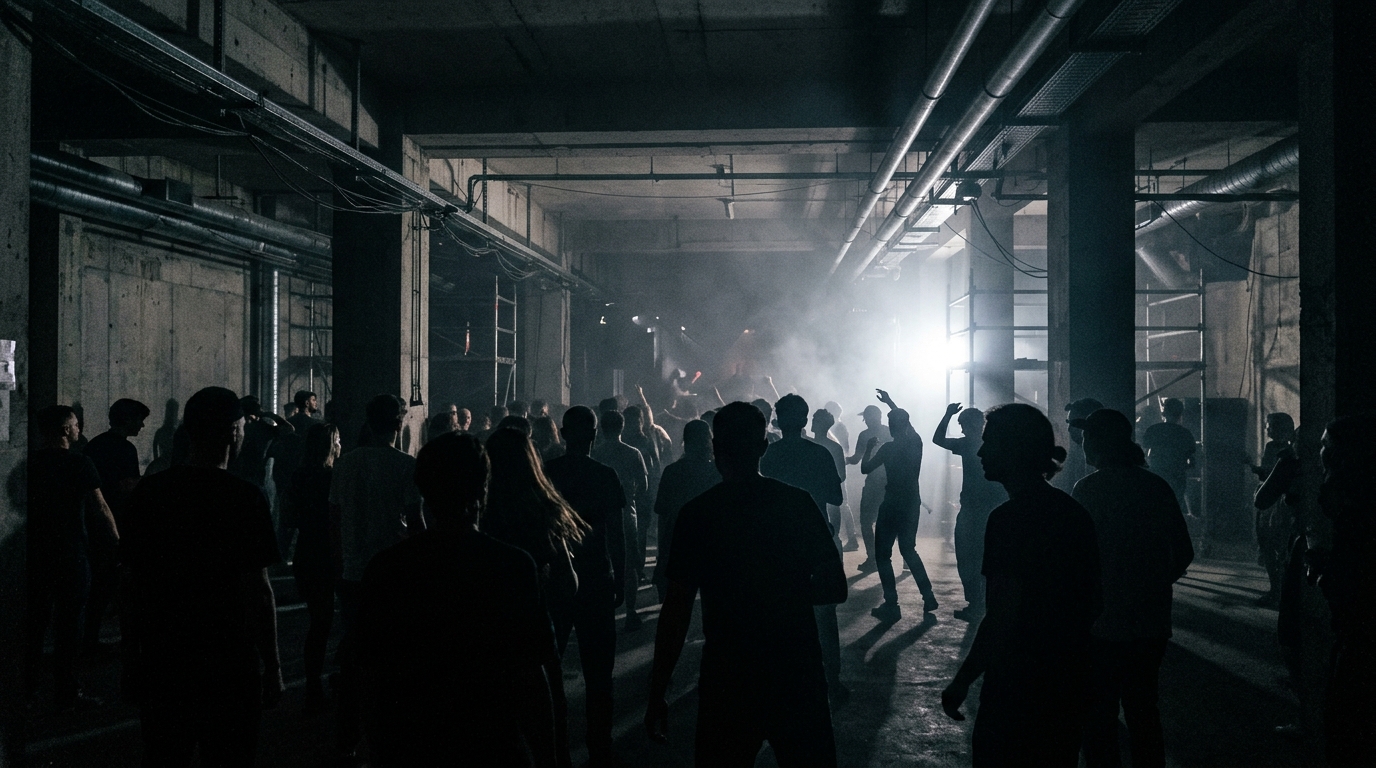
Some labels chase trends. Others build a sound so specific that the trends eventually circle back around. Fachwerk Records is the second kind: a Berlin-rooted minimal techno imprint that has quietly stacked over 50 releases while most of its peers burned through their catalogs chasing whatever BPM the algorithm rewarded that quarter. Built by Mike Dehnert as both a creative outlet and a curatorial statement, Fachwerk Records Mike Dehnert minimal techno represents a particular strain of Berlin techno that prizes groove, dub-inflected textures, and patience over spectacle. With the label now pushing into global touring activity, including dates in Toronto and beyond, this is the right moment to understand why Fachwerk matters and where it sits in the broader architecture of minimal techno.
Understanding Fachwerk Records’ Unique Identity
Fachwerk Records defines its identity through an unwavering commitment to vinyl-first minimal techno with deep dub influences, operating from Berlin with a catalog that now exceeds 50 releases. The label has maintained a tight relationship with Berlin’s club infrastructure, pressing records that work in small rooms at 3 a.m. rather than chasing festival-scale bombast.
Where other Berlin techno labels diversified into ambient side-projects or hard techno sub-imprints, Fachwerk stayed in its lane. That discipline is the identity. The label’s Facebook presence holds around 10,000 followers, a modest number that reflects its audience: DJs who actually play the records, not passive followers scrolling past content.
What is Fachwerk Records?
Fachwerk Records is a Berlin-based electronic music label specializing in minimal techno, founded and operated by producer Mike Dehnert. The catalog focuses on vinyl releases built around hypnotic grooves, dubby chord stabs, and stripped-back percussion that sits comfortably between 124 and 130 BPM. It is not a compilation factory; nearly every release carries Dehnert’s direct involvement, either as the artist or as the guiding ear behind the master.
Who runs Fachwerk Records?
Fachwerk management centers entirely on Mike Dehnert, who serves as founder, primary artist, and A&R. This single-operator model keeps the label’s output consistent but also means every release reflects one person’s taste. That’s a strength: there’s no committee diluting the sound. Dehnert selects the tracks, oversees the cuts, and maintains the visual identity. The result is a catalog that reads like a single, extended artistic statement rather than a roster showcase.
Key Figures Behind Fachwerk Records
Mike Dehnert is the central figure behind Fachwerk Records, functioning as its founder, lead producer, and sole decision-maker. His Slimsun EP, cataloged as Fachwerk’s landmark 50th release, was described by Phonica Records as “heavy grooving modern techno tracks with some dubby influences,” a concise summary of what Dehnert has spent years refining.
Dehnert’s influence extends beyond his own label. His production style helped define a particular corridor of Berlin minimal techno that sits between the stripped-back click-house of the early 2000s and the heavier, industrial-adjacent sound that dominated the city’s clubs after 2015. He chose neither extreme. That middle ground is where Fachwerk lives.
Who is Mike Dehnert?
Mike Dehnert is a Berlin-based techno producer known for a production approach that prioritizes deep, rolling grooves over peak-time aggression. His tracks rarely shout. They pull you in through repetition, subtle harmonic shifts, and low-end weight that rewards proper sound systems. I’ve heard his records played at Tresor on a quiet Wednesday, and they commanded the room precisely because they didn’t try to compete with louder, flashier material around them.
What is Dehnert’s role in Fachwerk?
Dehnert’s role at Fachwerk is total. He produces the majority of the catalog, curates the occasional guest releases, and maintains the label’s visual and sonic identity. This is closer to the collective-as-brand model than a traditional label structure, except Fachwerk is essentially a collective of one. That concentration of control means the label can’t scale quickly, but it also means quality control never slips. Every record that leaves the press carries his direct approval.
Fachwerk’s Impact on Minimal Techno Scene
Fachwerk’s influence on the minimal techno scene operates through consistency rather than individual breakout moments. Over 50 releases deep, the label has become a reference point for producers who want to understand how dub techno aesthetics can coexist with functional dancefloor minimalism without collapsing into ambient wallpaper.
The impact is easiest to hear in how other Berlin producers approach low-end design. Before Fachwerk established its template, much of the city’s minimal output leaned toward clicky, high-frequency-focused arrangements. Dehnert’s records brought the sub-bass back into focus, proving that minimal didn’t have to mean thin. That shift influenced a generation of producers working in the 125–128 BPM range who now treat bass weight as a structural element rather than an afterthought.
How has Fachwerk influenced artists?
Fachwerk artists and associates absorbed a production philosophy: restraint as a creative tool. The label demonstrated that you could build a 7-minute track around two chord changes and a single percussion loop if the groove was right. I’ve watched younger producers in Berlin reference specific Fachwerk catalog numbers the way jazz musicians cite Blue Note pressings. It’s a shorthand for a certain kind of discipline, a refusal to over-produce.
What makes Fachwerk’s sound unique?
The Fachwerk sound sits at the intersection of dub techno’s spatial depth and minimal techno’s rhythmic precision. Where a label like Basic Channel dissolved structure into reverb, and a label like Perlon sharpened it into micro-house clicks, Fachwerk occupies the space between: warm, dubby pads layered over tight, functional kick-hat patterns. The records are mixed for vinyl, which means the low end is cut with physical playback in mind. That analog-first mastering philosophy gives the catalog a cohesion you can hear across releases, even years apart. It’s a sound built for deep listening on proper systems, not laptop speakers.
Fachwerk Records’ Global Touring Activities
Fachwerk touring has expanded beyond Berlin’s club circuit, with label artists now booking dates in North America, including Toronto, alongside continued European appearances. This global push signals a shift from a vinyl-only cult label to one that actively builds audience through live presence.
The Toronto dates are particularly notable. Canada’s techno scene has historically leaned toward harder, industrial-influenced sounds, so bringing Fachwerk’s dub-minimal aesthetic into that context creates an interesting friction. It’s the kind of booking that works best in intimate rooms: 200-capacity basements where the sub-bass can fill the space without competing against festival-scale PA systems.
Where is Fachwerk touring currently?
Fachwerk tour locations in 2026 include Toronto as a key North American stop, alongside ongoing appearances across European cities. The label’s touring strategy mirrors its release philosophy: selective, intentional, and focused on rooms where the music translates properly. These are not arena plays. They’re club nights built around sound quality and audience familiarity with the catalog.
What events feature Fachwerk artists?
Fachwerk events typically appear as label showcases within existing club programming rather than standalone festival stages. This format works better for the music. A Fachwerk night at a 300-cap venue in Kreuzberg or a warehouse in Toronto’s west end puts the audience close to the speakers, which is where these records come alive. The label’s social media presence, active across both Facebook and Instagram, promotes these dates directly to its core following rather than relying on festival marketing pipelines.
The Future of Fachwerk Records
The future direction of Fachwerk Records points toward continued catalog growth on vinyl, expanded international touring, and selective onboarding of new producers who fit the label’s sonic template. With 50 releases already pressed, the label has enough back-catalog gravity to sustain itself without chasing streaming metrics.
The vinyl market’s ongoing resurgence benefits labels like Fachwerk disproportionately. Their audience already buys physical records; the format isn’t a novelty add-on. As melodic techno’s emotional maximalism saturates streaming playlists, Fachwerk’s restraint becomes a counterweight that collectors actively seek out.
What are Fachwerk’s upcoming projects?
Fachwerk projects in the pipeline will likely follow the label’s established cadence: a handful of vinyl EPs per year, each carrying Dehnert’s production or direct curation. The 50th release milestone suggests the label is entering a phase where retrospective attention meets forward momentum. Expect continued 12-inch singles rather than album-length experiments. The EP format is where Fachwerk does its best work, and Dehnert has shown no interest in abandoning it for longer formats that dilute the impact.
How is Fachwerk evolving?
Fachwerk’s evolution is measured in degrees, not leaps. The label adapts by expanding its geographic reach through touring while keeping its sonic identity locked. That’s the correct strategy for a label at this scale. Chasing new subgenres or pivoting toward digital-only distribution would alienate the exact audience that sustains it. The evolution is logistical, not aesthetic: more cities, more club nights, more visibility for a sound that has always been there but rarely gets the spotlight it deserves outside Berlin’s inner circle.