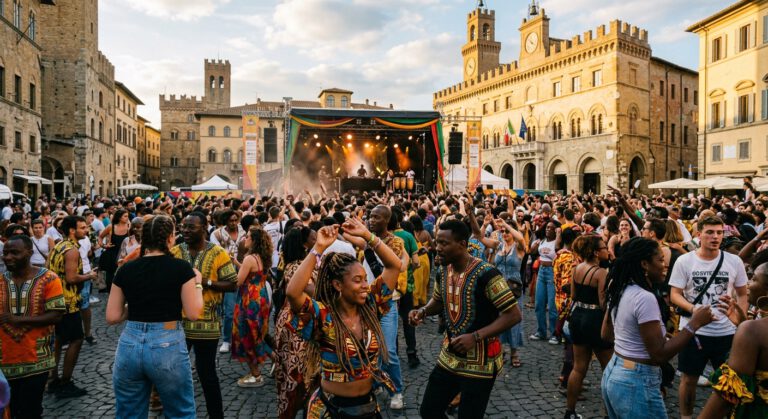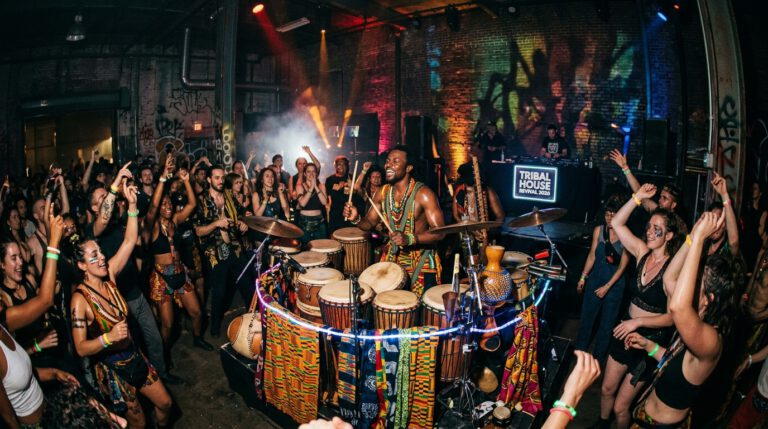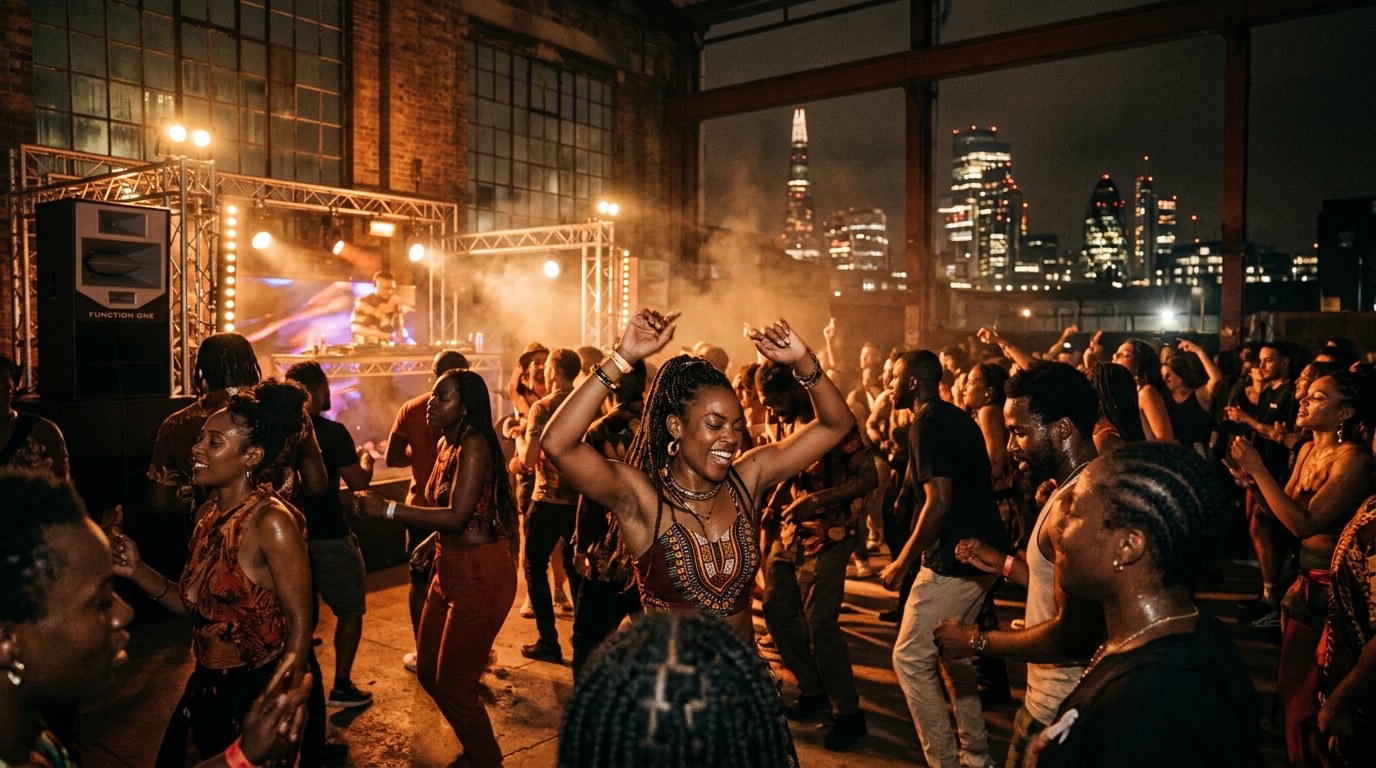
The Gondwana festival London Natives 2026 collaboration is the clearest signal yet that African electronic music has outgrown the “emerging scene” label. On 13 June, Natives and Gondwana KE bring Kenya’s largest African electronic festival to Riverside East in Queen Elizabeth Olympic Park, and the implications stretch far beyond a single day party. Their 2024 collaboration sold out. This one carries higher stakes: a proving ground for whether Nairobi’s club sound can hold a permanent residency in London’s crowded summer calendar.
Understanding the Gondwana Festival
The Gondwana festival is Kenya’s largest African electronic music event, built around afro house, organic house, and the broader spectrum of African club sounds. It has become the primary stage for East Africa’s electronic producers to reach an audience that understands the music on its own terms, not as a novelty import.
Gondwana’s Nairobi editions have used venues like the Nairobi Railways Museum, grounding the events in physical spaces that carry their own cultural weight. The April 2026 edition there featured JAZZWRLD, a producer whose records have been dominating afro house charts, reinforcing Gondwana’s position as the launchpad for the continent’s sharpest electronic talent.
What is the Gondwana Festival?
The Gondwana festival is an African electronic music event rooted in Nairobi, Kenya, spotlighting afro house, deep house, and organic house producers from across the continent. It functions less like a traditional festival and more like a curated showcase, each edition shaped around a specific sonic narrative. At the April 2026 Nairobi edition, the sundowner set drew a crowd response that was entirely participatory rather than passive — the energy in those recordings is nothing like a European festival audience, and that distinction is central to what Gondwana is trying to transplant to London.
History of Gondwana in Kenya
Gondwana started in Kenya and built its reputation through carefully programmed Nairobi events that prioritized sound quality and artist development over scale. The festival grew quickly within the East African scene, earning a loyal following that treats each edition as a cultural moment rather than just another party. Their use of heritage sites like the Nairobi Railways Museum sets them apart from promoters chasing warehouse aesthetics. That grounding in place and history is not incidental — it is the reason Gondwana carries curatorial authority that newer East African electronic events have struggled to replicate.
Partnership with London Promoters
Gondwana’s partnership with London promoter collective Natives brings the Kenyan festival’s curatorial identity into the European music scene through a co-branded open-air event at Riverside East, Newham, E20, on 13 June 2026. This is not a licensing deal or a brand exercise; it is a direct programming collaboration with a lineup featuring artists like Limzy, asanda LDN, EUGGY, and others rooted in the African electronic sound.
The venue choice matters. Riverside East sits inside Queen Elizabeth Olympic Park, a 1,000-capacity outdoor space that favors intimate sound over festival sprawl. Tickets start at £29 through DICE, which means reseller-proof access and a crowd that actually wants to be there. The 2024 Natives x Gondwana edition sold out, and the organisers have publicly stated they expect the same this time.
Why partner with London?
London is the natural bridgehead for African club music entering Europe because the city already has deep diasporic networks and a club infrastructure that rewards niche programming. Natives, as a promoter, understands how to position African electronic sounds for a London audience without diluting them. The importance of this London partnership is that it gives Gondwana access to a market where afro house is no longer a curiosity but a viable headliner draw. It also gives Natives a programming identity that is genuinely distinct in a city where open-air summer events compete fiercely for the same audience.
Impacts of European collaboration
The impact of European collaboration for Gondwana goes beyond ticket sales. It creates a booking pipeline: DJs who play the London edition get visibility with European agents, and European selectors who attend get exposed to East African producers they would never find through algorithm-driven platforms. This pattern has already played out with South African amapiano acts over the past three years; the difference is Gondwana is doing it with intentional curatorial control rather than letting major labels dictate the crossover terms. Each successive London edition builds a documented track record that agents and festival bookers can point to when making the case for East African acts on European stages.
Cultural Significance of the Festival
Gondwana’s cultural significance lies in its insistence that African electronic music be presented on African terms, with programming, aesthetics, and artist selection driven by people embedded in the Nairobi scene rather than external tastemakers. This is what separates it from European festivals that book one or two African acts as a diversity gesture.
The festival treats cultural representation as a structural principle, not a marketing angle. When Gondwana programs a sundowner showcase overlooking Nairobi, the setting is not incidental decoration. It is the context the music was made for. Transplanting that ethos to East London’s Olympic Park is the real experiment here: can the feeling survive the geography?
How does Gondwana represent African culture?
Gondwana showcases African culture by centering East African electronic producers and letting the music speak without the usual Western festival framing. The lineups are not tokenistic additions to a house or techno bill. They are the bill. The representation of African culture here is curatorial: every artist, every venue, every visual element reinforces a coherent identity rooted in Nairobi’s creative community and its connection to broader pan-African sounds.
Importance of cultural exchange
Cultural exchange at the festival level works best when it is reciprocal rather than extractive. The Natives x Gondwana model achieves this because both sides bring genuine audiences; Natives has built credibility in London’s Black music spaces, and Gondwana commands loyalty across East Africa. The cultural exchange importance here is that neither party is borrowing the other’s credibility. They are pooling it. That distinction is everything when the alternative is European promoters cherry-picking African acts for one-off bookings with no structural commitment.
The Future of African Club Music
African club music is moving from a streaming phenomenon to a live-event economy in Europe, and the Gondwana x Natives collaboration is one of the clearest examples of how that transition works in practice. The genres driving this shift, including afro house, amapiano, and gqom, have already proven they can fill rooms; the question now is who controls the infrastructure.
The emerging artists coming through Gondwana’s pipeline represent a generation that grew up hearing both Johannesburg’s dance music and Berlin’s techno, and their productions sit comfortably at 120 to 125 BPM where those worlds overlap. Producers like Drega, who features on Maline Aura’s “Mabebuza” (a track highlighted in the Natives x Gondwana lineup), exemplify this hybrid fluency. The European music market is paying attention because the numbers are already there; what has been missing is the live infrastructure, and that is exactly what events like this build.
What trends are emerging in African music?
The emerging trends in African music centre on the fusion of traditional percussion patterns with electronic production techniques borrowed from deep house and organic house. Afro house producers are increasingly comfortable working at tempos and textures that European DJs can integrate into longer sets without jarring transitions. This is not assimilation; it is African electronic producers recognising that their sound already has structural compatibility with European club formats and choosing to exploit that on their own terms rather than waiting for A&R departments to notice.
Will African music dominate European charts?
African music will not dominate European charts in the traditional sense because the most interesting work is happening below the pop threshold, in club spaces and festival circuits where chart position is irrelevant. What is happening instead is more consequential: African club music is building its own European infrastructure through events like Gondwana x Natives, through DICE-distributed ticketing, through promoter alliances that bypass legacy gatekeepers entirely. The question of African music on European charts misses the point. The real power move is owning the rooms, and that is already underway.