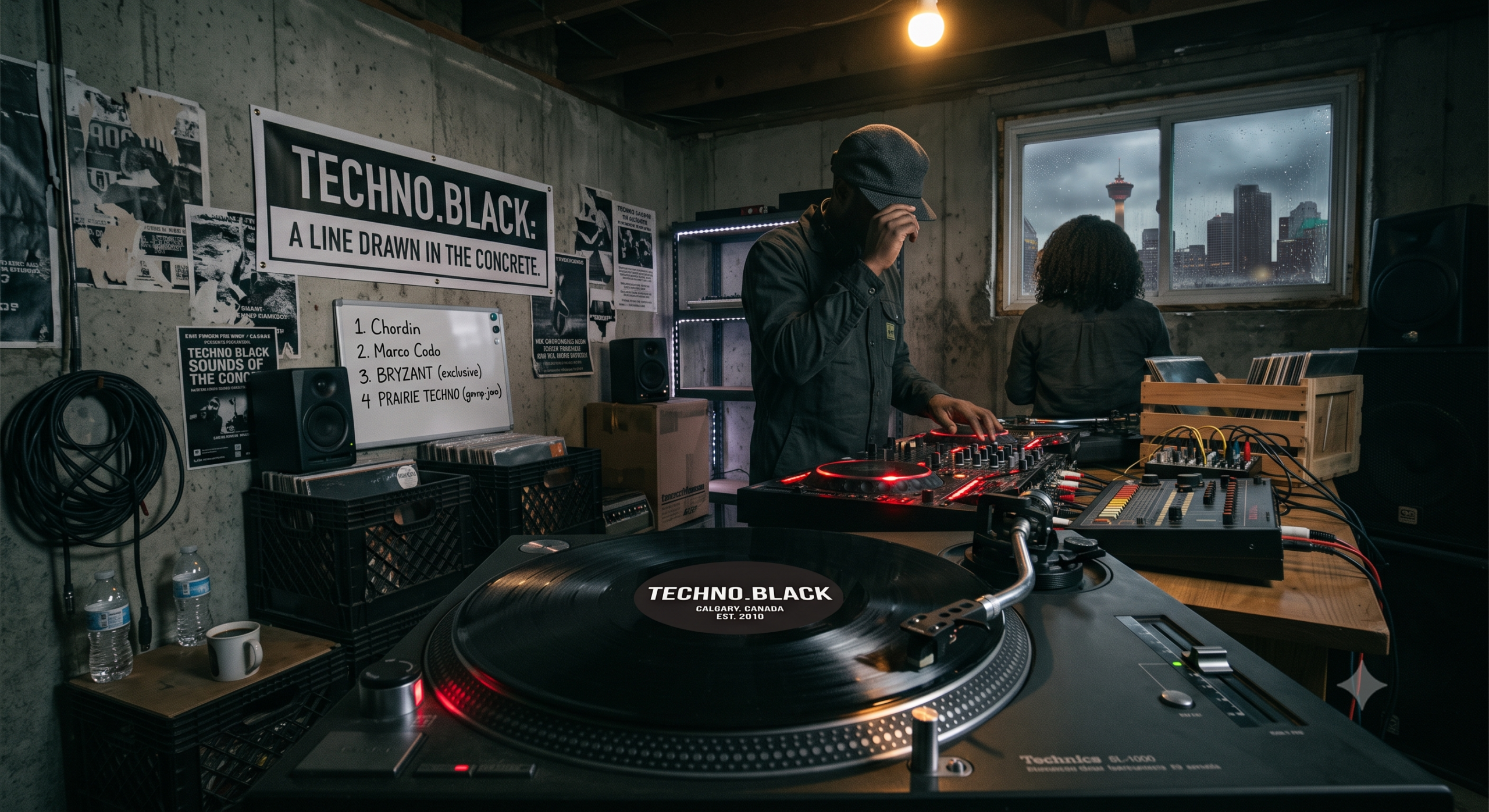
Founded in 2016, the TECHNO.BLACK label Calgary Canada operates as one of the most deliberately positioned imprints in North American underground electronic music. It is not simply a techno label. It is a line drawn in the concrete: Black identity fused to a genre that Black artists invented and that the global industry spent decades whitewashing. From the Canadian prairies, Bryzant and a growing roster are building something that refuses to separate the music from the people who made it possible.
What TECHNO.BLACK Label Calgary Canada Actually Is
TECHNO.BLACK is a Calgary-based techno record label founded in 2016, operating as a platform for producers, DJs, and live performers. According to its Resident Advisor profile, the label provides a forward-thinking channel for techno through mentoring, production, performance, distribution, broadcasting, and events. It is one of the few Black-owned techno imprints operating out of Western Canada.
The roster includes artists like Chordlust, KillMiDi, Marco Cardoza, Mark Adam, Mehta, The GOAT, Topology, and Tragamin. This is not a vanity project with one name on every release. It is a functioning collective with a specific mission embedded in every catalog decision.
Who Founded TECHNO.BLACK in Calgary
Bryzant, a Black techno artist based in Calgary, founded TECHNO.BLACK in 2016 as both a creative outlet and an act of cultural assertion. The label was built to operate at the intersection of sound design, cultural criticism, and underground music infrastructure, positioning Bryzant not just as a producer but as an architect of Black-led electronic music space in a city with no existing template for it.
What Genre and Sound TECHNO.BLACK Releases
TECHNO.BLACK releases dark, industrial, and raw techno, often sitting in the 130-140 BPM range that favors physical intensity over melodic comfort. The sound leans confrontational. It shares DNA with labels like America’s darkest techno imprints but carries a specific weight tied to its cultural framing. The darkness here is not aesthetic posture; it is inseparable from the identity politics the label centers.
Is TECHNO.BLACK an Active Independent Imprint
TECHNO.BLACK remains an active independent label with an established Resident Advisor presence and a roster of eight listed artists. For an imprint operating from Calgary with no major industry infrastructure behind it, maintaining activity since 2016 is a statement in itself. Most independent techno labels outside major hubs collapse within two years. This one has not.
Why a Calgary Techno Label Disrupts the Expected Map
A Black-owned techno label based in Calgary is culturally significant because it breaks the geographic gatekeeping that has defined techno legitimacy for decades. The genre’s power centers, Detroit, Berlin, London, Amsterdam, have functioned as credentialing systems. A label asserting Black techno identity from the Canadian prairies forces a reckoning with who gets to define where the music belongs.
Calgary has its own underground history. As The Scene Calgary documented, the city has a tradition of renegade tunnel raves and DIY party infrastructure dating back to the mid-90s, with organizers hauling sound systems into underpasses and building the scene themselves. TECHNO.BLACK grows from that same guerrilla soil.
Is Calgary Part of the Global Techno Scene
Calgary is not a recognized node in the global techno network, and that is precisely what makes TECHNO.BLACK’s position powerful. The city lacks the institutional support, the booking pipelines, and the media attention that flow to Berlin or Detroit. But as someone who has watched scenes emerge from places the industry ignores, I can say the absence of infrastructure often produces the most uncompromising music. Calgary’s isolation is not a limitation for TECHNO.BLACK; it is a filter that strips away careerism.
How Geography Shapes TECHNO.BLACK’s Identity
Operating from the prairies means operating without a safety net. There is no local techno economy to absorb you, no club circuit to validate you weekly. Geography forces TECHNO.BLACK to be digital-first and ideologically sharp, because the label cannot rely on proximity to scene capital. That distance from traditional techno hubs, similar to what labels emerging from Central Asia face, becomes a source of clarity rather than disadvantage.
What a Prairie Techno Label Signals Culturally
A techno label on the Canadian prairies signals that Black electronic music identity is not geographically confined. It rejects the idea that you need to be in Detroit to claim techno’s Black roots or in Berlin to be taken seriously as a techno label. The prairie context strips away the social capital that comes with location and forces the music and the mission to carry the full weight.
Techno’s Whitewashed Terrain Bryzant Refuses
Techno was created by Black artists in Detroit in the 1980s, and the genre’s commercial expansion was largely absorbed by white European artists and labels, erasing much of its Black authorship. Juan Atkins, Derrick May, and Kevin Saunderson, the Belleville Three, built the foundation. Four decades later, events like the “Four Decades of Techno” celebration at ADE 2026 featuring Juan Atkins and Metroplex Records remind the industry of those origins, but the label infrastructure globally remains overwhelmingly white-owned.
TECHNO.BLACK exists as a direct refusal of that erasure. It does not petition for inclusion in existing structures. It builds its own.
Has Techno Been Whitewashed From Its Black Origins
Yes. The evidence is structural, not anecdotal. Look at the major techno label rosters on platforms like Echio, which lists Kompakt, Tresor, Drumcode, Ostgut Ton, and Perc Trax among the genre’s key imprints. Black-owned labels are nearly invisible in those listings. The commercial machinery of techno, the booking agencies, the festival headliner slots, the distribution deals, overwhelmingly benefits artists and owners who are not Black. TECHNO.BLACK confronts this by existing, by putting the word Black in its name and refusing to let anyone forget.
How Black Techno Artists Navigate Label Exclusion
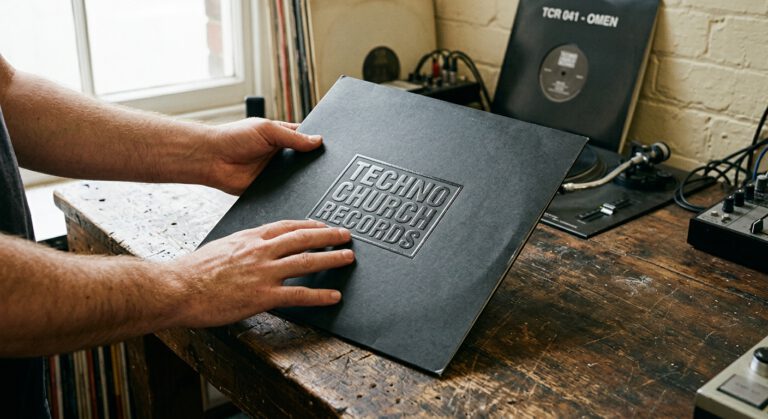
Black techno artists navigate label exclusion by building their own. I’ve seen this pattern repeat across cities: when the existing infrastructure won’t open, you pour the foundation yourself. Labels like Techno Church Records in Philadelphia operate from a similar impulse, creating spiritually and culturally charged spaces because the mainstream pipeline was never designed to carry their signal. TECHNO.BLACK follows that same logic, transplanted to Calgary.
What Ownership Means in Underground Electronic Music
Label ownership in underground electronic music means controlling the narrative, the aesthetic, the revenue, and the catalog. For Black artists in techno, ownership is not a business preference; it is a survival mechanism. When you own the label, no one can tokenize your release, bury your credits, or strip your cultural context. Bryzant understood this when founding TECHNO.BLACK: the label itself is the political instrument, not just the tracks it releases.
Bryzant’s Black Identity Embedded in Every Release
Bryzant embeds Black identity into TECHNO.BLACK releases by making the label name itself a manifesto. The compound “TECHNO.BLACK” fuses genre and racial identity into a single indivisible statement. Every release that carries that imprint name forces the listener, the DJ, the distributor, and the algorithm to process Blackness as inseparable from the music. The period between the two words functions as a deliberate pause, a punctuation of resistance.
This is not branding in the marketing sense. It is closer to what Detroit’s original producers did when they named their labels and tracks after futurist concepts: using language to claim territory that the mainstream had not yet recognized as theirs.
How Bryzant Expresses Black Identity Through Music
Bryzant’s expression of Black identity through techno is not limited to lyrical content or sampling. It operates at the structural level: who gets released, how the label presents itself, what the name forces you to acknowledge before you even press play. The sonic choices, dark textures, industrial weight, raw percussion, carry the same uncompromising stance as the label’s visual and verbal identity.
The Sonic Philosophy Behind TECHNO.BLACK Releases
The sonic philosophy of TECHNO.BLACK centers on rawness and confrontation. The releases favor distorted kicks, metallic percussion, and sparse arrangements that leave no room for passive listening. This is techno designed to occupy space aggressively, reflecting a label philosophy where sound design and political positioning are the same act. There is no separation between the aesthetic and the argument.
Does TECHNO.BLACK Address Race Explicitly in Its Branding
TECHNO.BLACK addresses race explicitly and unapologetically in its branding. The label name is the statement. There is no subtext to decode, no careful euphemism. In a genre where most labels avoid any direct engagement with race, TECHNO.BLACK puts it in the URL, the logo, the catalog. That directness is rare in electronic music, where even labels with Black founders often avoid foregrounding race for fear of being pigeonholed. Bryzant rejects that calculation entirely.
How TECHNO.BLACK Builds Infrastructure Beyond the Music
TECHNO.BLACK functions as label infrastructure for Black electronic music by operating across mentoring, production support, broadcasting, and event coordination, not just distribution. This multi-channel approach mirrors what established independent labels like Berlin’s Mobilee Records have built over decades, but TECHNO.BLACK does it from Calgary with a fraction of the resources and a fundamentally different cultural mission.
The label’s digital-first distribution strategy allows it to reach the international techno community from a city that most of that community cannot place on a map. That is infrastructure by design, not by accident.
Does TECHNO.BLACK Support Other Black Electronic Artists
TECHNO.BLACK operates as a full label imprint, not a solo artist project. Its Resident Advisor page lists eight associated artists, confirming that the platform extends beyond Bryzant alone. The label’s stated mission includes mentoring and production support, positioning it as a development pipeline for Black electronic artists in a region where no comparable infrastructure exists.
What Platforms Distribute TECHNO.BLACK Releases
TECHNO.BLACK releases are distributed through digital platforms including Bandcamp, Beatport, and major streaming services. This digital-first approach is strategic for a label operating from Calgary: it removes the geographic penalty and places the catalog alongside releases from Berlin, Detroit, and London. For DJs and collectors, the music is accessible through the same channels they already use, which matters more than physical proximity to any scene hub. Those interested in how platform choice shapes underground label strategy will recognize the calculation at work here.
How the Label Functions as a Cultural Institution
TECHNO.BLACK functions as a cultural institution by combining music release with broadcasting, events, and artist development under a single ideological framework. It is not just putting out records; it is building the systems, branding, and community channels that Black artists in techno have historically been denied. In Calgary, where no other entity fills this role, the label operates as both a creative platform and a political statement about who gets to build infrastructure in electronic music.
Why TECHNO.BLACK Matters to Techno’s Global Future
TECHNO.BLACK matters to techno’s global future because it represents a corrective force at a moment when the genre’s commercial expansion is accelerating without proportional Black ownership. The global dance music industry is valued at over $11 billion, and the question of who owns the labels, the festivals, and the publishing becomes critical to whether Black artists benefit from the culture they created.
Labels like TECHNO.BLACK are not waiting for permission from established power centers. They are building ownership from the ground up, in cities and communities that the industry has never bothered to look at.
Can Black-Owned Techno Labels Reshape the Genre’s Future
Black-owned techno labels can reshape the genre’s future by redistributing who controls the narrative and the revenue. The model is not new: Detroit’s Metroplex Records, founded by Juan Atkins, proved decades ago that Black ownership and artistic innovation are inseparable in techno. What TECHNO.BLACK adds is proof that this model can be replicated outside the original cities, in places like Calgary where no one expected it to appear.
What Precedent TECHNO.BLACK Sets for Canada
TECHNO.BLACK sets a precedent for Canada by demonstrating that Black-led music labels can operate from cities without established underground scenes and still build a functional, ideologically coherent platform. For Canadian electronic music, which has historically been dominated by Toronto and Montreal, a Calgary-based Black techno imprint active since 2016 is a direct challenge to the country’s own internal geography of legitimacy. It opens a door that did not previously exist.
How TECHNO.BLACK Connects to Detroit’s Original Legacy
TECHNO.BLACK draws a direct philosophical line back to Detroit, where Black artists invented techno as a response to deindustrialization, racial inequality, and the need for self-determined futures. Bryzant’s label continues that tradition of using techno as both art and resistance, transplanted into the Canadian prairie context. The connection is not nostalgic. It is structural: asserting that Black techno has always been about ownership, survival, and the refusal to let someone else tell your story.