The 303 never really left. It just went underground for a while, hiding in warehouse sets and B-sides, waiting for the culture to catch up again. Now, in 2026, the acid house revival 2026 is unmistakable: new producers are programming squelch lines with the same devotion their predecessors brought to Chicago basements nearly four decades ago. What’s different this time is the context. The ritual has changed. The rooms have changed. The voices driving the sound forward are global, genre-fluid, and uninterested in nostalgia for its own sake.
The Evolution of Acid House Music
Acid house evolved from a hardware accident into one of electronic music’s most enduring sonic signatures. The Roland TB-303, originally a bass accompaniment tool that flopped commercially at its 1981 launch price of around $400, became the genre’s defining instrument after Chicago producers like DJ Pierre and Phuture repurposed its resonant filter sweeps into something entirely alien. That single piece of gear created a genre.
From the Haçienda in Manchester to the fields of illegal raves across the M25 corridor, acid house evolution followed a path shaped as much by legislation and moral panic as by musical innovation. The UK’s Criminal Justice Act of 1994 tried to kill it. It didn’t. The sound simply mutated, folding into trance, hard techno, and electro before cycling back to its raw form.
How Acid House Started in the 1980s
The acid house origins trace to 1987 Chicago, specifically to Phuture’s “Acid Tracks,” a record built almost entirely around the TB-303’s unpredictable filter patterns. DJ Ron Hardy played it at the Music Box, reportedly looping it for hours. I’ve spoken to people who were in that room; they describe it less as a song and more as a chemical event. The 1980s acid house explosion that followed was the first time electronic music felt genuinely dangerous to mainstream culture.
Key Influences Shaping Acid House Today
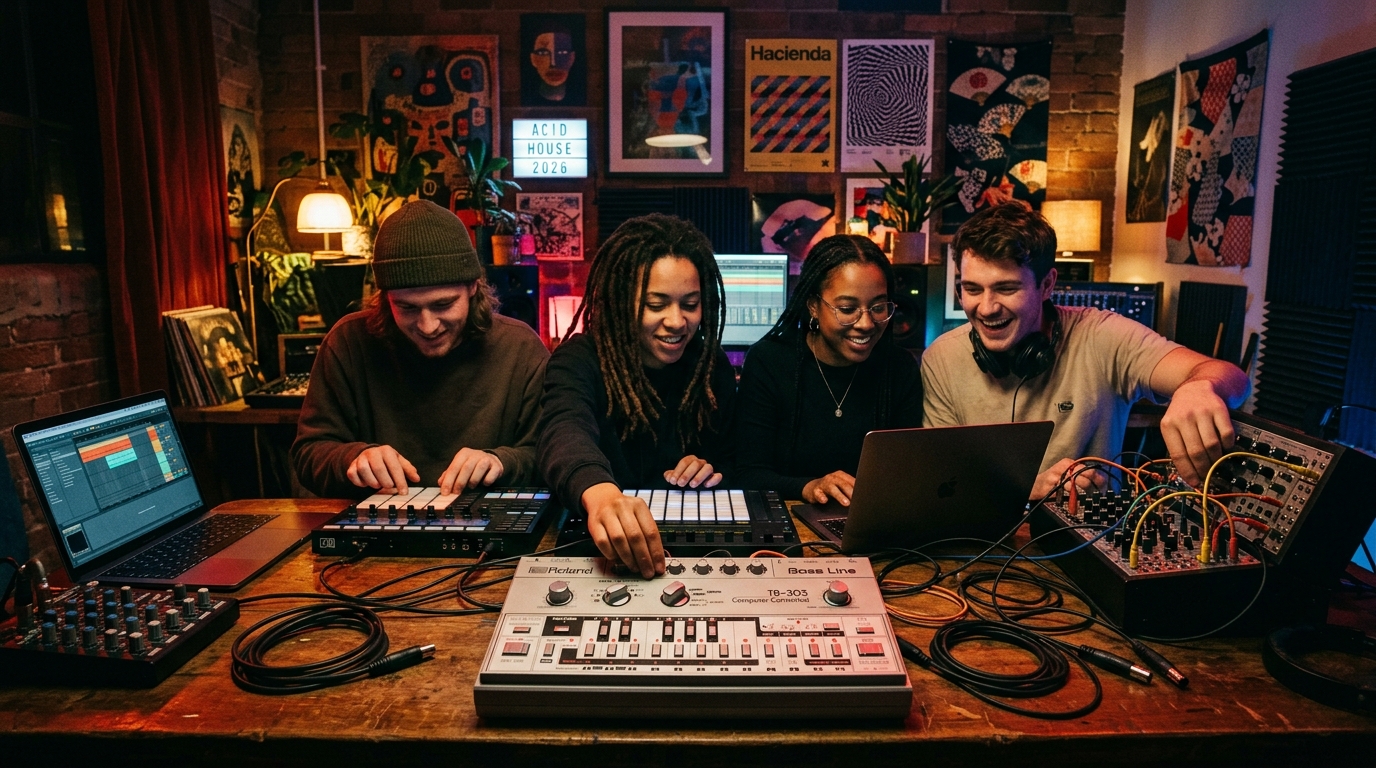
Today’s acid house influences stretch well beyond the original Chicago-Detroit-Manchester triangle. Producers pull from dub minimal’s spatial techniques, Afro-diasporic rhythmic structures, and ambient music’s patience. The result is acid that breathes differently. Labels like Balkan Vinyl and Acid Waxa have pushed the sound toward slower, more hypnotic territory, often sitting around 120-125 BPM rather than the frantic 130+ of early rave-era acid. Modular synthesis has also cracked the genre open; the 303 is still central, but it now shares space with Eurorack patches and software emulations that would have been unthinkable in 1988.
Current Trends in Acid House Revival 2026
The acid house trends in 2026 center on three currents: lo-fi production aesthetics, ritualistic event design, and cross-genre pollination. Producers are deliberately roughening their mixes, rejecting the hyper-polished mastering chains that dominated the 2010s. Tracks are landing on Bandcamp with tape hiss intact, and the audience wants it that way. There’s a conscious rejection of algorithmic smoothness.
The 2026 acid house scene also leans heavily into visual identity. Flyer art references the smiley-face iconography of 1988 but filters it through brutalist design and AI-generated psychedelia. Events are designed as full sensory environments, not just DJ sets with a light rig bolted on.
Popular Themes in 2026 Acid House
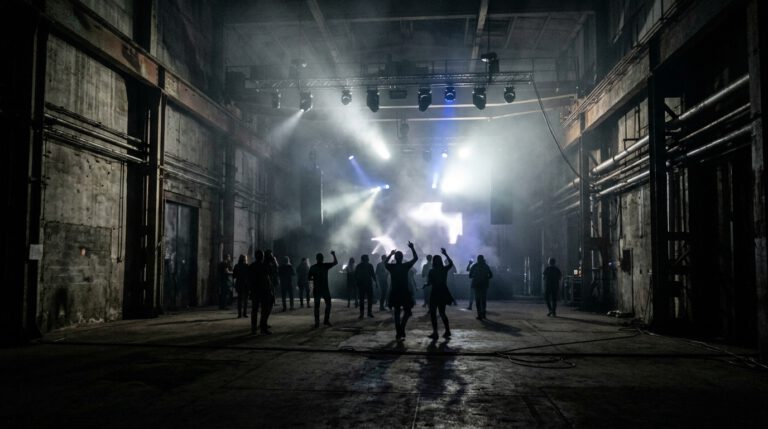
The dominant 2026 acid house themes are communal catharsis and anti-digital sentiment. Sets are structured less like peak-time bangers and more like slow-building ceremonies. I played a four-hour acid set in a converted church basement in Rotterdam last spring, and the crowd didn’t want drops; they wanted sustained tension, long filter sweeps that lasted eight bars before resolving. That patience is the defining mood of the current wave. It’s closer to meditation than rave, even when the BPM pushes past 128.
How Nostalgia Fuels the Revival
Nostalgia in acid house operates as a gateway, not a destination. Younger listeners find the genre through TikTok clips of late-’80s warehouse footage or Red Bull Music Academy’s oral histories of the original acid house movement, then quickly move beyond pure revivalism. The smartest producers use nostalgic textures, the grain of a real 303, the warmth of analog tape, as raw material for something that sounds genuinely contemporary. Pure pastiche doesn’t survive on a dancefloor in 2026. The rooms are too informed for that.
New Artists Leading the Acid House Scene
New acid house artists in 2026 are arriving from unexpected corners. The scene is no longer dominated by white European men in their forties, and the music is better for it. Producers from São Paulo, Tbilisi, and Johannesburg are bringing regional rhythmic DNA into acid’s framework, creating hybrid forms that the genre’s founders couldn’t have predicted.
What connects these emerging voices is a shared commitment to hardware performance and live improvisation. The laptop-with-Ableton setup that defined much of the 2010s feels increasingly rare at acid-focused events. Performers want their hands on knobs, and audiences want to see the sound being shaped in real time.
Emerging Artists to Watch in 2026
Among emerging acid house artists, names like Ceephax Acid Crew’s protégés and a new generation of hard techno-adjacent acid producers are pushing the form forward. Producers working through labels like Furthur Electronix and CPU Records are building catalogs that treat the 303 as a lead instrument rather than a texture. Several of these artists operate almost entirely outside Spotify’s ecosystem, selling directly through Bandcamp where acid releases regularly chart in the electronic top sellers, sometimes moving 500+ units in a first week at £7-8 per digital album.
Collaborations Shaping the Future Sound
Acid house collaborations in 2026 are breaking genre walls. Producers are linking with industrial techno artists like Blawan, whose distortion-heavy approach shares acid’s love of abrasive texture. Cross-pollination with ambient and drone musicians has produced some of the year’s most compelling releases: long-form acid pieces that stretch past the 10-minute mark, designed for deep listening as much as dancefloor use. These collaborations signal that acid house is no longer a closed circuit. It’s an open protocol.
The Role of Festivals in Acid House Revival
Acid house festivals serve as the revival’s most visible infrastructure. They concentrate the community, give emerging artists exposure to crowds of 2,000-10,000, and create the kind of shared physical experience that streaming platforms cannot replicate. The festival circuit has become the primary mechanism for audiences to encounter acid house in 2026, outpacing playlist placement and social media algorithms.
What separates acid-focused festivals from generic electronic music events is curation philosophy. These are not festivals that book acid as one flavor among twenty. They build entire stages, sometimes entire weekends, around the 303 and its descendants.
Major Festivals Celebrating Acid House
Key acid house festivals in 2026 include Bangface in the UK, which has long championed acid and breakcore in equal measure, and Berlin’s Acid Camp events, which operate as multi-day residencies rather than traditional festival formats. According to the IMS Business Report, niche genre-specific events have seen attendance growth of roughly 15% year-over-year since 2023, outpacing mainstream EDM festivals. In the Netherlands, dedicated acid stages at Dekmantel continue to draw some of the weekend’s densest crowds.
Impact of Festivals on Artist Exposure
For acid house artists, festivals and artist exposure are directly linked. A strong festival set can translate into label interest, booking agency attention, and a Bandcamp sales spike within 48 hours. I’ve watched relatively unknown producers go from 200 monthly listeners to sold-out club tours after a single well-placed festival slot. The festival stage remains the genre’s most honest audition room: no algorithm, no playlist politics, just a crowd deciding in real time whether the acid hits.
Acid House’s Cultural Impact in 2026
The cultural impact of acid house in 2026 extends well beyond the dancefloor. Acid’s visual language, its smiley faces, its day-glo palette, its DIY flyer aesthetic, has been absorbed into streetwear, graphic design, and even fine art. The genre’s ethos of radical inclusivity and anti-commercial defiance resonates with a generation facing economic precarity and algorithmic fatigue.
More than a sound, acid house functions as a counter-narrative. In a music industry increasingly dominated by AI-generated content and corporate playlist curation, the genre’s insistence on hardware, liveness, and communal experience feels like a political act, even when the producers themselves wouldn’t frame it that way.
Acid House and Modern Dance Culture
Acid house dance culture in 2026 has reintroduced the concept of the all-night session as a social ritual rather than a consumer product. Smaller, unlicensed events are thriving in cities like Berlin, where the night never truly ends, as well as in Manchester, Detroit, and increasingly in cities like Lisbon and Beirut. These events prioritize sound system quality and spatial design over bottle service and VIP areas. The dancefloor is flat, literally and socially. That’s the point.
The Genre’s Influence on Other Music Styles
Acid house’s influence on music now reaches into genres that would seem incompatible on paper. Hyperpop producers sample 303 lines. Experimental hip-hop beatmakers in Los Angeles run acid basslines through granular processors. Even some corners of the Afro house scene have started incorporating acid textures into percussive frameworks. The squelch is a universal solvent: it dissolves genre boundaries on contact. That adaptability is exactly why the acid house revival in 2026 feels less like a nostalgic cycle and more like a permanent expansion of what electronic music can be.