Something cracked open in 2026. The live techno punk crossover stopped being a curiosity whispered about in Berlin smoking areas and became a real subgenre moment, with its own circuit, its own crowds, and its own rules. Industrial techno’s machine-driven repetition found a volatile new partner in punk’s confrontational physicality, and the results are reshaping what a night out sounds like. The convergence isn’t a marketing exercise; it’s a pressure valve for a generation that wants its electronic music to bite back.
The Rise of Live Techno Punk Fusion
Live techno punk fusion is the collision of industrial techno’s mechanical intensity with punk’s raw, unpolished stage energy, performed with hardware rigs, vocals, and physical presence rather than a laptop and a USB stick. As Wikipedia’s techno entry documents, industrial music and EBM have been stylistic origins of techno since the mid-1980s Detroit scene; the 2026 iteration simply closes a loop that was always there, pulling it back into sweaty, confrontational rooms.
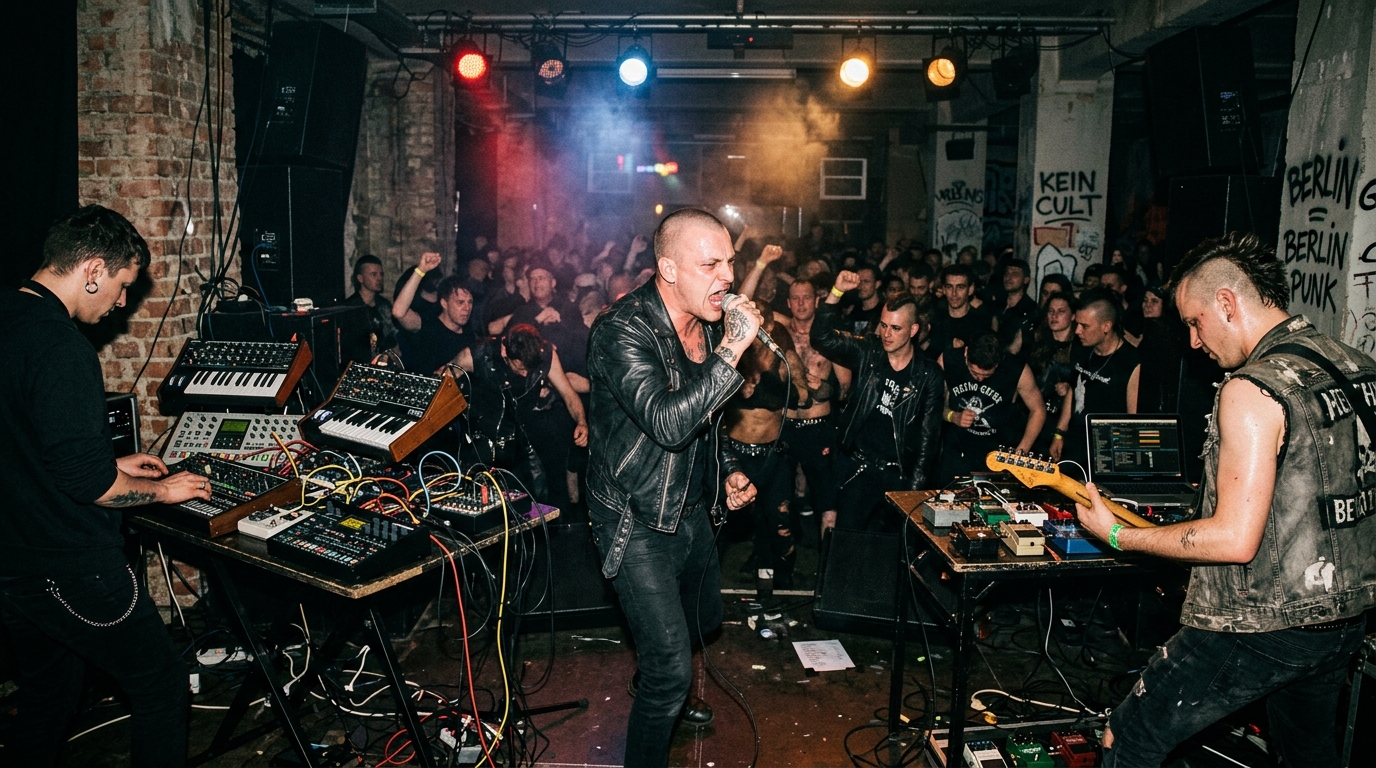
The fusion sits comfortably around 135 to 145 BPM, faster than standard peak-time techno but slower than gabber. What makes it distinct is the live element: distorted vocals screamed into SM58s, modular synth patches ripped apart mid-set, and drum machines punished until they clip. This isn’t DJing. It’s performance art with a kick drum.
What defines techno punk crossover?
Three non-negotiable elements define techno punk crossover: live hardware performance, vocal aggression borrowed from hardcore punk, and industrial techno’s signature distorted textures. The DJ booth disappears. In its place, you get a table of machines and a performer who treats the audience like a pit, not a passive crowd. If there’s no risk of something breaking mid-set, it’s not this genre.
Key artists leading the movement
The key artists in techno punk right now share a lineage with producers like Blawan, whose industrial techno work on Sick Elixir proved that emotional extremity and dancefloor function aren’t mutually exclusive. The current wave builds on that template but adds live vocals and stage confrontation. Acts rooted in EBM and noise are crossing over from punk venues into club contexts, and the booking patterns in Berlin, Manchester, and Detroit reflect that shift clearly.
Punk Energy Transforming Techno Events
Replacing passive consumption with physical participation is what punk energy brings to techno events. The standard techno crowd faces the DJ, sways, maybe raises a hand. A live techno punk set demands something closer to a hardcore show: bodies pressed forward, eye contact with the performer, collective tension that can snap at any moment. I watched a room of 200 people at a warehouse party in east London go from polite nodding to full-contact movement within three tracks once a vocalist started screaming over a 140 BPM kick pattern. That shift doesn’t happen with a CDJ transition.
The audience engagement model is fundamentally different. Techno events built around this energy are shorter, more intense, and more physically exhausting than a six-hour minimal session. The trade-off is clear: you lose the hypnotic drift of a long set, but you gain an urgency that makes every minute feel earned.
How does punk energy enhance techno?
By injecting unpredictability into a genre that can default to precision, punk energy transforms what techno can feel like live. Live errors, feedback loops, and vocal improvisation create moments that a pre-programmed set cannot replicate. The crowd responds to risk. When a performer is visibly struggling with a patch cable while a distorted 303 line spirals out of control, the room locks in harder than it would for a perfectly beatmatched blend.
Audience reactions to live performances
At live techno punk shows, audience reactions skew physical and communal in ways that standard techno events rarely achieve. Mosh pits form. People shout back at vocalists. The barrier between performer and crowd collapses. I’ve seen people leave these shows drenched and grinning the way they used to leave hard techno nights, but with a rawness that feels less choreographed and more cathartic.
Key Venues for Live Techno Punk Shows
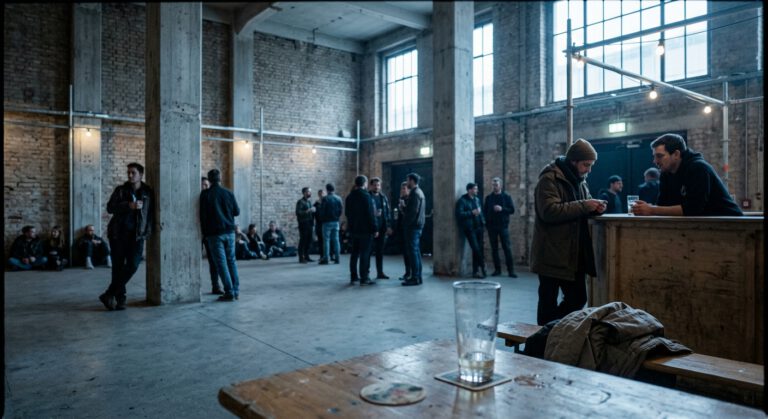
The best venues for techno punk shows are spaces built for volume and chaos, not comfort: converted warehouses, DIY punk spaces with reinforced sound systems, and underground clubs where capacity stays under 400. Larger festival stages strip the format of its intimacy. The ideal room has low ceilings, concrete walls, and a sound system that can handle sustained distortion without folding. Capacity matters here; once a room gets too big, the confrontational energy dissipates into spectacle.
Berlin’s industrial spaces remain the default reference point, but cities like Manchester, Detroit, and Tbilisi are producing their own versions of the format. The common thread is architecture that amplifies aggression rather than softening it.
Top locations for crossover events
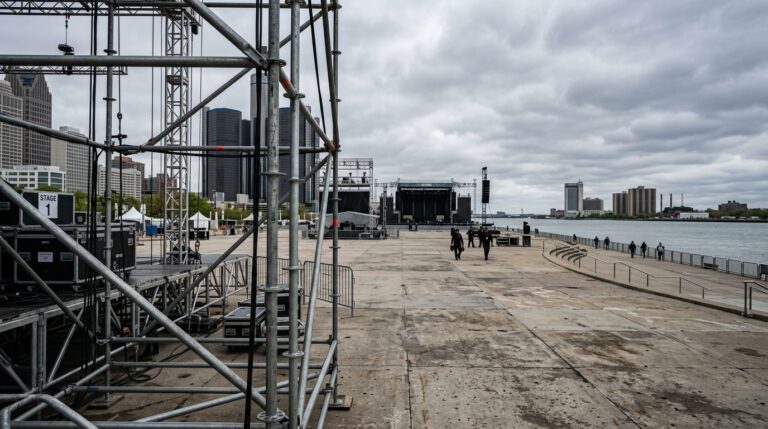
The top locations for techno punk crossover events cluster in cities with existing industrial infrastructure and permissive noise regulations. Berlin’s warehouse circuit remains central, while Detroit’s post-industrial spaces and underground venues in Tbilisi are gaining ground. Cities with cheap rent, abandoned buildings, and a tolerance for volume consistently produce the strongest scenes.
How venues shape the experience
Venues shape the experience of techno punk shows more than any other variable, including the performer. A concrete box with a Funktion-One rig at ear-splitting volume creates a physical environment where bass becomes a bodily sensation, not just an auditory one. Carpeted rooms with drop ceilings kill the genre dead. The endurance of Berlin’s nightlife infrastructure exists partly because those spaces were never designed for comfort; they were designed for intensity, which is exactly what this crossover demands.
Cultural Impact of Techno Punk Crossover
Since 2020, streaming’s share of global music revenue has climbed past 67 percent, and that dominance is precisely what the techno punk crossover pushes against. In an era where Spotify’s weekly recommendations flatten taste into personalized sameness, the live techno punk circuit offers something that cannot be replicated through headphones: physical risk, communal noise, and the specific feeling of being in a room where something could go wrong. The crossover mirrors post-punk’s historical alignment with countercultural values like social justice and individual expression, updated for a generation raised on screens.
The movement’s cultural weight comes from its refusal to scale cleanly. You cannot livestream a mosh pit. You cannot playlist confrontation. That resistance to digital packaging is precisely what gives it meaning in 2026.
How does it reflect societal changes?
The techno punk crossover reflects societal changes rooted in fatigue with digital mediation. After years of pandemic-era isolation and algorithm-driven consumption, audiences are gravitating toward experiences that demand physical presence and emotional commitment. The genre’s DIY ethos, its rejection of polished production, and its insistence on liveness all point to a cultural moment where authenticity is measured by sweat, not streams.
Influence on fashion and lifestyle
The fashion and lifestyle influence of techno punk is visible in the return of industrial aesthetics: steel-toe boots, torn black fabrics, hand-printed merch sold at the door rather than through online drops. The look borrows from 1980s EBM culture and early-2000s electroclash but strips away the irony. It’s functional clothing for rooms where you’ll get stepped on. The lifestyle component extends to a preference for cash-door events, word-of-mouth promotion, and a deliberate absence from social media marketing.
Future Trends in Live Techno Punk Music
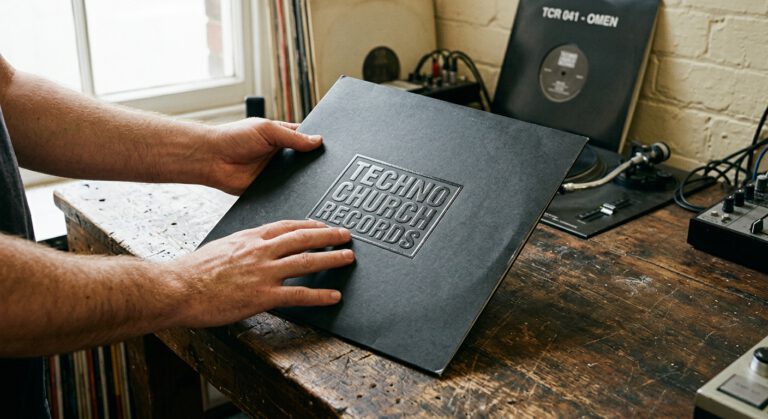
With underground electronic music’s live-performance segment growing steadily since 2022, the future of live techno punk points toward deeper collaboration between electronic producers and punk or noise musicians, with hybrid acts replacing solo laptop performers on underground bills. Kevin Saunderson’s E-Dancer project, which has spanned multiple decades of genre-crossing experimentation, offers a template for how electronic artists can sustain creative reinvention across eras. The next phase will likely see dedicated label infrastructure emerge around the crossover, similar to how Fachwerk anchored Berlin’s minimal techno identity in the 2000s.
Expect festival programmers to carve out dedicated stages for this format by 2027, and expect the purists to complain about it immediately. That tension between underground credibility and broader visibility is the genre’s next real test.
Predictions for the next five years
Predictions for live techno punk over the next five years center on infrastructure rather than sound. Dedicated booking agencies, vinyl-focused labels pressing limited runs of live recordings, and purpose-built venue nights will formalize what is currently a loose network of one-off events. The sound itself will likely push past 145 BPM as producers compete for intensity, risking a speed arms race that could hollow out the genre’s emotional core if left unchecked.
Emerging artists to watch
The emerging artists in live techno punk are coming from unexpected corners: noise musicians picking up Elektron boxes, hardcore punk vocalists collaborating with modular synth builders, and industrial techno producers who got bored of playing to still rooms. The names worth tracking are the ones booking both punk basements and club nights on the same tour. That dual-circuit presence is the clearest signal that an artist understands the crossover as a genuine creative commitment, not a branding exercise.