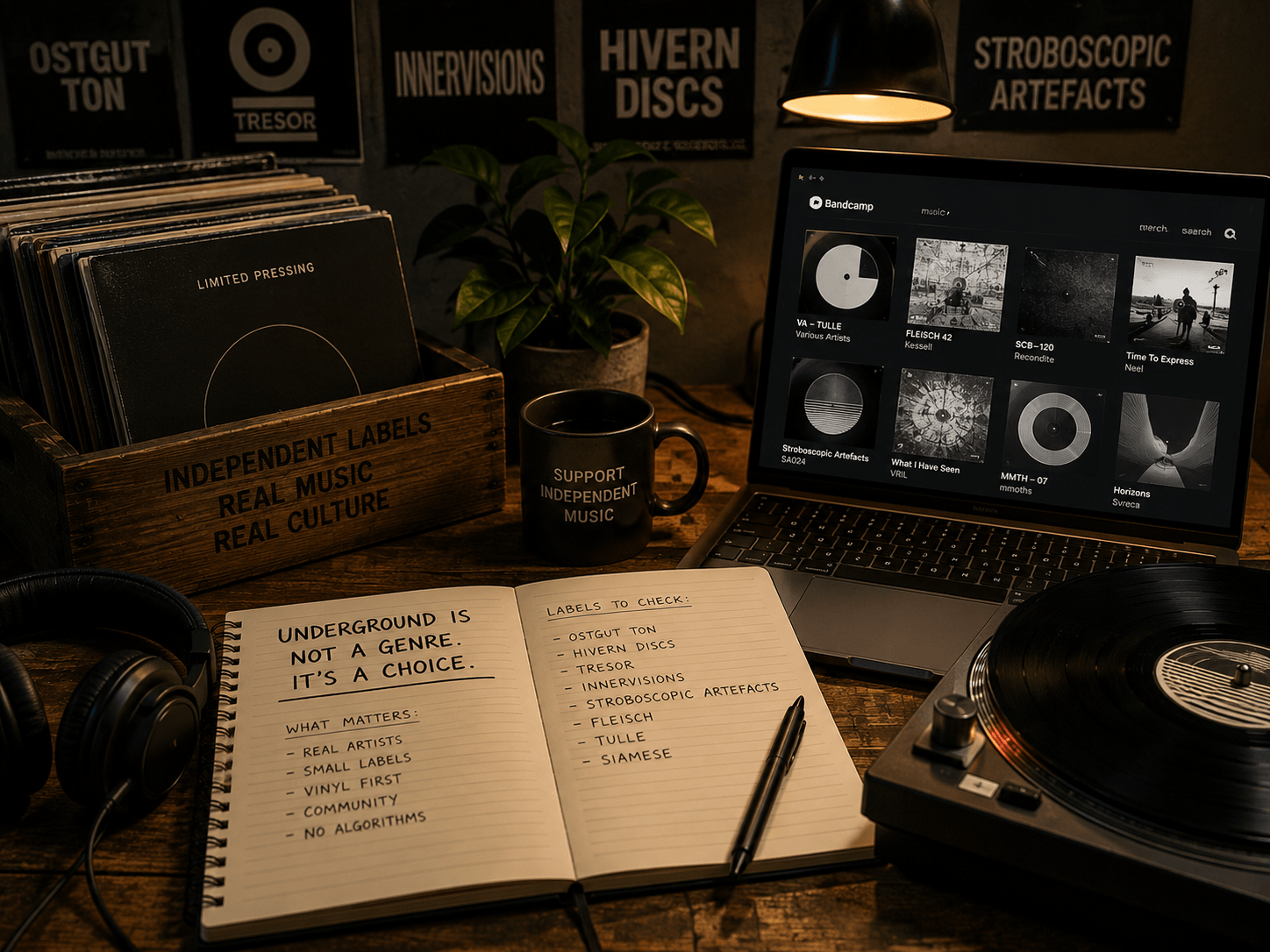
Some tracks find you. Most don’t. The ones that actually change something, the ones that shift how you hear everything that comes after, they don’t show up in your Discover Weekly. Someone sent them to you at midnight. Or you fell into a Bandcamp rabbit hole, and there it was, three pages deep, 47 plays, released eight months ago. A 300-copy vinyl run is already gone, but you found the digital on some obscure label page because you just kept looking.
That’s really it. You just kept looking.
In 2026, non-commercial electronic music discovery hasn’t disappeared. It just doesn’t live where most people are spending their time. And if you are here reading this, you probably already know something’s missing from what the platforms are serving you. This is for you.
Why Mainstream Electronic Music Sounds Repetitive in 2026
Streaming platforms are built for retaining artists and their fans, not for revealing new numbers. You only get to see on top of the list what has already worked for music lovers. Everything else confines itself beneath.
The Algorithm Keeps Serving You The Same 40 Tracks
Spotify built its whole editorial model around one thing: Does the listener stay past 30 seconds? That’s it. That single number quietly shaped what producers started making. You learn fast when you are chasing placement. Don’t challenge anyone. Don’t make them wait. Don’t build for three minutes before you get to the part that matters. The underground melodic techno playlist you would actually want on a Tuesday at 2 am fails that test immediately.
TikTok brings another layer of problems on top of that. A sound goes viral, somebody samples it, twenty people remix it, a hundred more do derivative versions, and by the time it reaches your feed, it’s already six weeks exhausted. You are not hearing music at that point. You are hearing the echo of music.
Mainstage Melodic vs Underground Melodic
And this is where the difference between melodic techno and progressive house becomes more than just genre pedantry. Progressive house ran straight into that viral machine and got flattened by it. The underground melodic techno scene, the real one, not the festival-adjacent version, never did.
It stayed long and slow and structurally uncompromising. Tracks that take four minutes to arrive somewhere. Producers who don’t care if you skip. That stubbornness is exactly why it still sounds like something worth caring about.
The Analog Synth Textures That Are Quietly Reshaping Everything
Hardware synthesis is back, not because of nostalgia but because producers want sounds that behave unpredictably. The software is too clean. Too solved. The imperfection is the point.
Analog Synth Textures Are Driving The Shift
Analog synth textures in modern production are coming from specific instruments, making specific decisions that software can approximate but never fully replicate. A Moog Subsequent 37 run through a hardware filter at low resonance has a warmth that drifts slightly, responds to temperature, and breathes.
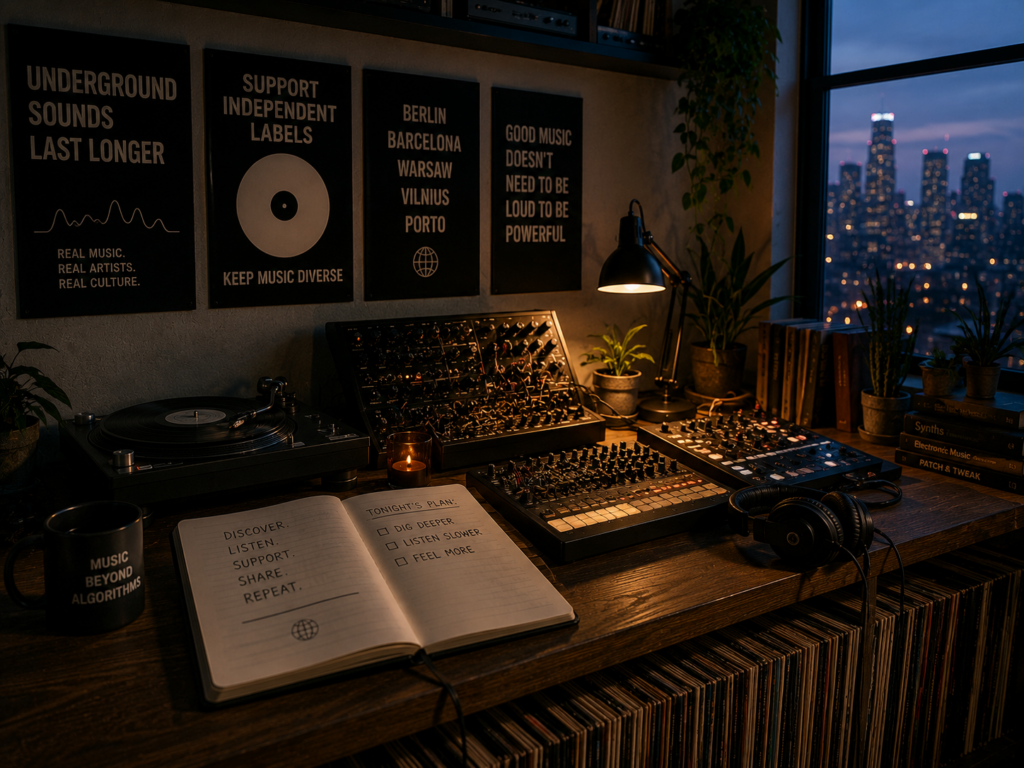
It doesn’t hold perfectly still the way a plugin does. Producers like Recondite, Neel, Dj Stingray, and the artists circling Stroboscopic Artefacts and Farbwechsel have spent years building sounds that carry exactly this kind of weight.
Melodic Techno Has Gotten Slower, Darker, and More Cinematic Ambient
Modular synthesis is the other half of this. Eurorack systems have no preset logic, no undo, no recall. You patch something up, and it sounds one way. Once you pull the plug, it starts sounding other ways. The underground sound design produces underlying textures that feel like doctored, not found. I have heard listeners describe it without knowing the technical reason why. They just say it sounds alive. Yeah. That’s why.
Deep House Is Pulling From Jazz and Soul Again
Granular synthesis, too, takes small recorded fragments and rebuilds them into something new. It’s what gives a lot of experimental electronic music releases in 2026, that half-remembered blurred quality, like hearing something in a dream and trying to hold onto it.
Melodic techno in this space has slowed down and gotten more cinematic. Labels like Erased Tapes and Fleisch are putting out tracks that develop over ten to twelve minutes. The energy doesn’t peak and reset. It accumulates. For late-night electronic listening when you actually want to feel something, nothing else sits right.
Independent Electronic Labels 2026: This Is Where The Real Curation Lives
The most consistent source of quality underground music right now is not a platform. It’s a small number of independent labels that know exactly what they’re doing and don’t have shareholders to answer to.
Why Small Labels Are Outperforming Platforms
Ostgut Ton, out of Berlin, keeps releasing music that sounds like the architecture of the city: hard, considered, built to last. Hivern Discs from Barcelona sits at this warm intersection of melodic house and ambient that doesn’t really have a better name than just „Hivern Discs music.“ Tresor is still Tresor. Innervisions for when you want a deep house that actually has a soul.
Where To Find White Label and Limited Digital Releases
Siamese, Mmoths‘ Tulle label, and a handful of artist-run Bandcamp labels operating out of Warsaw, Vilnius, and Porto. Those cities have quietly become serious underground hubs. Nobody proclaims the show or announces it. But because the scenes are real, they just happen.
What underrated independent electronic labels have in common is this: vinyl first, small runs, no major distributor, and no editorial pitching budget. The music spreads through communities that already trust the taste. Following their Bandcamp pages and their Resident Advisor profiles is still the most honest non-algorithmic music curation strategy that exists in 2026. Not because it’s romantic. Because it works.
The Emerging Underground Electronic Artists Actually Worth Your Attention
The most interesting artists right now are operating well below algorithmic detection. Small labels, 300-capacity clubs, loyal audiences built without a single playlist placement.
Producers Prioritizing Atmosphere Over Hype
Alignment from the UK. If you haven’t heard his stuff yet, just go now. Releases through Fabric’s label arm, some on his own channels. His tracks feel like they’re working something out, like there’s a problem being solved slowly over eight minutes, and you are sitting inside it while it happens.
Skee Mask shouldn’t even have to say it, but I will because people still sleep on him. What he does with space and percussion, with what he leaves out as much as what he puts in, a deep melodic techno mix built around his catalog sounds like nothing else running right now.
Morah operates at the ambient edge with releases on Hessle Audio that are more texture than rhythm. Not club music. Something better, depending on the night.
The Emerging Wave Blending Genres Without Rules
For underrated deep house producers right now: Nandu, Juxta Position, Folamour. All three are making music that sits between dancefloor functionality and genuine late-night emotional weight. None of them is chasing anything. That’s the tell.
The best underground melodic techno artists in 2026 aren’t underground because they’re obscure for the sake of it. They’re underground because the choices they’re making don’t fit the commercial system. Better production decisions. Longer patience. More interesting results.
How You Actually Find This Music
The short answer: Micro-community music discovery in 2026 runs on human networks. Not recommendations. Not feed. People telling people.
Bandcamp first. Always. Search by tag, „melodic techno,“ „deep house,“ or „ambient electronic“; sort by new; and spend time in it. Actually buy something when it hits. That direct signal to an artist means more than ten thousand streams ever will, and it keeps small labels alive.
SoundCloud for mixes and DJ sets that never get a formal release. Search for label showcases. Radio show recordings. Live sets from smaller clubs in Łódź, Lisbon or Leipzig, where nobody was filming for content. The deep atmospheric techno for late-night listening you are looking for is sitting in there in a three-year-old SoundCloud upload with 400 plays.
Resident Advisor label profiles. The Ransom Note. FACT Magazine. Actual music journalism still exists and still surfaces underground electronic tracks that deserve more attention before they hit anywhere else.
And Discord. The Farbwechsel server. Ostgut Ton fan communities. r/melodictechno and r/deephouse on Reddit, which function as real discovery networks if you ignore the hype posts and stay in the comments.
The method isn’t complicated. Go where people who genuinely care about music talk about music. Follow the taste. Ignore the algorithm.