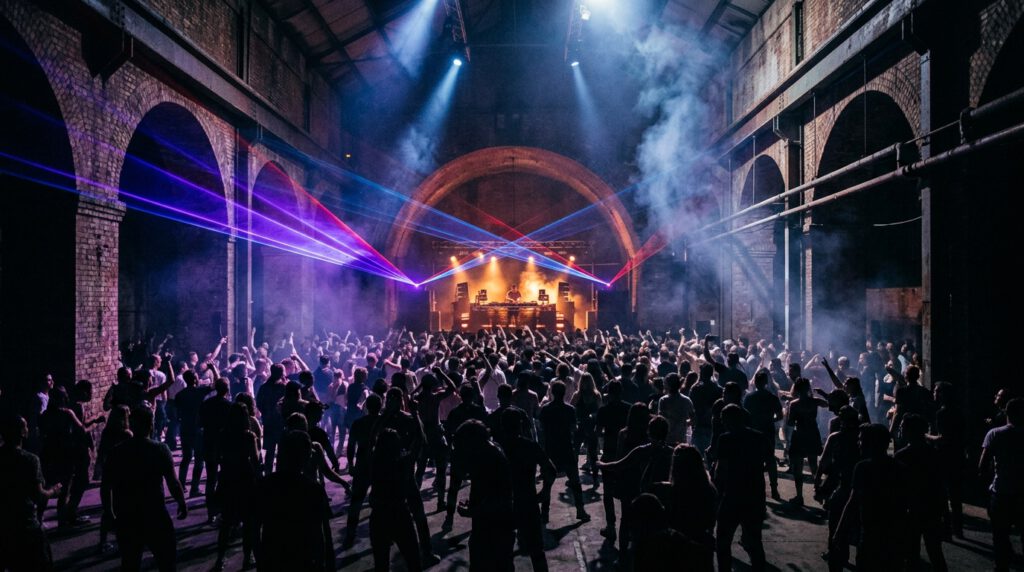
The Warehouse Project is marking two decades of operation with a documentary film and an expanded programme of events for 2026, as the Manchester institution continues to cement its place as one of the UK’s most enduring clubbing destinations.
Founded in the mid-2000s, The Warehouse Project has grown from a series of seasonal events into a fixture on the global electronic music calendar. The forthcoming documentary is set to chart that journey, offering a retrospective look at twenty years of programming, culture and community built around the venue and its rotating cast of residents and headliners.
Alongside the anniversary documentary announcement, the organisation has moved to finalise and expand its 2026 event schedule, revealing full line-ups for a series of takeovers that span a broad sweep of electronic music. The confirmed headliners include Overmono, Helena Hauff, DJ Bone, Tiësto and Solomun — a selection that reflects the venue’s long-standing approach of pairing underground credibility with mainstream draw.
Overmono, the Welsh duo of Tom and Ed Russell, have become one of the most talked-about acts in British electronic music over recent years, building a reputation for high-energy live sets that pull from hardcore, rave and UK garage traditions. Their inclusion as a takeover lead signals continued appetite from The Warehouse Project to platform artists who have crossed from cult favourites into headline territory without losing the edge that made them compelling in the first place.
Helena Hauff’s presence on the bill is equally fitting. The Hamburg-based DJ and producer has spent years championing a rawer, more industrial strain of techno and electro, and her sets are known for their uncompromising pace and selection. DJ Bone, the Detroit veteran, brings a lineage that connects directly to the city where techno was born — his inclusion adds genuine historical weight to a programme that might otherwise risk leaning too heavily on contemporary names.
Tiësto’s appearance represents the other end of the spectrum. The Dutch DJ, who was among the biggest names in trance and progressive house during the early years of The Warehouse Project’s existence, has since repositioned himself firmly within the commercial dance and pop crossover space. His inclusion will likely draw a different crowd to the venue, a dynamic The Warehouse Project has historically navigated by running varied nights across its season rather than pitching everything at the same audience.
Solomun rounds out the confirmed headliners. The Bosnian-born, Hamburg-based DJ has spent the better part of fifteen years building a devoted following through his Diynamic label and his legendary Pacha Ibiza residency. His melodic, emotionally charged approach to house music occupies a middle ground between underground taste-making and broad accessibility, making him a reliable draw for venues looking to fill large spaces without abandoning a sense of atmosphere.
The decision to release a documentary at this particular moment feels deliberate. Twenty years is a significant milestone for any nightlife institution, but especially one that has operated through the economic pressures, pandemic closures and shifting cultural priorities that have defined the past decade for UK clubbing. Many venues that were contemporaries of The Warehouse Project at its founding have since closed, and the anniversary provides an opportunity to reflect on what has allowed this particular operation to survive and grow where others have not.
The expansion of the 2026 programme, running alongside the documentary release, suggests the organisation is treating the anniversary less as a moment of nostalgia and more as a platform for continued momentum. Revealing full line-ups for multiple takeovers simultaneously is a statement of confidence — both in the demand for tickets and in the strength of the bookings themselves.
For Manchester specifically, The Warehouse Project has long functioned as something more than a promoter. The city’s musical identity, shaped by decades of post-punk, Madchester and rave culture, finds a contemporary expression in what the venue puts on each season. The documentary will likely explore that relationship in some depth, tracing how the institution has both reflected and influenced the city’s ongoing cultural life.
Details on the documentary’s release format and date have not yet been confirmed, but the announcement alongside the 2026 programme suggests the two are intended to work in tandem — building anticipation for the events while giving longer-term fans and newer audiences a way into the history behind them.