Something is happening in the dark rooms of Bangkok that most Western techno heads haven’t caught up with yet. No Signal Techno, a blackout rave series rooted in Bangkok’s underground, is pulling together industrial techno, a strict no-photo policy, and total darkness into one of the most committed sensory formats running in Southeast Asia right now. For anyone tracking how the blackout rave Bangkok techno 2026 circuit is shaping up, this is the event to watch.
What is a Blackout Rave?
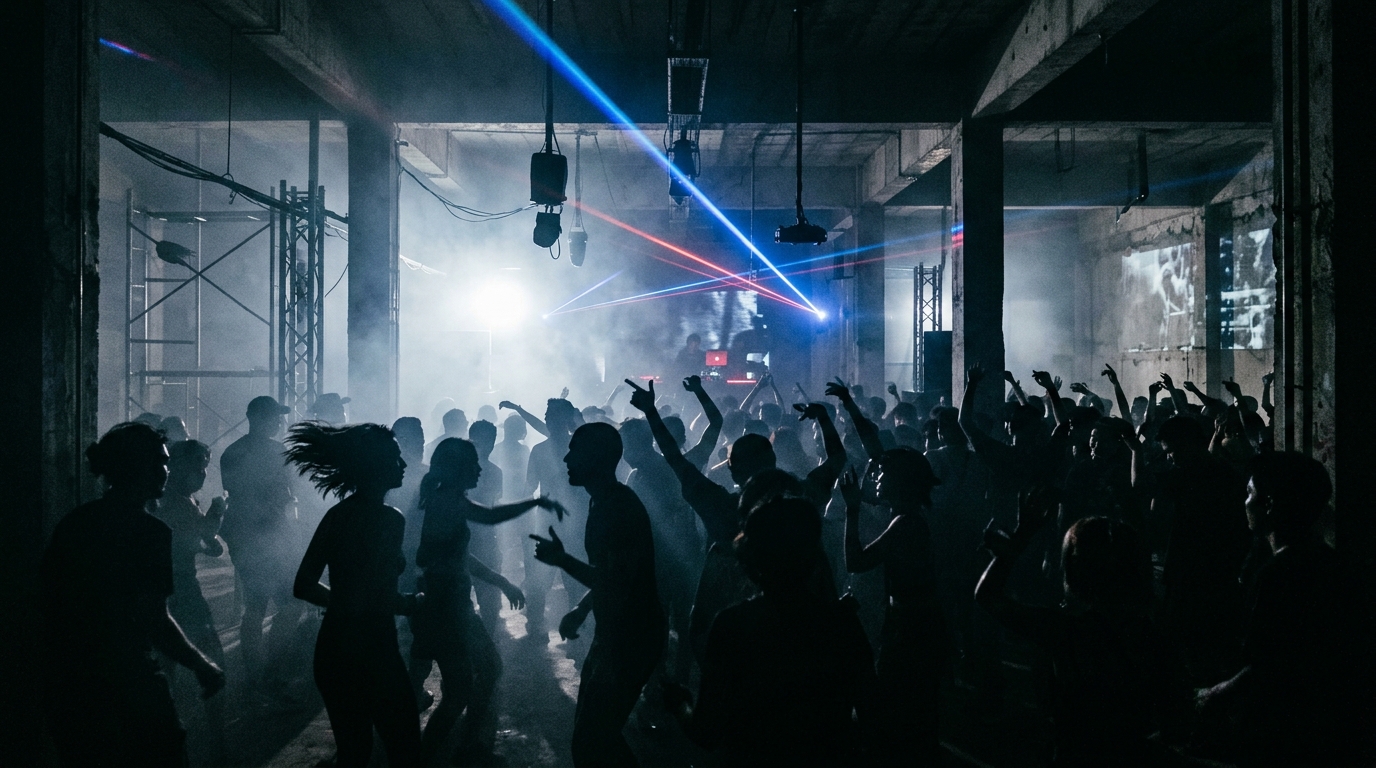
A blackout rave is an electronic music event staged in near-total or complete darkness, where minimal lighting strips away visual distraction and forces the crowd to navigate the room through sound alone. The format has been picking up momentum across underground scenes globally, but its most disciplined expressions are happening outside Europe, where promoters face fewer regulatory hurdles around unconventional lighting setups.
The concept isn’t just aesthetic posturing. Removing light changes how a crowd moves, how bodies relate to the speaker stacks, how a DJ reads energy. I’ve been in dark rooms at Berghain where the strobes cut for twenty minutes and the floor shifts into something more honest. Blackout raves take that accident and make it the entire architecture of the night.
Definition of Blackout Rave
A blackout rave means the room operates under a deliberate absence of lighting, often paired with a no-camera policy, to create an immersive sensory experience built entirely around sound and physical proximity. It is not a power outage or a gimmick; it is a curatorial decision that prioritizes the auditory over the visual, pushing attendees into a heightened state of listening.
Origins and Evolution of Blackout Raves
The origins of blackout raves trace back to underground warehouse scenes in the early 1990s, where budget constraints sometimes meant no lighting rigs at all. What started as necessity became intention. Berlin’s industrial spaces and Detroit’s after-hours rooms both incubated versions of this format, but the deliberate, branded blackout rave as a recurring concept is a more recent development, gaining traction around 2023 and accelerating into 2026 across cities like Bangkok, São Paulo, and Tbilisi.
Bangkok’s No Signal Techno Event
No Signal Techno is a recurring blackout rave series based in Bangkok that programs industrial, EBM, and driving techno in total darkness at Decommune and Berlin BKK, two of the city’s most committed alternative electronic music venues. Its “Berlin BKK” edition featured Phase Fatale (Ostgut Ton / BITE) alongside local selectors Mendy Indigo and Krit Morton, running from 9 PM to 5 AM, a proper eight-hour session that mirrors the durational expectations of European club culture.
What makes No Signal Techno notable is the consistency of its format. This isn’t a one-off concept night. The series returns regularly with a rotating cast of international headliners and Bangkok residents, and it enforces a no-photo policy that most Western events only talk about. Door tickets run around 500 THB (roughly $14 USD) with one drink included, and online presales start at 200 THB, making it radically accessible compared to comparable events in Berlin or London.
Overview of No Signal Techno
Attendees at No Signal Techno should expect a room with zero visual anchors: no LED walls, no phone screens, no photographer flash. The programming leans hard into industrial techno energy with tribal pressure, bass club elements, hard groove, and hard techno. Residents like Richie, Genji, and NT.66 hold down the local slots while international acts anchor the billing. The vibe is closer to a Berlin basement than a Bangkok rooftop bar.
Key Features of the Event
Three features distinguish No Signal Techno from standard Bangkok nightlife. First, the total blackout is non-negotiable; it is not mood lighting turned low, it is darkness. Second, the no-photo policy is actively enforced: “What happens inside No Signal stays between us,” as the promoters put it. Third, the venue selection is deliberate. Berlin BKK on Sukhumvit 63 provides the industrial shell the concept demands, with sound treatment that lets the low-end breathe at the volumes this music requires. I watched a room of 200 people lose themselves to Phase Fatale’s set in that space, and nobody reached for a phone once. That discipline is the feature.
How No Signal Techno Works
No Signal Techno operates as a pop-up series, selecting venues across Bangkok’s underground club network that can support full blackout conditions and proper sound reinforcement. The events typically run on weeknights, a Wednesday format that filters for committed attendees rather than casual nightlife tourists, keeping crowd sizes intimate and energy focused.
The logistics are tighter than they might appear. Running a room in total darkness for six to eight hours requires more planning than a standard club night, not less. Every element, from bar service to crowd flow, has to work without the crutch of visibility.
Event Setup and Location
No Signal Techno holds its events at Berlin BKK, located at 107 Soi Sukhumvit 63 in central Bangkok. The venue functions as a dedicated underground electronic music space with the concrete aesthetic and sound infrastructure to support industrial techno at volume. The room is configured specifically for the blackout format: bar areas use minimal red or UV accent lighting, the main floor operates in complete darkness, and the DJ booth is obscured from the crowd to eliminate any visual focal point.
Safety Measures in Blackout Raves
Safety at No Signal Techno involves layered protocols that account for the unique risks of darkness. Emergency lighting systems remain on standby, crowd density is controlled through limited ticket sales (presales cap quickly), and trained floor staff equipped with low-visibility markers circulate throughout the event. The 20+ age restriction and mandatory photo ID check at the door add another layer of control. These are not afterthoughts; they are structural requirements for making the blackout format viable as a recurring series rather than a one-off stunt.
Cultural Impact of Blackout Raves
The cultural significance of blackout raves extends beyond format novelty. They represent a direct rejection of the phone-first, content-capture model that dominates modern nightlife. In a scene where Instagram stories have replaced actual presence, the blackout rave reclaims the room as a shared private experience. Bangkok’s adoption of this format signals that Southeast Asia’s techno scene is not just importing European ideas but actively reshaping them.
The broader signal is economic too. Bangkok promoters are booking acts like Phase Fatale from Ostgut Ton, which means the money, the audience, and the infrastructure now exist in Southeast Asia to support touring schedules that previously skipped the region entirely. That shift matters more than any single event.
Influence on Bangkok’s Music Scene
No Signal Techno has given Bangkok’s local techno producers and DJs a platform calibrated to their strengths. Artists like Krit Morton and Mendy Indigo are building sets specifically for the blackout context, where the absence of visual spectacle demands tighter mixing, more dynamic track selection, and deeper attention to tension and release. The format rewards skill over showmanship. Bangkok’s electronic music community is responding by producing harder, more textured material designed for these rooms, pushing the city’s output closer to the industrial and EBM-adjacent sounds coming out of Berlin and Brussels.
Broader Implications for Southeast Asia
No Signal Techno’s success in Bangkok points to a wider shift across Southeast Asia’s experimental music infrastructure. Cities like Ho Chi Minh City, Kuala Lumpur, and Manila are watching what Bangkok builds and adapting it locally. The blackout rave format is particularly suited to the region because it sidesteps the expensive production arms race (LED walls, pyrotechnics, massive lighting rigs) that prices out smaller promoters. What you need is a good room, a proper sound system, and artists who can hold a floor without visual crutches. Southeast Asia has all three. The question is no longer whether the region can support serious techno culture; it is how quickly the rest of the world catches on.