Hard Techno vs Peak-Time Techno: The 2026 Sonic Divide Explained
There’s a conversation happening on dancefloors right now — in the sweat-soaked basements of Berlin, the warehouse rigs of Warsaw, the festival stages of Barcelona — and it’s not about which DJ is headlining. It’s about what the kick drum is doing. How hard it hits. Whether the room bends around it or simply follows. The hard techno vs peak-time techno 2026 divide has become one of the more genuinely interesting fault lines in underground electronic music culture, not because the two genres are at war, but because they’re pulling the same energy in two different directions. One wants to destabilize you. The other wants to hold you at the apex of a crowd and never let you come down.
Understanding the difference isn’t just academic. It changes how you listen, how you move, and — if you’re behind the decks — how you build a set that actually means something.
Understanding Hard Techno in 2026
Hard techno 2026 looks nothing like what the term meant a decade ago, and that evolution is precisely what makes it worth paying attention to. What began as an aggressive offshoot of industrial and schranz — brutalist, deliberately alienating, designed for the most uncompromising corners of the underground — has mutated into something with genuine emotional range. The aggression is still there. But now it carries tension, narrative, even a strange kind of beauty in the distortion.
What defines hard techno sound?
The hard techno sound in its current form is built around compression as a weapon. Kicks are distorted, clipped at the edges, almost industrial in their texture. The basslines don’t groove — they grind, cycling through repetitive motifs that feel more hypnotic than melodic. Acid elements surface frequently, sharp and unresolved. Layered over all of this is a sense of controlled aggression: the music pushes relentlessly forward without ever quite releasing the tension it builds. That refusal to resolve is, in many ways, the whole point.
What is the BPM range for hard techno?
Typical hard techno BPM sits between 140 and 155, though some of the more extreme productions push past 160. That tempo range is significant — it’s fast enough to feel physically demanding, to press against the body rather than simply move through it. At 145 BPM, the kick drum stops being a beat you follow and becomes something you absorb. The pace creates urgency without tipping into the chaos of early schranz. It’s aggressive, but it’s controlled aggression.
Key artists in hard techno 2026
The names shaping hard techno artists 2026 span a wide geography. Sara Landry remains a defining presence — her productions sit at the intersection of raw industrial texture and dancefloor functionality. Alignment has continued to push the technical edge, his sets drawing from both hard techno and industrial techno without settling into either. From the Eastern European circuit, artists emerging from Warsaw and Prague have added a rawer, more confrontational dimension to the sound, informed by local rave culture that never really softened. These aren’t artists chasing trends — they’re building a vocabulary.
By 2026, hard techno’s evolution has been shaped by cross-pollination with hypnotic techno, industrial, and even elements of hardcore. The genre absorbed influence without losing its edge, which is a difficult balance to maintain. The result is a sound that feels simultaneously more accessible and more intense than its predecessors — a paradox that defines where the scene currently sits. If you want to understand how underground music moves between cities and subcultures, the underground beats shaping the current moment offer useful context for how these sounds travel before they surface.
Defining Peak-Time Techno in 2026
Peak-time techno 2026 operates in a different emotional register entirely. Where hard techno wants to destabilize, peak-time techno wants to sustain — to hold a room at its highest point of collective energy for as long as physically possible. It’s the sound of a festival main stage at 3am, of a crowd that’s been building for hours and has finally arrived somewhere. The architecture of peak-time techno is designed around that moment and everything required to maintain it.
What characterizes peak-time techno?
The peak-time techno characteristics that define the genre in 2026 are rooted in dynamics and release. Where hard techno withholds resolution, peak-time techno delivers it — repeatedly, strategically, with precision. The kicks are powerful but cleaner, designed to work within large-scale sound systems without losing their physicality. Melodic elements appear more frequently: dark, atmospheric pads, tension-building synth lines that resolve into drops with genuine emotional payoff. The production prioritizes impact at scale. Everything is engineered to land harder in a room of two thousand people than it does on headphones.
What is the BPM range for peak-time techno?
The peak-time techno BPM range typically falls between 135 and 145 — slightly slower than hard techno, which is a deliberate choice. That tempo window creates space for the kind of dramatic build and release that peak-time sets depend on. The slightly reduced pace allows producers to layer more complexity into arrangements without the music feeling congested. It’s fast enough to sustain energy but measured enough to breathe. That breathing room is where the emotional architecture lives.
Top artists in peak-time techno 2026
The artists defining peak-time techno artists 2026 are largely those who’ve mastered the art of the festival moment. Amelie Lens continues to be a central figure — her sets built around sustained tension, precise drops, and a production style that translates effortlessly to outdoor stages. Charlotte de Witte has refined her approach further, leaning into darker melodic textures without sacrificing dancefloor impact. Newer names from the Belgian and Dutch scenes have pushed the sound toward more cinematic territory, incorporating film score sensibilities into the club context. The genre has a theatricality to it now that wasn’t present five years ago.
Peak-time techno’s evolution by 2026 reflects the broader professionalization of the festival circuit. As production budgets for events grew, the music adapted to fill larger spaces — sonically and emotionally. The genre became more sophisticated in its use of dynamics, more deliberate in its emotional pacing. What was once simply “big room techno” has developed genuine artistic depth, even as its commercial profile expanded. For anyone trying to understand why Berlin remains the spiritual center of this sound, the city’s relationship with techno culture explains a great deal about how the genre’s values were formed.
Comparing Hard Techno and Peak-Time Techno
Placed side by side, hard techno vs peak-time techno reveals two fundamentally different philosophies about what a dancefloor is for. One treats the crowd as a body to be pushed to its limits. The other treats it as a collective emotional experience to be guided, peaked, and held. Neither approach is wrong — they’re just answering different questions.
What are the key differences?
The differences in techno genres go deeper than tempo or production style. Hard techno is confrontational by design — it asks something of the listener, demands physical and psychological surrender. Peak-time techno is more transactional in the best possible sense: it offers release in exchange for presence. Hard techno’s arrangements tend to be more linear, more relentless. Peak-time techno is architectural, structured around tension and resolution cycles that manipulate crowd energy with deliberate precision. One resists comfort. The other weaponizes it.
Which genre is better for DJs?
The question of DJs preference techno genres depends entirely on context. Hard techno rewards DJs who understand how to build intensity over long periods — it’s less forgiving of miscalculation, more dependent on reading a room accurately. A hard techno set that misjudges the crowd can feel punishing rather than transcendent. Peak-time techno gives DJs more structural tools: the dynamics are built into the tracks themselves, providing natural moments to shift energy. For festival contexts and larger venues, peak-time offers more flexibility. For intimate underground spaces, hard techno’s rawness is often more appropriate — and more honest.
How do the production techniques differ?
The divergence in techno production techniques between these two genres is significant. Hard techno production prioritizes saturation, distortion, and compression — the goal is texture and aggression, achieved through deliberate sonic damage. Kick drums are often layered with industrial samples, basslines run through analog distortion chains. Peak-time techno production is more surgical: cleaner low-end management, more careful use of reverb and space, more sophisticated arrangement structures with distinct intro, build, drop, and breakdown phases. The tools overlap, but the intentions are entirely different.
Blending the two is absolutely possible — and increasingly common in 2026. DJs who move fluidly between hard techno’s aggression and peak-time’s emotional architecture often create the most compelling sets, using the contrast between the two approaches to generate their own narrative arc across a night.
Cultural Impact of Techno Genres in 2026
The cultural impact techno 2026 extends well beyond the dancefloor. Both genres have become markers of identity, community, and subcultural belonging in ways that mainstream music rarely achieves. The divide between them maps onto real differences in values, aesthetics, and what people are actually looking for when they walk into a dark room at midnight.
How do these genres influence raves?
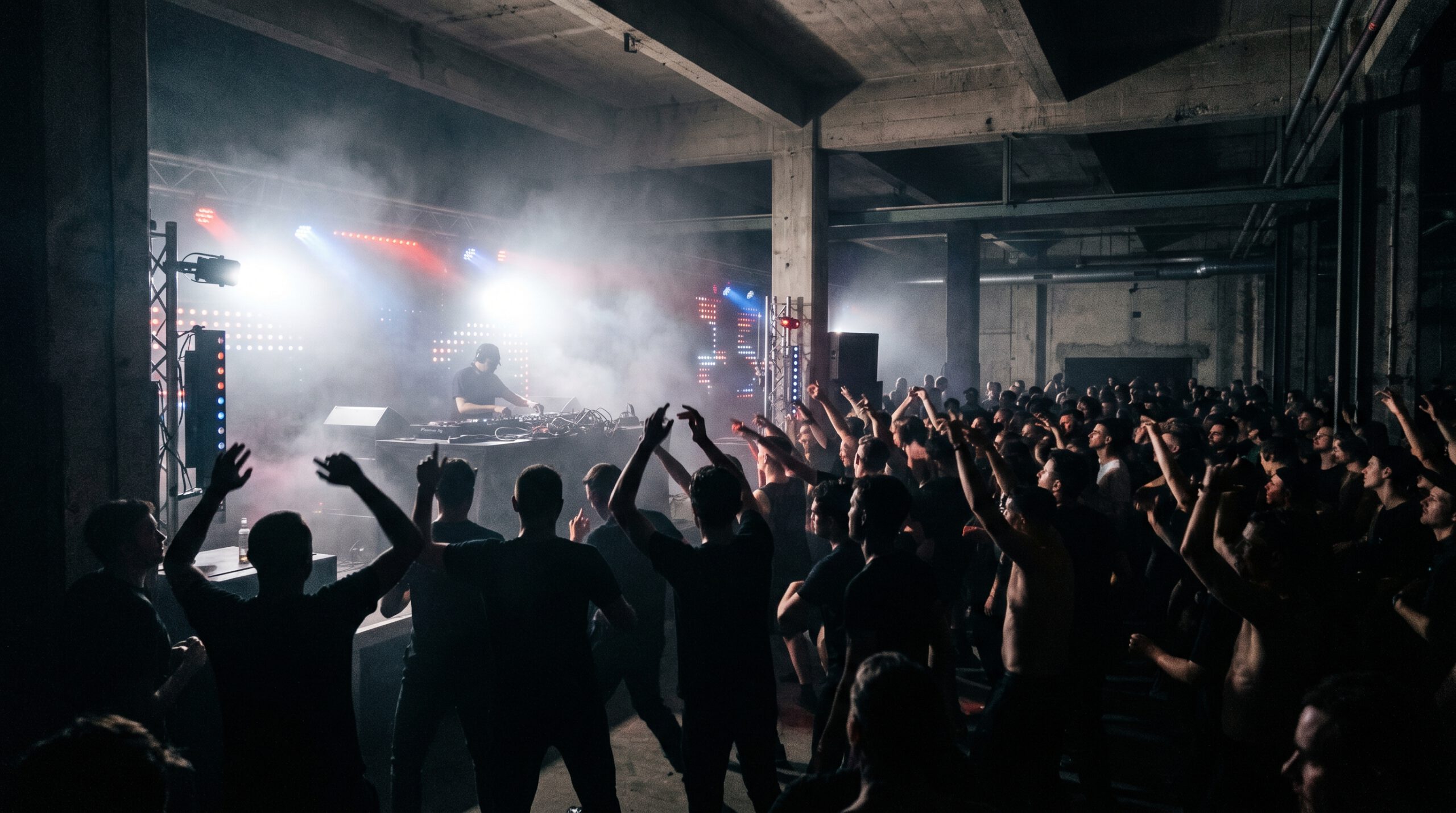
The techno genres influence raves in fundamentally structural ways. Hard techno events tend toward smaller, more confrontational spaces — warehouses, basements, venues where the sound system is the architecture. The rave design reflects the music: raw, uncompromising, deliberately stripped of comfort. Peak-time techno has migrated toward festival culture, outdoor stages, and purpose-built venues with production values to match. Both scenes maintain genuine underground credibility, but they’ve built different physical and social infrastructures around their sounds. The rooms feel different before a single track plays.
What is the audience demographic?
The techno audience demographics in 2026 reflect a generational shift. Hard techno has drawn in a younger audience — late teens and early twenties who discovered the genre through social media and short-form video, then followed it into physical spaces. Peak-time techno’s audience skews slightly older on average, with a stronger festival-going demographic that has been attending events for five to ten years. Both scenes are genuinely international now, with strong audiences in Latin America and Southeast Asia that didn’t exist at this scale five years ago. The music has outgrown its European origins without losing the values those origins created.
How are producers adapting these genres?
The most interesting development in how producers adapting techno are responding to 2026’s landscape is the deliberate blurring of genre lines. Producers who built reputations in hard techno are incorporating peak-time dynamics into their work. Peak-time artists are borrowing the raw textural qualities of hard techno to add grit to their productions. The result is a middle ground that doesn’t have a clean name yet — which is usually a sign that something genuinely new is forming. The future of both genres likely lives in that unnamed space between them.
Future trends point toward further hybridization, with producers increasingly refusing to be categorized by either genre exclusively. The next wave of techno will likely be defined less by BPM or distortion levels and more by emotional intent — which is perhaps how it should always have been measured.
Finding Your Sound: Choosing Between Genres
The question of choosing between techno genres isn’t really about which one is better. It’s about what you’re looking for on a given night — or across a career, if you’re building a practice around this music. Both genres offer something real. The choice is about context, intention, and honesty about what a room needs.
When to play hard techno?
Knowing when to play hard techno is largely about reading the room and the moment. Hard techno works best in environments where the audience has already committed — late-night slots, underground venues, events where the crowd has self-selected for intensity. It’s not an opening genre. It’s a destination. If the room is ready to be pushed, hard techno is the most honest way to push it. If the crowd is still finding its footing, the aggression can read as hostile rather than energizing. Timing is everything.
When to choose peak-time techno?
Understanding when to choose peak-time techno comes down to scale and emotional architecture. Festival main stages, peak hours at larger clubs, moments when a crowd needs to be unified rather than challenged — these are peak-time’s natural habitat. The genre’s built-in dynamics make it forgiving for DJs managing large, diverse crowds who may not all be on the same page emotionally. It rewards patience: the longer you build, the more the release means. If you want a room to feel something collectively, peak-time techno is engineered for exactly that.
What should fans know before choosing?
For fans choosing techno genres as listeners rather than performers, the most useful frame is physical and emotional honesty. Hard techno asks more of your body and your tolerance for sustained intensity. It’s not background music — it demands full presence. Peak-time techno can be experienced at multiple levels of engagement, from the front of the crowd to the back, from full immersion to casual observation. Neither is more valid. But knowing which one you’re walking toward changes how you prepare for a night, who you go with, and what you’re willing to give to the room. Both genres, at their best, give back everything you put in — and then some. The possibility of enjoying both isn’t just real — it’s increasingly how the most engaged people in the scene actually move through it, finding different things in different rooms on different nights.
The sonic divide between hard techno and peak-time techno in 2026 is real, but it’s not a wall. It’s more like a spectrum with two very clear poles — and the most interesting music, and the most interesting nights, often happen somewhere in between.
Frequently Asked Questions
Discuss the influences and changes in hard techno leading up to 2026.
Explore the evolution of peak-time techno over recent years.
Examine the possibilities of blending these two genres.
Explore the future directions for techno genres.
Discuss the possibility of enjoying both techno genres.